Backyard Soccer Games for Small Spaces and Mixed Ages8 min read
A full-size field is nice, but it is not required. Backyard soccer games shrink the sport down to the space you actually have, whether that is a narrow side yard, a driveway, or a patch of lawn behind the house. The trick is picking games built for tight spaces and mixed ages. The six games below need minimal gear, work with as few as two players, and let a six-year-old and a teenager compete without anyone getting bored. Most of them use one small goal or a pair of simple targets. If you need a goal that folds away after the game, our roundup of the best portable soccer nets and goals covers the sizes that suit small yards and young players.
Our top picks, compared:
Why Small-Space Backyard Soccer Games Work
Small fields change the game. With less ground to cover, every player touches the ball more often than in a full game. That is the same logic behind small-sided soccer games in youth leagues: more touches, more decisions, faster improvement. Tight spaces also level the playing field between ages. A teenager’s speed advantage shrinks in a 15-yard game, while a younger child’s close control suddenly matters more. Games stay close, and close games keep everyone playing longer. Finally, setup takes minutes: a ball, a handful of cones, and one target. When starting is easy, games happen far more often.
What You Need for Backyard Games
Keep the kit simple. Each game below runs on one ball, and flat disc cones mark boundaries, goals, and targets. They sit low, so nobody trips when a game spills over its lines. Our guide to the best sports and soccer cones covers the sets that survive being stepped on and left outside. Add a small portable goal if you have one, plus water and a patch of ground with no sprinkler heads or garden beds in the line of fire. Match the ball to the youngest player: size 3 for under-8s, size 4 for ages 8 to 12, and size 5 for teens and adults. A slightly soft ball also behaves better in tight spaces.
The 6 Games at a Glance
Here are all six games on one table, so you can pick by player count and space.
| Game | Players | Space Needed | Best Ages |
|---|---|---|---|
| Soccer Tennis | 2-4 | Driveway or 10 x 5 yards | Ages 6+ |
| Target Shooting | 1-6 | 10 yards in front of a goal | Ages 5+ |
| 2v2 Small Goals | 4 | 15 x 10 yards | Ages 7+ |
| Keep-Away Circle | 3-8 | 8-yard circle | Ages 6+ |
| Cone Knockdown Race | 2-6 | 10 x 10 yards | Ages 5+ |
| Penalty Shootout Ladder | 2 or more | Goal plus 8-12 yards | Ages 6+ |
Soccer Tennis: The Driveway Classic
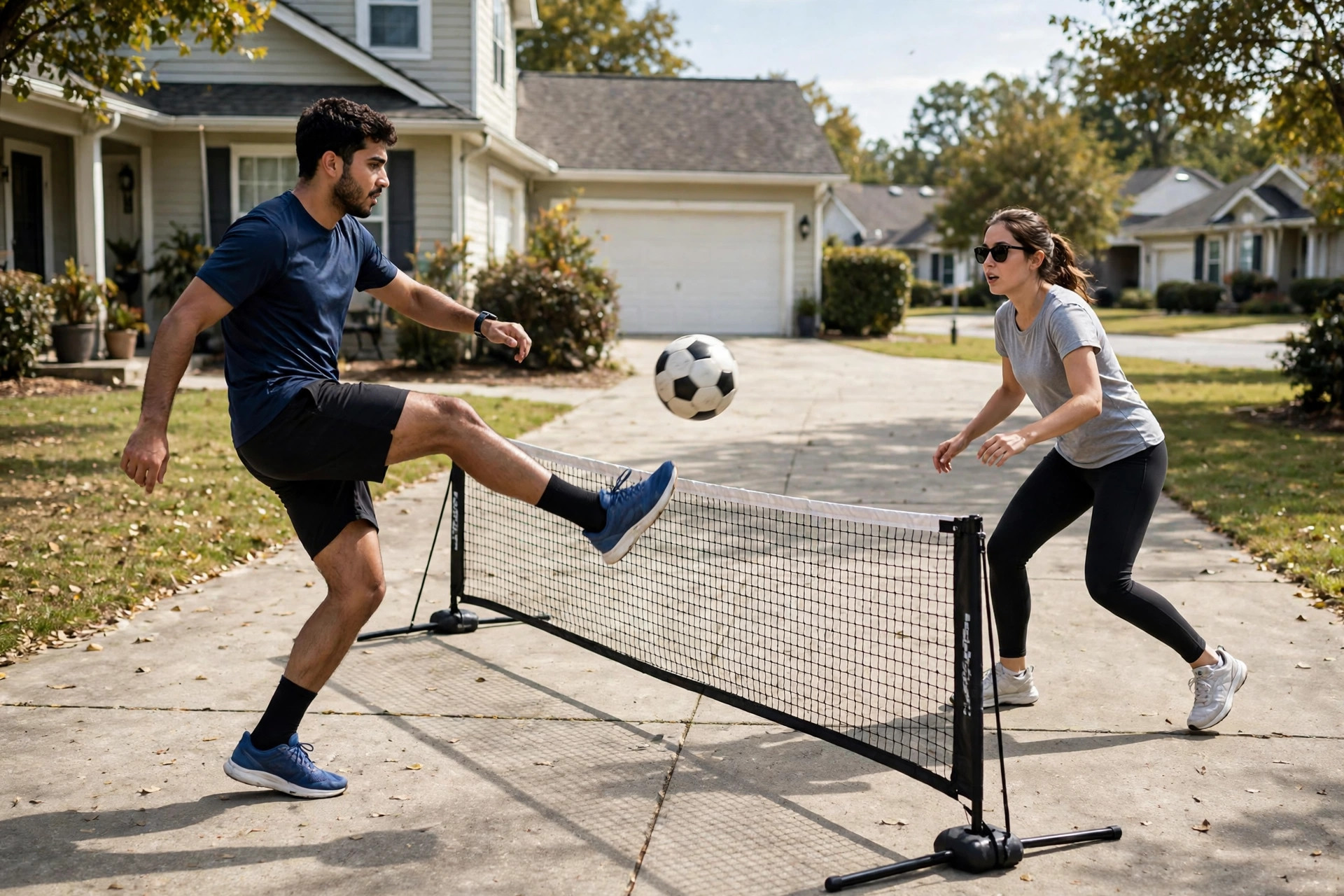
Soccer tennis needs a low net, a line of cones, or even a garden hose stretched across the middle of a driveway. Players volley or bounce the ball back and forth over the barrier, using feet, thighs, and head only. Score it like tennis, or simply count how long a rally lasts. One bounce per side suits younger players; no bounce raises the difficulty for teens. The small court rewards soft touches and quick feet, so a skilled younger child can genuinely beat an older sibling. It is also the quietest game on this list. Ten minutes of it doubles as a warm-up for the other games.
Target Shooting and the Cone Knockdown Race
Target Shooting
Set a goal or a target zone, then shoot from a marked line. Award points by zone: corners are worth more than the middle, and hitting a cone balanced on the line scores most of all. Rotate shooters quickly so nobody stands around. Move the shooting line back as accuracy improves, and let younger players shoot from closer in. Five rounds each makes a complete game in about ten minutes.
Cone Knockdown Race
Balance four cones upright at one end of the yard, one set per player or team. Players pass or shoot from a line to knock their cones down, then race to stand them back up and go again. First player to knock down all four cones three times wins. The game teaches passing accuracy under mild time pressure, and resetting keeps younger kids moving instead of waiting.
Keep-Away Circle: The Mixed-Age Equalizer
Mark a circle about eight yards across. Most players stand around the edge passing the ball, while one or two defenders in the middle try to intercept. A defender who wins the ball swaps with the player whose pass was cut out. Keep-away is a classic for a reason. The passing players learn to move the ball quickly and call for it, while the defender gets a serious workout. Limit better players to two touches to keep the game honest. For mixed ages, put the oldest player in the middle first. Younger players get early success, and the game finds its balance within a few rounds.
Small-Sided 2v2: Real Soccer in a Tiny Space
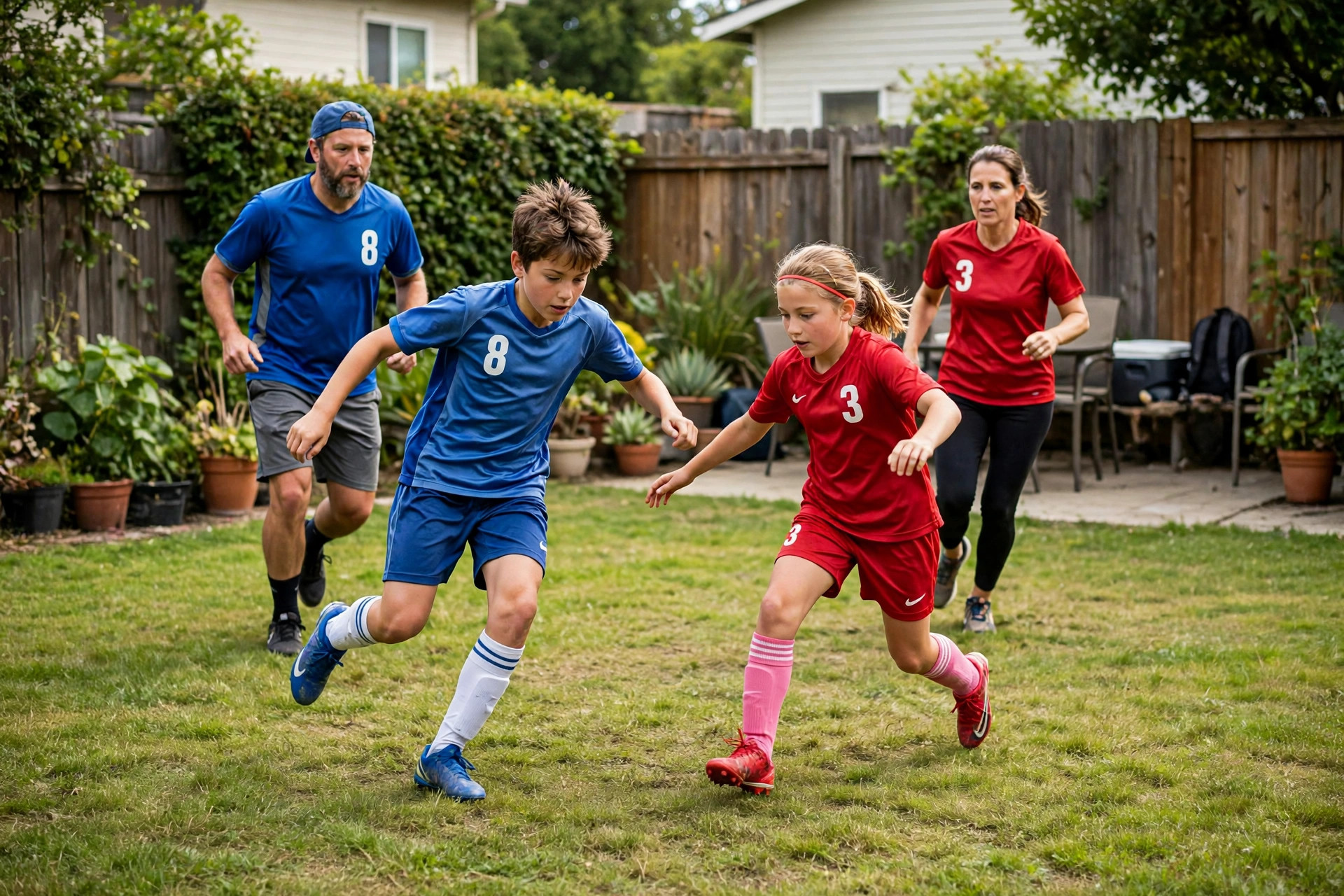
When you have four players and about 15 by 10 yards, play real soccer. Two small goals, no goalkeepers, and a rule that every player must touch the ball before a shot keeps it flowing. This is one of the best soccer games for kids who want the real sport, just smaller. Two small goals make the game, and the folding models in our best portable soccer nets and goals guide set up in minutes and store flat against a garage wall. Cone goals work too: a goal counts when the ball passes between the cones below knee height. Play short rounds of three minutes, then swap teams. Pair an adult with a child on each side and the game usually referees itself.
Penalty Shootout Ladder: The Finisher
End any session with penalties. Every player shoots from a marked spot, and anyone who scores climbs a rung: the spot moves a step back, or the target shrinks to one side of the goal. Miss, and you stay on your rung while the others climb. Rotate the goalkeeper every round so everyone shoots plenty. A parent in goal at half effort is the traditional arrangement, and still the best one. The ladder format means the game tightens as it goes. Better shooters end up further back aiming at smaller targets, while beginners keep shooting from close range. First to the top rung wins, and there is always time for one rematch.
Making Mixed Ages Fair: Simple Handicaps
Backyard soccer games stay fun when the result is in doubt, so use small handicaps instead of asking older players to hold back. Holding back is no fun, and kids spot it instantly. Try these adjustments:
- Weaker foot only for the oldest player or the adult.
- Head start points for the youngest player in shooting games.
- Smaller target for the best shooter, full goal for beginners.
- Two-touch limit for experienced players in keep-away and 2v2.
- Adult in goal during shootouts, defending at half effort.
Adapting the Games for Very Young Players
For under-6s, shorten everything: closer shooting lines, bigger targets, and rounds of two or three minutes. Let them use a size 2 or 3 ball, and count effort as loudly as goals. Most young children prefer the knockdown race and target shooting, where success is obvious. Save keep-away and 2v2 until they can pass in the right direction.
Frequently Asked Questions
What are the best backyard soccer games for a small yard?
Soccer tennis, target shooting, and the cone knockdown race fit almost any yard, because they need one ball, a few cones, and about ten yards of space. Keep-away needs only an eight-yard circle. If you have 15 yards and four players, small-sided 2v2 gives you real soccer in miniature.
How much space do you need for backyard soccer games?
Most backyard soccer games fit in 10 to 15 yards of clear ground. Soccer tennis works on a driveway, target shooting needs ten yards in front of a goal, and 2v2 needs about 15 by 10 yards. Measure your space once, then pick games from the table that match it.
How do you make backyard soccer games fair for mixed ages?
Use small handicaps instead of asking older players to ease off. Try weaker-foot-only rules for the oldest player, head start points for the youngest, smaller targets for the best shooter, and two-touch limits in passing games. Short rounds and mixed-age teams in 2v2 also keep games close.
What equipment do you need for small space soccer games?
One ball in the right size for the youngest player, a set of flat disc cones, and one small goal or target cover nearly every game here. A portable goal helps for shooting games and 2v2, and a low net or line of cones is all soccer tennis requires.
Can two players play backyard soccer games on their own?
Yes. Soccer tennis, target shooting, the knockdown race, and the penalty shootout ladder all work with two players, and most work solo against a target or a timer. Two-player sessions are often the best practice, because both players touch the ball constantly with no waiting around.
Final Thoughts
The best backyard soccer games are the ones that actually get played: quick to set up, fair across ages, and finished before anyone gets bored. Start with soccer tennis and the knockdown race, add 2v2 when you have four players, and end with the shootout ladder. Rotate the handicaps as the kids improve, and the same small yard will keep producing close games for years.

How to Choose a Soccer Ball Size by Age: Size 1 to 5 Chart
At-Home Soccer Training for Kids: 15-Minute Plans by Age, No Team Needed