
Cornhole Practice Drills You Can Do Alone in 20 Minutes6 min read
Most cornhole improvement happens between games, not during them, and that is exactly what cornhole practice drills are for. In a backyard match you might throw thirty meaningful bags in an hour; a focused solo session gives you that many in five minutes. These cornhole practice drills are built for one player, one or two boards, and a spare 20 minutes. Each drill isolates one shot: the slide, placement around the hole, the airmail, and the block and push. You will score every drill. That is deliberate: cornhole practice drills only work when they produce a number you can beat next week, and the session plan below strings all five into a single 20-minute cornhole training routine.
Our top picks, compared:
What You Need for These Cornhole Practice Drills
One board is enough for most drills, though two boards save walking. Eight bags, two sets of four in different colors, make solo cornhole practice far more efficient: throw all eight, score them, walk once. Set the board at your normal game distance, 27 feet front edge to front edge for adults. If your boards wobble or sit unevenly, fix that first; our guide to the best cornhole boards covers what a stable, regulation-height setup looks like. Bring a notebook or notes app: every drill ends in a count, and the count is the point.
Drill 1: Around the Hole Clock
Setup: One board, four bags. Picture four landing spots around the hole: 12, 3, 6, and 9 o’clock, each about a bag’s width from the rim.
Reps: Throw one bag at each clock position in order; four rounds.
Scoring: One point per bag stopping within a bag’s width of its called position; two points if it stops there without falling in.
What it builds: Touch around the hole, where most innings are decided.
Drill 2: The Slide Ladder
Setup: One board, four bags. Picture four rungs: front edge, mid-board, just short of the hole, and in the hole.
Reps: Throw the ladder in order, one bag per rung; four ladders per set, two sets.
Scoring: One point per bag stopping in its rung’s zone; a bag sliding past scores zero.
What it builds: Slide distance control, the foundation shot. If your bags slide unpredictably, our guide to fixing cornhole bags that are too slick or too sticky shows how to even out a set.
Drill 3: The Cornhole Airmail Drill
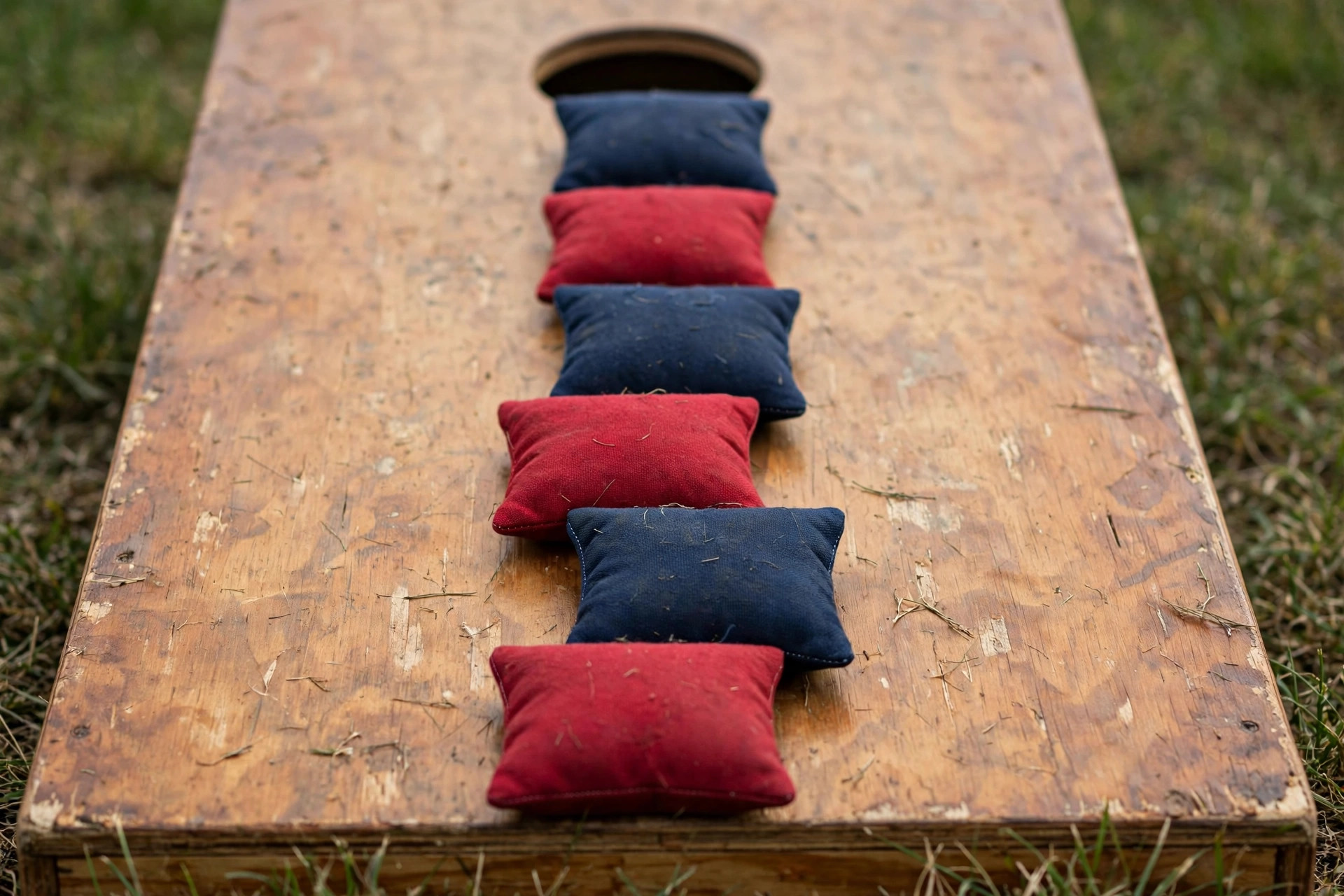
Setup: One board, four bags. Park one bag directly in front of the hole as a blocker.
Reps: Throw all four bags airmail, over the blocker and into the hole without touching the board first; five sets of four, twenty throws total.
Scoring: Count makes out of twenty, honestly: a bag that clips the board first is a slide, not an airmail.
What it builds: The scoring shot itself. Newer players should expect two to five makes out of twenty at first. If your airmail shape feels wrong, our guide to the four cornhole shots explained breaks down the throw.
Drill 4: Block and Push
Setup: One board, four bags of one color. Place your first bag as a block, six to twelve inches short of the hole.
Reps: Use your next bag to push the block into the hole without knocking it past or off line; eight pushes per set, two sets.
Scoring: Two points when the block drops in, one when both bags finish in scoring position, zero when the push scatters both.
What it builds: The most common real-game sequence in cornhole.
Drill 5: The Two-Bag Race
Setup: Two boards if you have them, eight bags in two colors: one color is you, the other is the ghost.
Reps: Throw your four bags and score them; then throw the ghost’s four, genuinely trying to beat your own total; five rounds.
Scoring: Win the session by taking three of five rounds.
What it builds: Pressure, the closest practice gets to a real inning.
Your 20-Minute Cornhole Training Routine
Here is the full session, start to finish:
| Time | Drill | Focus |
|---|---|---|
| 0:00-3:00 | Warm-up slides, easy throws at mid-board | Loosen up and find your slide distance |
| 3:00-7:00 | Slide Ladder | Distance control |
| 7:00-11:00 | Around the Hole Clock | Placement beside the hole |
| 11:00-15:00 | Block and Push | Setting up and finishing points |
| 15:00-18:00 | Airmail Reps, eight throws | Scoring over a block |
| 18:00-20:00 | Two-Bag Race, one round | Light pressure to finish |
Run it two or three times a week. Consistency beats marathon sessions: twenty focused minutes, three times a week, is well over 150 scored throws.
Track Your Progress With Simple Counts
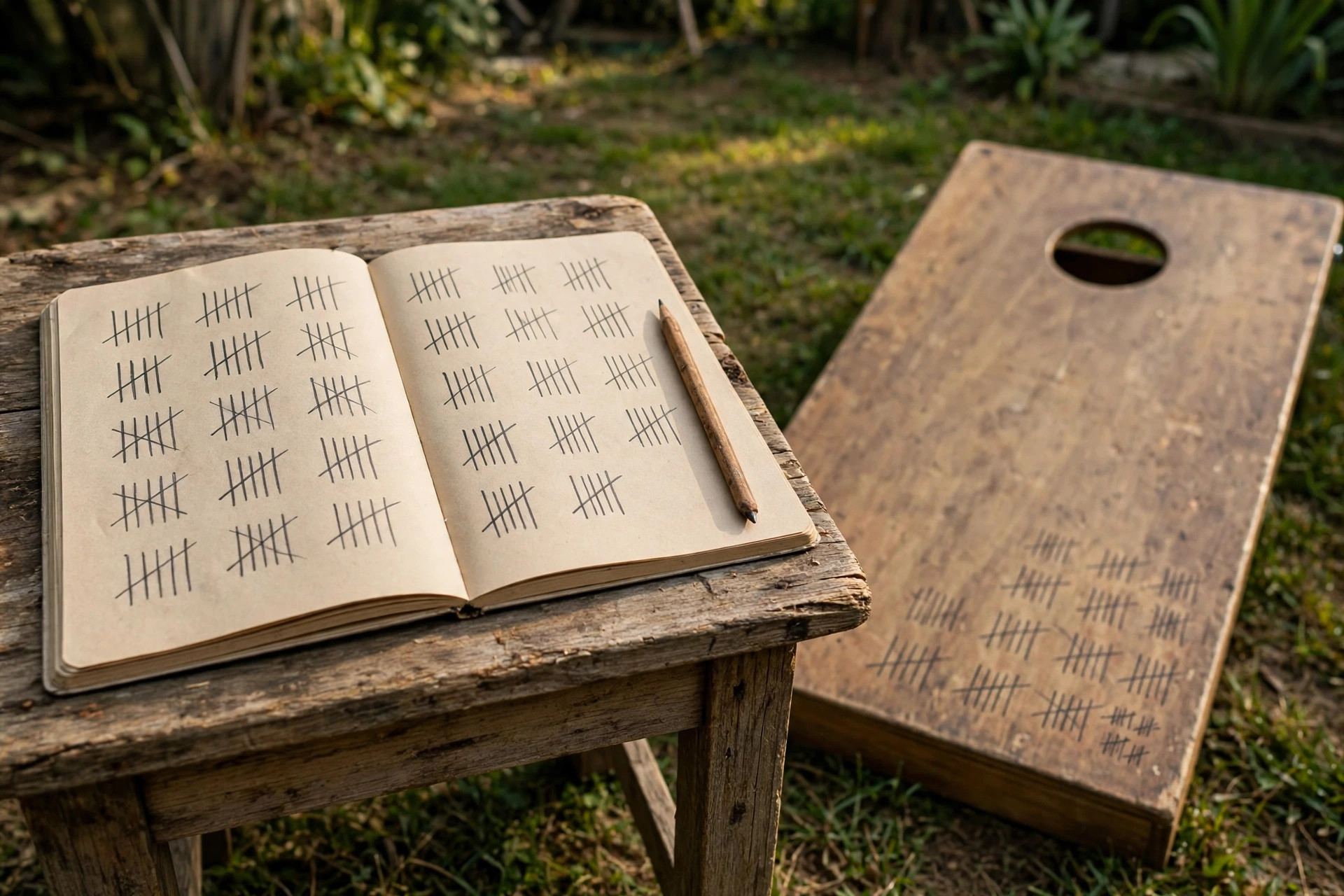
Write down three numbers per session: ladder points, airmail makes, and race rounds won. Review every two weeks, not every day; the two-week trend is the real signal. Change one variable at a time.
Common Solo Practice Mistakes
- Practicing only your best shot (your weakest shot is the one opponents will force).
- Never scoring anything (if there is no number, there is no feedback).
- Moving the board closer (keep game distance, always).
- Throwing through bad form (tired reps teach tired mechanics).
- Changing bags mid-session (pick one set per session so counts stay comparable).
Frequently Asked Questions
How often should I do cornhole practice drills?
Two or three 20-minute sessions a week is the sweet spot for most players: well over a hundred scored throws a week without wearing out your arm. Take at least one rest day between heavy airmail sessions.
What are the best cornhole drills for beginners?
Start with the Slide Ladder and Around the Hole Clock. Both train distance and placement at low speed. Add Block and Push once your slide is consistent, and leave high-volume airmail reps until your basic throw repeats reliably.
Can I do solo cornhole practice with only one board?
Yes. Four of the five drills need one board, and the Two-Bag Race works with one board too: throw, score, and throw back. Eight bags help more than a second board.
How many bags do I need for solo practice?
Four bags are enough to start, but eight, two sets of four in different colors, are ideal. You can throw a full drill set before walking to the board and run the Two-Bag Race without resetting.
How long before solo practice improves my game?
Most players see their drill counts move within two to three weeks of twice-weekly sessions, and game results follow a little later. Distance control improves first, then placement around the hole.
Final Thoughts
Twenty minutes, five drills, three numbers in a notebook. That is the whole system. If you are upgrading your setup along the way, our best cornhole boards roundup is the place to start.
Cornhole Distance for Kids by Age: The Chart Parents Actually Need

7 Cornhole Scoreboards to Help Keep Score
