How to Choose Crokinole Buttons: Concave, Convex and Materials9 min read
Every crokinole player eventually shops for replacement discs and runs into an older word: buttons. Crokinole buttons are simply the discs by their traditional name, and choosing the right ones matters more than most new players expect. The wrong face, wood or size quietly changes how every shot slides, rebounds and drops. This guide walks through the four decisions that define a set of buttons: face profile, material, size and finish. Get those four right and your set matches your board, plays consistently from the first disc to the last, and lasts for years of regular games. Buttons and boards are a matched pair, so if you are still choosing the board itself, start with our roundup of the best crokinole boards and then come back here to spec the buttons that fit it.
Crokinole Buttons at a Glance
Here is the whole decision in one table. The sections below explain what each row means for the way your game actually plays.
| Button Feature | Options | What It Changes |
|---|---|---|
| Face profile | Concave on one side, convex on the other | Which part of the button rides the board: rim contact for speed, centre contact for grip |
| Material | Maple, birch and other hardwoods | Weight, durability, and how well the button takes wax and wear |
| Size | 32 mm tournament or 28 mm compact | Whether the button drops cleanly through your board’s centre hole |
| Finish | Waxed or unfinished | Friction out of the box, and how much upkeep the set needs |
One relationship sits underneath the whole table: buttons, pegs and the centre hole are sized as a system. Change one piece without checking the others and the game stops behaving the way it should.
Why Players Call Them Buttons
New players sometimes wonder if buttons and discs are different pieces. They are not. Players have called the discs buttons for as long as the game has existed, because the earliest pieces were small turned-wood discs that looked like the buttons on a coat. The name stuck in Canadian crokinole tradition and never really left. Most makers and tournament players use the two words interchangeably, so a set sold as crokinole buttons is the same purchase as a set sold as discs. Knowing that saves confusion when you compare listings, because both terms describe the identical piece of equipment.
Concave vs Convex: Choose Your Playing Face
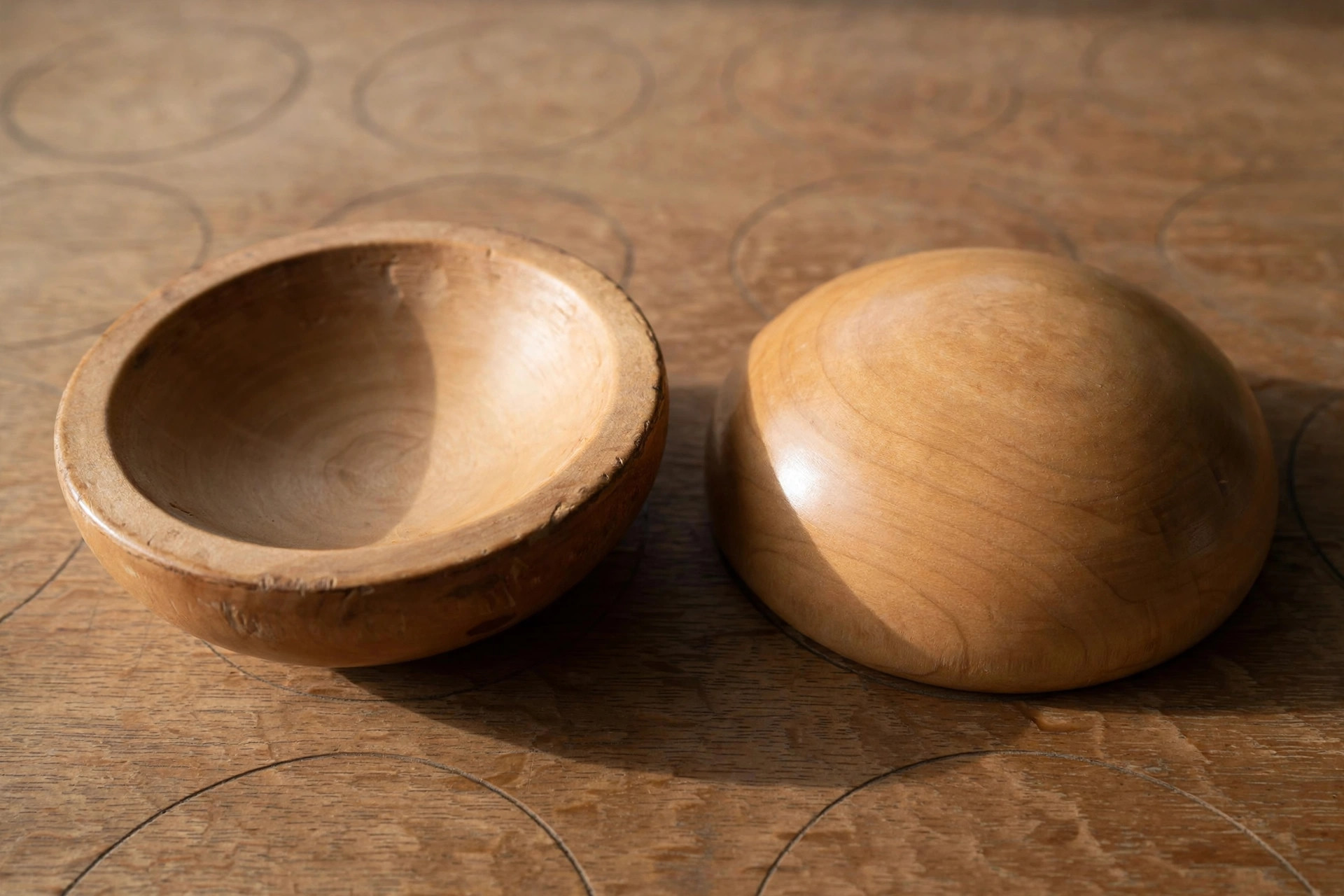
Pick up a button and look at it edge-on. One face dishes inward, the concave side, and the other crowns outward, the convex side. Nearly all quality crokinole buttons are made with one of each, which means every set gives you both options and the choice is simply which face rides down. Played concave side down, a button contacts the board mostly on its rim. Less contact means less friction, so the button slides faster and further on the same flick and glides over tiny surface imperfections. Most players who wax their buttons play concave down, because the two speed advantages stack. Played convex side down, the button contacts near its centre and grips a little more. The slide is shorter and stops sooner, which suits delicate shots that need to die close to the centre hole. Neither face is more correct than the other; it is a genuine preference, and the only way to find yours is to play a few games each way.
Crokinole Button Materials: Maple, Birch and Other Hardwoods
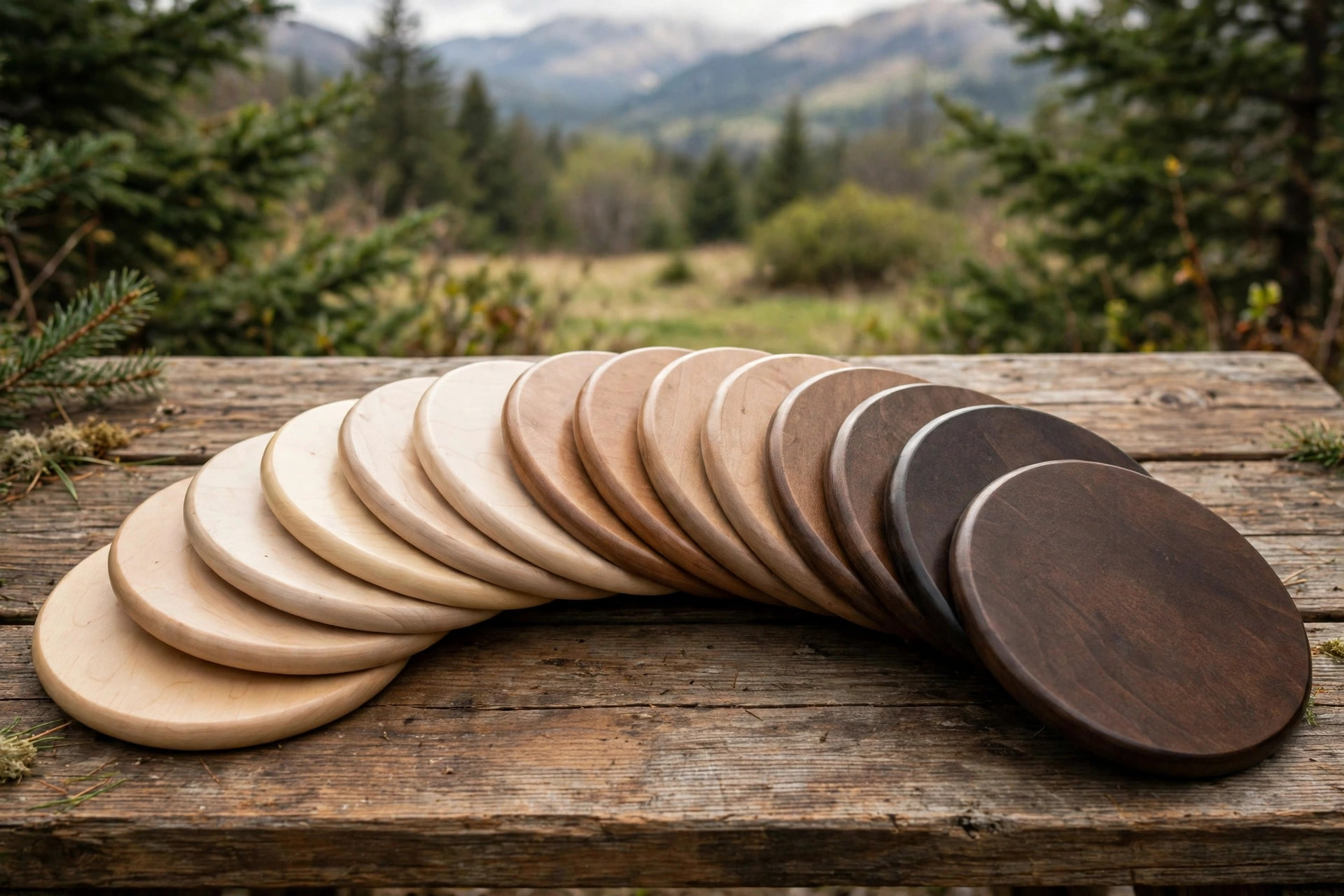
Wood is the traditional button material, and the species matters less than hardness and consistency. What you want is a dense hardwood that turns smoothly, holds a clean edge, and weighs the same from button to button. Maple is the tournament favourite. It is hard, fine-grained and durable, so maple buttons keep their edges through years of peg contact and hard take-out shots. They also take wax evenly, which keeps the whole set sliding alike. Birch runs a close second and is common on Canadian-made sets. It is slightly lighter than maple with a similar smooth finish, and many players cannot tell the two apart in play. Baltic birch buttons are a solid, widely available choice. Other hardwoods such as cherry, beech and oak all work, with small differences in weight and feel. Cherry tends to run a touch softer, while oak is noticeably grainy. What matters most is that all 24 buttons in a set come from the same material and batch, so no single button plays faster or heavier than its partners.
Crokinole Button Size: 32 mm vs 28 mm
Size is the one decision you cannot fudge, because it is set by your board. Tournament buttons measure 32 mm across and pair with the standard 26-inch playing surface and its 35 mm centre hole. Compact and travel boards use smaller buttons of about 28 mm, matched to a smaller hole. The rule is clearance: a button needs roughly 3 mm of space around it to drop cleanly for a 20. Measure your centre hole before you order, especially if your board was sold by its overall diameter rather than its playing surface. Our full guide to crokinole disc size and wax walks through the measuring checks in detail.
Waxed vs Unfinished: The Finish Decision
Buttons leave the maker either waxed or unfinished, and the difference is friction. A waxed finish slides fast straight out of the box and needs only an occasional refresh: a thin coat of paste wax, buffed completely off, every few weeks of regular play. Unfinished buttons start slower and grip more, which some players prefer while learning touch shots. They will pick up oils and dirt faster, though, and most owners end up waxing them anyway. Either way, keep the finish identical across the set, because one freshly waxed button among dull ones plays like a different piece of equipment.
Match Your Buttons to Your Board
Before you buy, run three checks. First, measure the centre hole and confirm the button size it needs. Second, confirm the set is a full matched set of 24, twelve per side, ideally with a couple of spares. Third, check the maker’s stated weight and material so a future replacement set can match. If you are buying the board and buttons together, the boards in our guide to the best crokinole boards list their playing surface and hole dimensions clearly, which makes this matching step a two-minute job instead of guesswork.
Frequently Asked Questions
Are concave crokinole discs better than convex ones?
Neither is better overall; they suit different shots. The concave face rides on its rim, so it slides faster and further, which most players prefer for open shots. The convex face grips more and stops sooner, which helps delicate shots near the centre. Most buttons have one face of each, so try both.
Which crokinole disc materials last the longest?
Hard maple is the durability benchmark, holding its edges through years of peg contact and hard shots. Birch is close behind and slightly lighter. Softer woods dent and round over sooner. Whatever the species, a matched set from one batch outlasts a mixed set, because uneven wear makes buttons play differently from each other.
Are wooden crokinole buttons better than plastic buttons?
For regular play, yes. Wooden crokinole buttons have the weight, edge profile and wax-friendly surface the game was designed around, and they rebound off the pegs predictably. Plastic buttons on budget sets are lighter, bounce inconsistently and cannot be waxed effectively. They are fine for a child’s first set, but most players upgrade quickly.
How many crokinole buttons come in a set?
A standard set has 24 buttons, twelve for each side, usually black against natural wood. Games are played with the full set, so check that any replacement set matches your existing buttons in size, weight and material, or replace all 24 at once and keep the old ones as spares.
Can I mix buttons from two different sets?
It is not recommended. Even small differences in diameter, weight or finish change how a button slides and rebounds, so a mixed set quietly makes the game unfair. If one button is lost or chipped and an exact match is unavailable, replacing the full set is the cleaner fix.
Final Thoughts
Choosing crokinole buttons comes down to four checks: the face you prefer down, a hard and consistent wood, the size your centre hole demands, and a finish you will actually maintain. Run those checks once and the equipment disappears into the background, which is exactly where it belongs. The game should be about the shots, not the gear.
Crokinole Opening Shots: Where to Aim Your First Disc

How to Choose the Right Size Crokinole Discs for your Board