
Bocce Scoring Disputes Solved: Measuring, Ties and the Kiss Explained11 min read
Every friendly bocce game eventually reaches the same moment. Two balls sit a whisker from the pallino, everyone crouches down, and somebody says, “Mine’s closer.” Somebody else says, “No, mine is.” That is the moment bocce scoring rules exist for.
Most disputes are not about honesty. They are about eyeballing a gap smaller than an inch from a standing position, which nobody can judge reliably.
The good news: every common argument, from measuring close balls to ties to the famous kiss, has a standard way to settle it.
Our top picks, compared:
Bocce Scoring Rules in Brief
Before the disputes, the basics. A frame ends when all eight balls have been rolled. The team with the ball closest to the pallino scores one point for each of its balls that sits closer than the opponent’s closest ball. Only one team can score in a frame. Games are commonly played to 12 points, though groups also use 11, 15, or 16, so agree on the target before the first frame. The team that scores throws the pallino to start the next frame, a detail that decides several tie rulings below. New to the flow of play itself? Start with our full guide on how to play bocce ball, then come back here when the arguments start.
How to Measure Bocce Balls When It Is Close
When two balls look equally close, stop crouching and measure. First, look straight down from above the pallino: judging from a standing angle makes the farther ball look closer. Still too close to call? These methods, from simplest to most precise, are how to measure bocce balls the way league players do. One rule prevents half of all measuring fights: nobody touches any ball until the measurement is finished and both teams accept it. A bumped ball cannot be un-bumped.
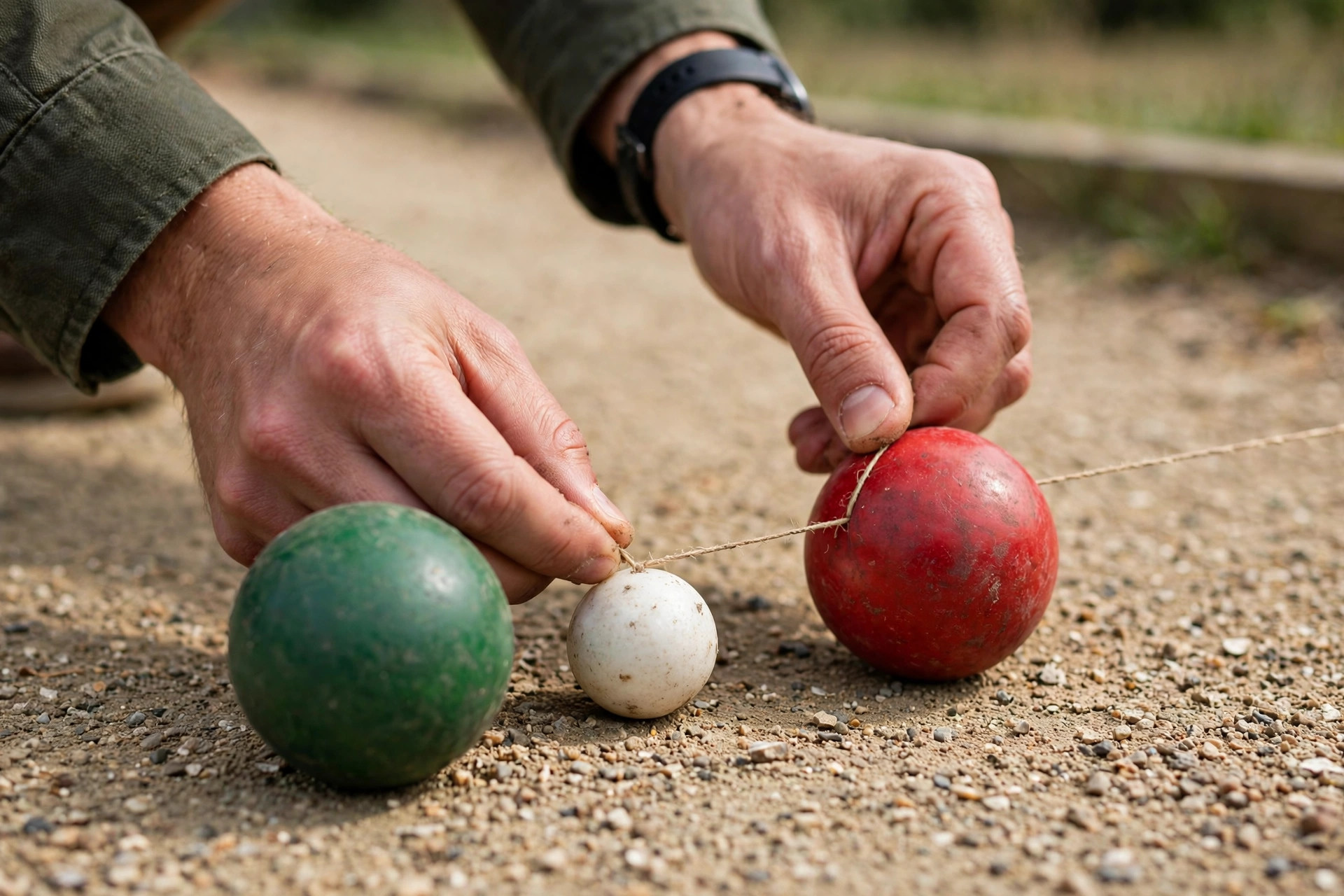
The String Method
- Hold one end of a string against the side of the pallino.
- Stretch the string to the nearest edge of the first ball and pinch it at that point.
- Swing the pinched string to the second ball without letting go.
- If the string reaches past the second ball, that ball is closer. If it falls short, the first ball is closer.
A string beats a stiff tape here because it pivots cleanly from ball to ball without anything being lifted or shifted.
Tape Measure and Calipers
A tape measure works well on hard courts: measure from the pallino’s edge to the nearest edge of each ball and write the numbers down. On grass the tape tends to push balls, so the string is safer. Serious leagues use calipers that bridge from pallino to ball without touching either; overkill for the backyard, but they settle dead-even calls.
The Two-Ball Comparison Method
No tools at all? Use a straight stick or a scorecard pencil as a fixed gauge. Mark the pallino-to-first-ball distance on it with your thumb, then compare that span against the second ball. Crude, but far better than arguing from six feet away. One fairness point: measuring gets confusing when a set mixes sizes. Our bocce ball size chart shows the standard sizes, so everyone can play with a matched set.
Bocce Ball Tie Rules: When Nobody Scores
Ties cause more confusion than any other call, so here are the bocce ball tie rules most groups play by.
Two Opposing Balls Measure Exactly Equal
If the closest red ball and the closest green ball are exactly the same distance from the pallino, they cancel each other out. Look at the next closest balls instead: whichever team owns the next nearest ball scores for its balls inside the other team’s best remaining ball. A true exact tie is rare once you measure properly. Most “ties” resolve to a millimeter one way or the other.
The Whole Frame Ends Tied
If, after all balls are counted, neither team has a ball closer than the other, no points are awarded for the frame. This “no points” outcome is the standard ruling in most rule sets. Who throws the pallino next? The common convention is that the team that scored in the previous frame keeps the throw, since nobody new earned it. Some leagues instead replay the frame from the opposite end. Both are legitimate, so agree on one before your game starts.
A Ball Leaning on the Pallino
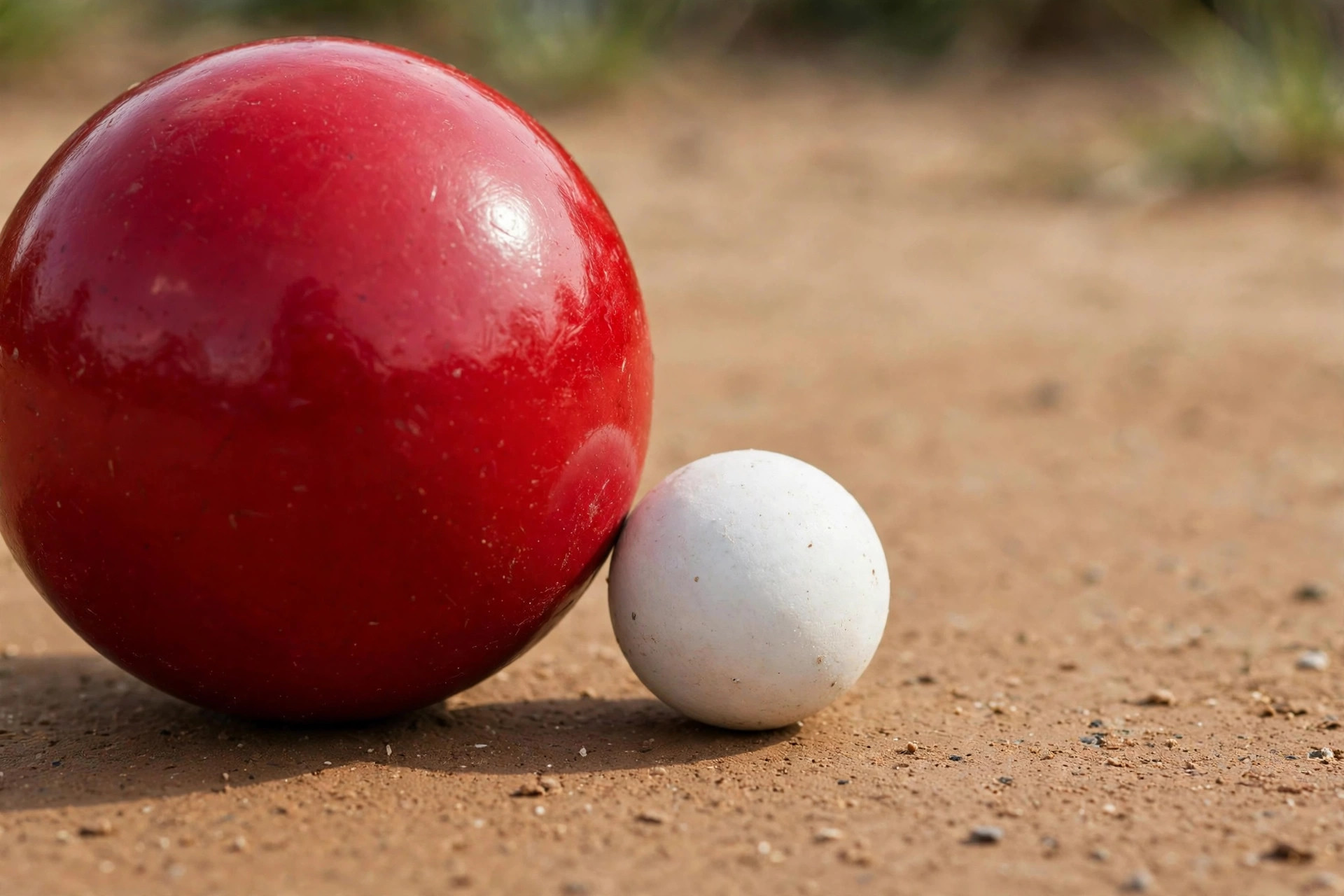
A ball resting against the pallino is not a tie. It counts as that team’s closest ball, and may also earn the kiss bonus described next.
What Is a Kiss in Bocce? The Bacio Explained
Ask an Italian player what is a kiss in bocce and you will hear the word bacio. A kiss is a ball that finishes the frame resting directly against the pallino, literally kissing it. In many formal rule sets, a kiss that survives to the end of the frame is worth 2 points instead of 1, provided it is also the closest ball: a reward for a touch shot that takes real control. Casual groups split on this one. Many count a kiss as a normal closest ball worth 1 point. Our advice: adopt the 2-point kiss. It rewards a gentle lag shot instead of blasting away every frame. A ball knocked into a kiss by another ball still counts in most rule sets, as long as it is touching when the frame ends. Where balls finish matters, not how they got there.
Bocce Pallino Rules: Center Line and Out of Bounds Disputes
The pallino starts every argument about court boundaries, so it helps to know the standard bocce pallino rules for the opening throw and for mid-frame chaos.
The Pallino Must Cross the Center Line
On a marked court, the opening pallino throw must cross the center line and stay inside the court. A pallino that stops short of the line, or rolls out of bounds, is a failed throw. The common ruling: the same player throws again. If the second attempt also fails, the other team gets to throw the pallino. Backyard groups without a marked center line usually skip this rule entirely.
The Pallino Is Knocked Out of Bounds Mid-Frame
A hard hitting shot can send the pallino flying off the court. In formal rules, that frame is dead: no points, and the frame is replayed from the other end. Backyard groups often prefer a friendlier fix: place the pallino at the nearest in-bounds point and finish the frame. Either works. Pick one before someone launches a raffa shot at a one-point lead.
The Pallino Is Knocked Back Across the Center Line
This one surprises people: the center line requirement only applies to the opening throw. If the pallino is knocked back across the line during the frame, play continues from wherever it stops, as long as it stays in bounds.
Common Bocce Disputes and Rulings at a Glance
These bocce scoring rules calls cover nearly every argument we see.
| Dispute | What Happened | Common Ruling |
|---|---|---|
| Too close to call | Two balls look equally near the pallino | Measure with string or tape before touching any ball |
| Exact tie for closest | Opposing balls measure the same distance | The tied balls cancel; the next closest ball decides the frame |
| Frame ends tied | Neither team has a closer ball | No points for the frame; the last team to score keeps the pallino throw |
| Kiss at frame end | A ball finishes touching the pallino | 2 points in many rule sets; 1 point in casual games if agreed |
| Short pallino | Opening throw stops before the center line | Throw again; after a second failure, the other team throws |
| Pallino out of bounds | A shot knocks the pallino off the court | Formal: dead frame, replay. Backyard: re-spot it and play on. |
How to Keep Disputes Friendly
Most arguments about bocce scoring rules are really equipment and agreement problems. Three habits fix them. First, spend one minute before the game agreeing on the target score, the kiss value, and the pallino out-of-bounds fix. Second, appoint one neutral measurer per frame, someone whose balls are not involved in the call, and accept the measurement. Third, play with one matched set of balls. Mixed sizes and weights roll differently and make close calls harder to judge. If your set has seen better days, our roundup of the best bocce ball sets compares current options by size, weight, and material.
Frequently Asked Questions
How do you measure which bocce ball is closest to the pallino?
Stretch a string from the edge of the pallino to the nearest edge of one ball and pinch it at that point. Swing the pinched string to the other ball without letting go. If it reaches past that ball, the second ball is closer. A tape measure or calipers works the same way on hard courts.
What happens if two bocce balls are exactly the same distance from the pallino?
If the two closest opposing balls measure exactly equal, they cancel each other out and neither counts as closest. The next closest ball then decides the frame. If no team has a ball closer after that, the frame ends with no points awarded to either team.
What is a kiss in bocce?
A kiss, called a bacio in Italian, is a ball that finishes the frame resting directly against the pallino. In many formal rule sets a kiss is worth 2 points instead of the usual 1, as long as it is the closest ball. Casual groups sometimes count 1 point, so agree on the value before you play.
Does the pallino have to cross the center line in bocce?
Yes, on a marked court the opening pallino throw must cross the center line and stay in bounds. If it stops short, the thrower tries again, and after a second failed attempt the opposing team throws the pallino instead. The rule applies only to that opening throw.
What happens if the pallino is knocked out of bounds?
Under formal rules the frame is dead: nobody scores, and it is replayed from the opposite end. Many backyard groups use a friendlier house rule instead, placing the pallino at the nearest in-bounds spot and finishing the frame. Both are fine, as long as the group agrees on one before the game.
Final Thoughts
Bocce scoring rules are simpler than the arguments they cause. Measure instead of squinting, let tied balls cancel, give the kiss its moment, and agree on your pallino fixes before the first frame. Do that, and the only thing left to argue about is whose turn it is to bring the drinks.
How to Build a Backyard Bocce Court on a Budget: Step by Step

Bocce for Kids: Shorter Courts, Lighter Balls and Simpler Rules
