Best Kite Reels and Winders: When to Upgrade From the Stock Spool8 min read
The best kite reels and winders are the ones matched to two numbers: how much line you fly and how hard your kite pulls. A stock spool handles a small delta on 150 feet of line without any drama. That same spool becomes a slow, wrist-aching chore behind a large foil on 500 feet. Upgrading is not about buying the fanciest reel. It is about knowing which job you actually need done, because each tool below solves a different problem. The reels and winders here sit alongside the line and handles covered in our guide to the best kite strings and accessories, and the two purchases are best made together.
Our top picks, compared:
Start With Line Length and Pull, Not the Reel
Most buying mistakes in this category come from shopping by price instead of by workload. A reel that feels solid in your hand can still be the wrong tool if it was built for half the line you own, or if it has no way to hold back a kite that pulls hard in a gust.
Work through two questions before anything else. First, how much line do you realistically fly? Most casual single-line flying happens between 100 and 300 feet, whatever the spool says. Second, how strong is the pull at the handle in a fresh breeze? If you can hold the line comfortably in one hand, almost any winder works. If you brace with both hands and lean back, you need a reel that can lock.
| Reel or winder type | Line it handles well | Pull it suits | Watch out for |
|---|---|---|---|
| Stock spool (included with most kites) | Up to about 200 ft | Light | Slow to wind in, twists line |
| Hand winder (yo-yo or hoop style) | 150 to 400 ft | Light to moderate | Still hand-powered in strong wind |
| Lockable reel with ratchet or brake | 300 ft and up | Moderate to strong | Heavier, costs more, overkill for small kites |
| Ball-bearing handles (dual-line) | Set line lengths, usually 50 to 120 ft | Control, not storage | Not a storage tool at all |
When the Stock Spool Is Enough
The plastic spool that comes free with most kites is genuinely fine for a large share of flying. Small and medium deltas, diamonds flown by kids, and anything on 200 feet of line or less in moderate wind does not need more hardware. The spool is light, it has nothing to break, and a child can manage it without pinching fingers in moving parts.
Its limits show up in two places. Winding in 200 feet by hand-over-hand turning takes minutes, and every turn of the wrist tends to add twist to the line, which later shows up as tangles on the ground. If your sessions are short and your kite is small, neither problem matters much. Keep the spool and spend the money on better line instead.
Hand Winders: The Cheap Middle Step
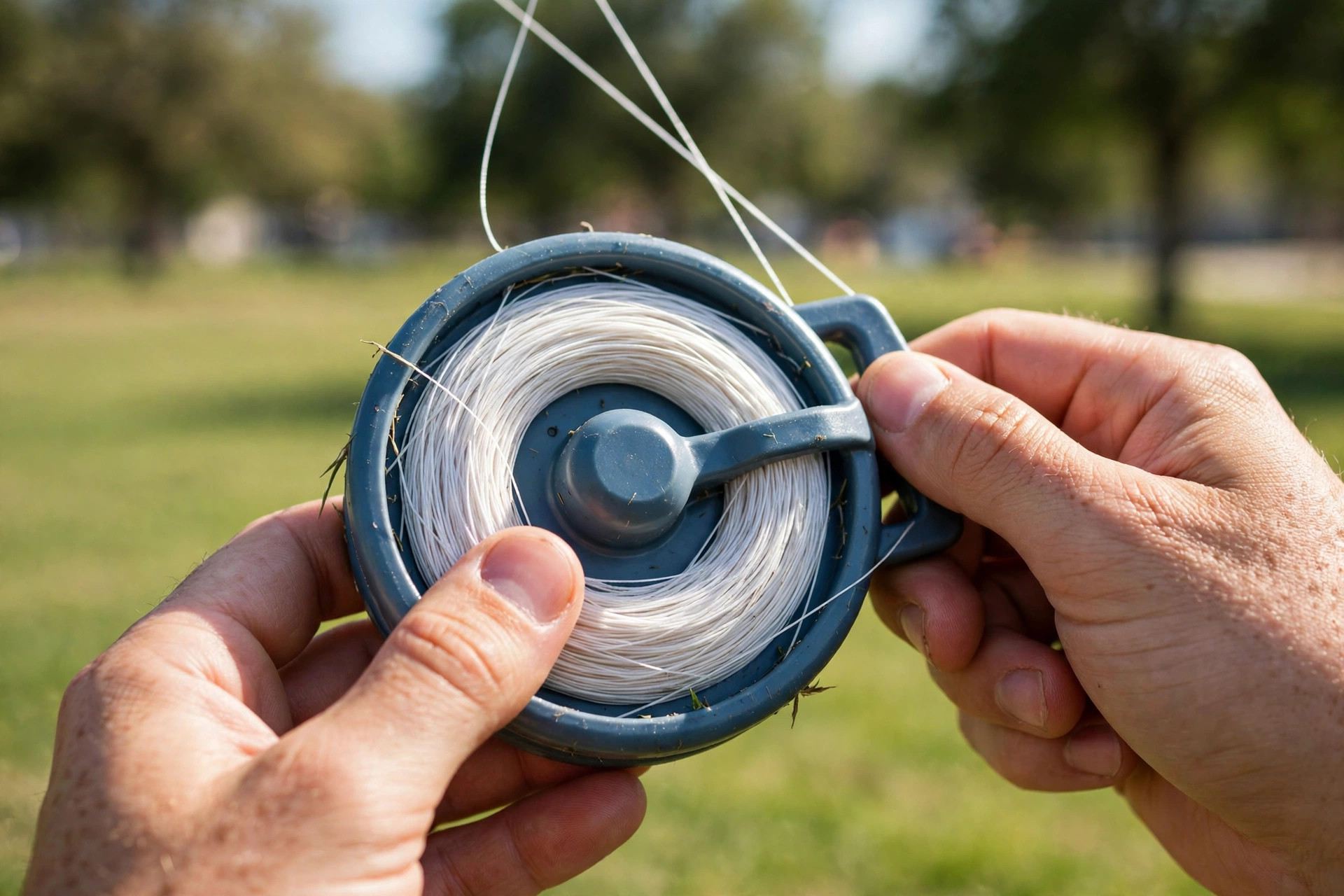
A hand winder, usually a flat yo-yo style frame or a hoop, is the upgrade most flyers actually need. Line wraps onto a wide, open frame, so winding in is two or three times faster than a stock spool and the line comes off cleaner on the next flight. Winders also give you a proper handle to grip, which matters more than it sounds during a long retrieve.
Winders suit single-line kites on roughly 150 to 400 feet of line with light to moderate pull. They are still hand-powered, so a big kite in rising wind will fight you on the way down. Managing that retrieve alone is much easier with a winder than a spool, and it pairs well with the techniques for launching a kite solo, where controlled line handling does most of the work. Below that workload, a winder is the sensible stopping point for most people.
Lockable Reels: For Big Kites and Long Line
A lockable reel adds a ratchet, a pawl lock, or a brake, and that one feature changes the whole job. The lock holds the line against the kite’s pull, so your arms stop being the brake. You can let line out under control in a gust, rest mid-retrieve, and wind in steadily instead of fighting surges. For large foils, big deltas, and parafoils that pull hard, or for anyone flying 300 feet and up, this is the category to buy from.
One widely sold example of the style is the emma kites 8.7in lockable kite reel, which turns up in our own Amazon product report with steady clicks. Treat it as a reference point for the type rather than a tested recommendation: a large-diameter lockable reel with a ratchet lock and room for long line. Diameter matters here. A bigger reel retrieves more line per turn, which you feel immediately when 500 feet has to come down before a storm cell arrives.
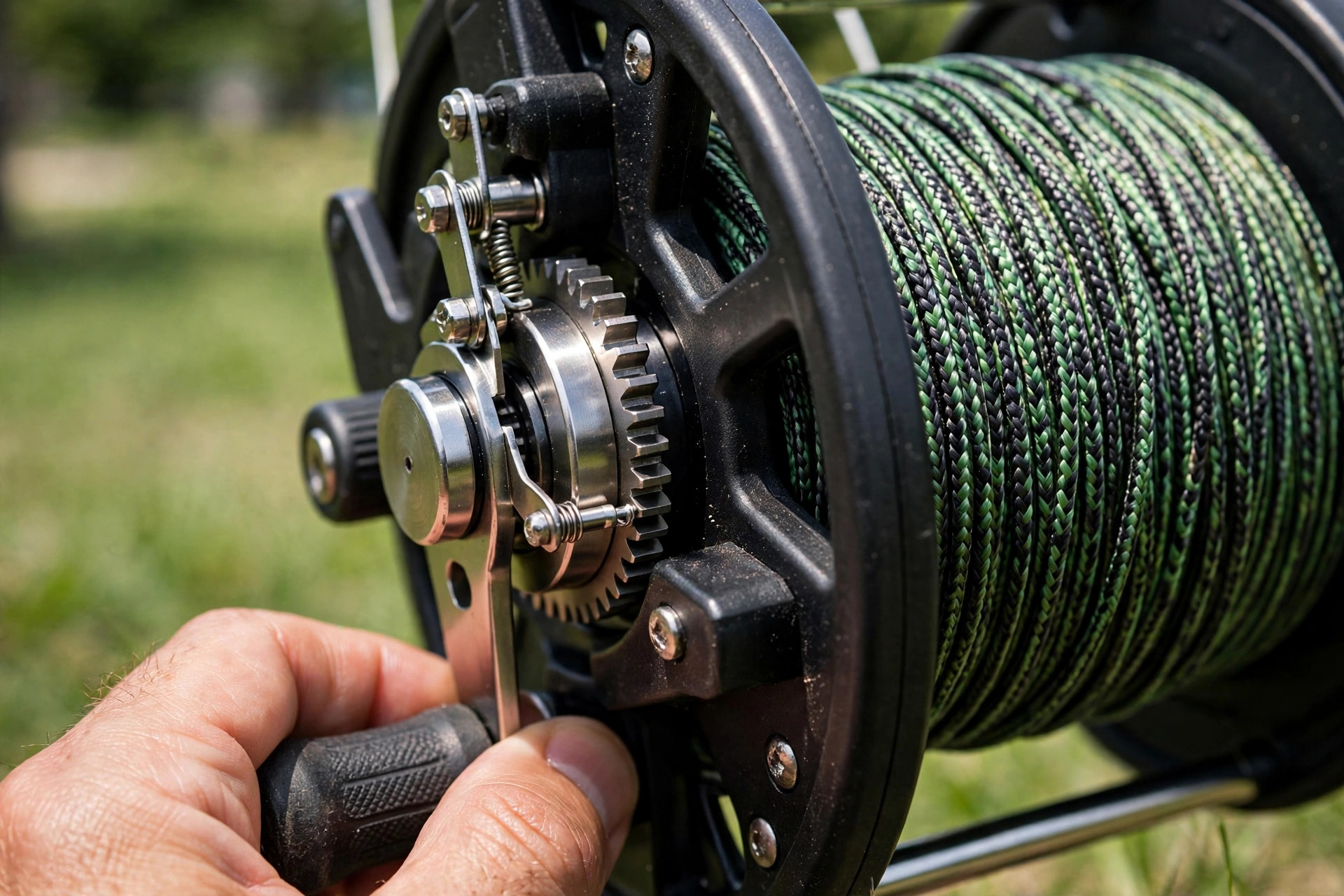
The trade-offs are weight and cost. A lockable reel is the heaviest thing in your kite bag and the most expensive option in this article, and it is wasted on a kite a child flies at the park. Buy it for pull and line length, not for looks.
Ball-Bearing Handles for Dual-Line Kites
Dual-line sport kites use a different tool entirely, and it is worth separating them so nobody buys the wrong thing. Stunt kite flyers hold two handles or straps, one per line, and the upgrade in that world is ball-bearing swivel handles. The bearings let the handles spin freely as the lines twist during tricks, which reduces wrist strain and keeps line wraps from binding mid-maneuver.
These handles store almost nothing. Dual-line sets come in fixed lengths, commonly 50 to 120 feet, and the handles are about control in the air, not retrieval speed. If you fly a sport kite, this is your upgrade path. If you fly single-line, skip this section entirely, because a reel or winder serves you better.
The Line Capacity Mistake Almost Everyone Makes
Reel and winder capacity ratings assume a specific line. A reel listed as holding 500 feet does so with the thin line the manufacturer had in mind, usually a light braided line. Fly a heavier line for a bigger kite and the same reel may hold barely half that length, because thicker line takes up far more room per foot. Our guide to how to choose kite line covers matching line strength to kite size, and that choice has to be made before the reel, not after.
The second half of the mistake is overfilling. Line wound right up to the flange edge jumps off in loops during a fast retrieve and tangles around the frame. Leave visible headroom below the rim, and treat a reel that is 80 percent full with your actual line as full. If your line and reel are mismatched, the honest fix is a bigger reel, not tighter winding.
A Short Decision Rule
Strip away the product names and the choice reduces to this:
- Under 200 feet of line and a kite you can hold in one hand: keep the stock spool.
- Up to about 400 feet, moderate pull, tired of slow retrieves: buy a hand winder.
- Strong pull, long line, or gusts that surge: buy a lockable reel with headroom to spare.
- Dual-line tricks: ball-bearing handles, and leave reels out of it.
Whichever route you take, the reel, the line, and the kite have to be sized as a set. The roundup of the best kite strings and accessories is the place to check that the rest of the setup matches the winder you choose.
Frequently Asked Questions
Can I use a fishing reel for kite line?
It comes up often, and it is not a good fit. Fishing reels are built to cast and to play a fish on a drag system, not to store hundreds of feet of line under steady load. The line guides are narrow, winding is slow, and kite line under tension can cut into itself on a small spool. A basic kite winder costs less and does the job properly.
Does a bigger reel always wind line in faster?
Per turn, yes. A larger diameter pulls in more line with every rotation, which is why big lockable reels feel so much quicker on long retrieves. The cost is weight in your hand for the whole session. For 200 feet of line the difference is a few seconds and not worth carrying. For 500 feet it is the difference between a calm pack-up and a rushed one.
Should kids use a reel instead of a spool?
For young kids, the spool is usually the safer and simpler choice. Reels have pinch points around the ratchet and handle, and a locked reel connected to a gusty kite can pull a small child off balance. Older kids who fly bigger kites do fine with a plain hand winder, which has no moving parts and winds in fast enough to keep sessions fun.

7 Best Prism Kites for All Experience Levels

How to Make a Kite at Home With Your Kids: Two Builds That Actually Fly