Spikeball Drills for Two Players: Passing, Setting and Spiking Practice8 min read
You do not need four players to get better at roundnet. Two players, one net, and a plan will build cleaner touches faster than most full games, because in a game you might touch the ball twenty times; in a focused session of spikeball drills, you touch it two hundred times.
These drills are built for exactly that: two players working on passing, setting, and spiking in short, repeatable blocks.
One honest note on gear: drills expose a sagging net immediately, because you hit the same bounce fifty times in a row. If yours plays unevenly, our roundup of the best Spikeball sets covers the firmer frames that hold up to daily practice.
Our top picks, compared:
What You Need for Two Player Spikeball Practice
A net with even tension, one ball (two is better, so a stray ball never stops a drill), and enough open space to move around the full circle. Set a simple rule before you start: drills run in timed blocks, not until someone gets bored. Agree on feeding roles too: in most of these drills one player feeds and one works, then you switch. The feeder’s job is consistency, not trickery.
Spikeball Passing Drills for a Cleaner First Touch
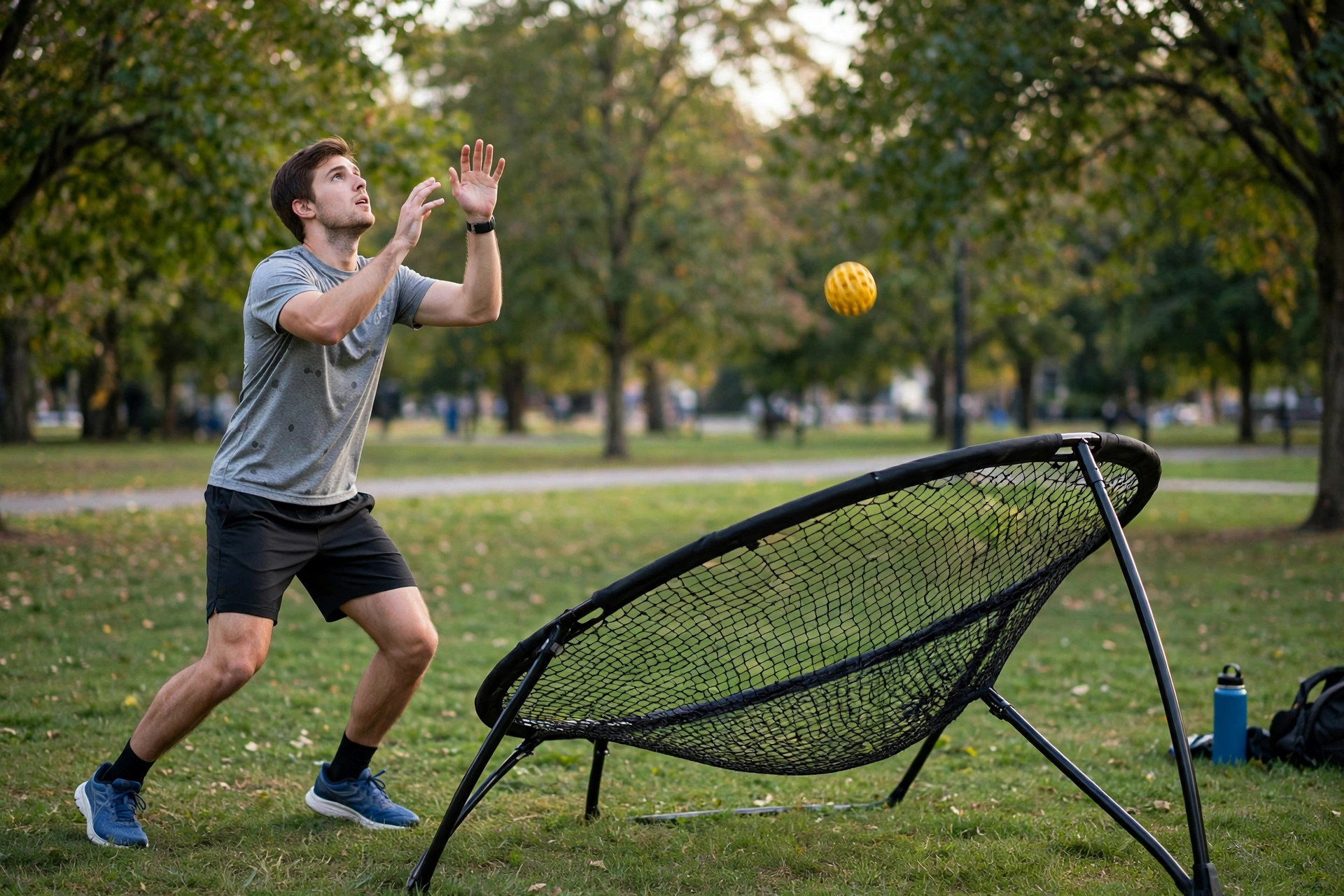
The first touch decides most rallies, which is why spikeball passing drills come first. The goal is a soft, high pass that lands where your partner wants it.
Drill 1: Fifty Clean Catches
Stand on opposite sides of the net. One player hits the ball down onto the net so it bounces up to the partner, who passes it back onto the net in one touch. Count consecutive clean exchanges and try to beat your streak. Ten minutes of this builds softer hands than a month of games.
Drill 2: High Pass Target
The working player must pass every feed up high, above head height, and toward a called side, left or right. High passes buy your partner time in real games, and calling the side forces control instead of survival touches. Run two minutes per player, then switch.
Spikeball Setting Drills for Soft, Accurate Sets
Good sets are quiet. Spikeball setting drills train you to absorb the pass and place the ball where your hitter can attack it.
Drill 3: Set to the Shoulder
Your partner passes from different spots around the net. You must set the ball so it arrives at their hitting shoulder, at the height they call before the pass. Alternate who sets every ten balls.
Drill 4: Off-Net Recovery Sets
The feeder deliberately passes wide, low, or behind you. Your job is to get a playable set back over the net zone anyway, even if it is not pretty. Games are full of broken plays, and the teams that win them are the ones whose setters practiced ugly balls. Two minutes each, then switch roles.
Spikeball Spiking Drills for Power and Placement
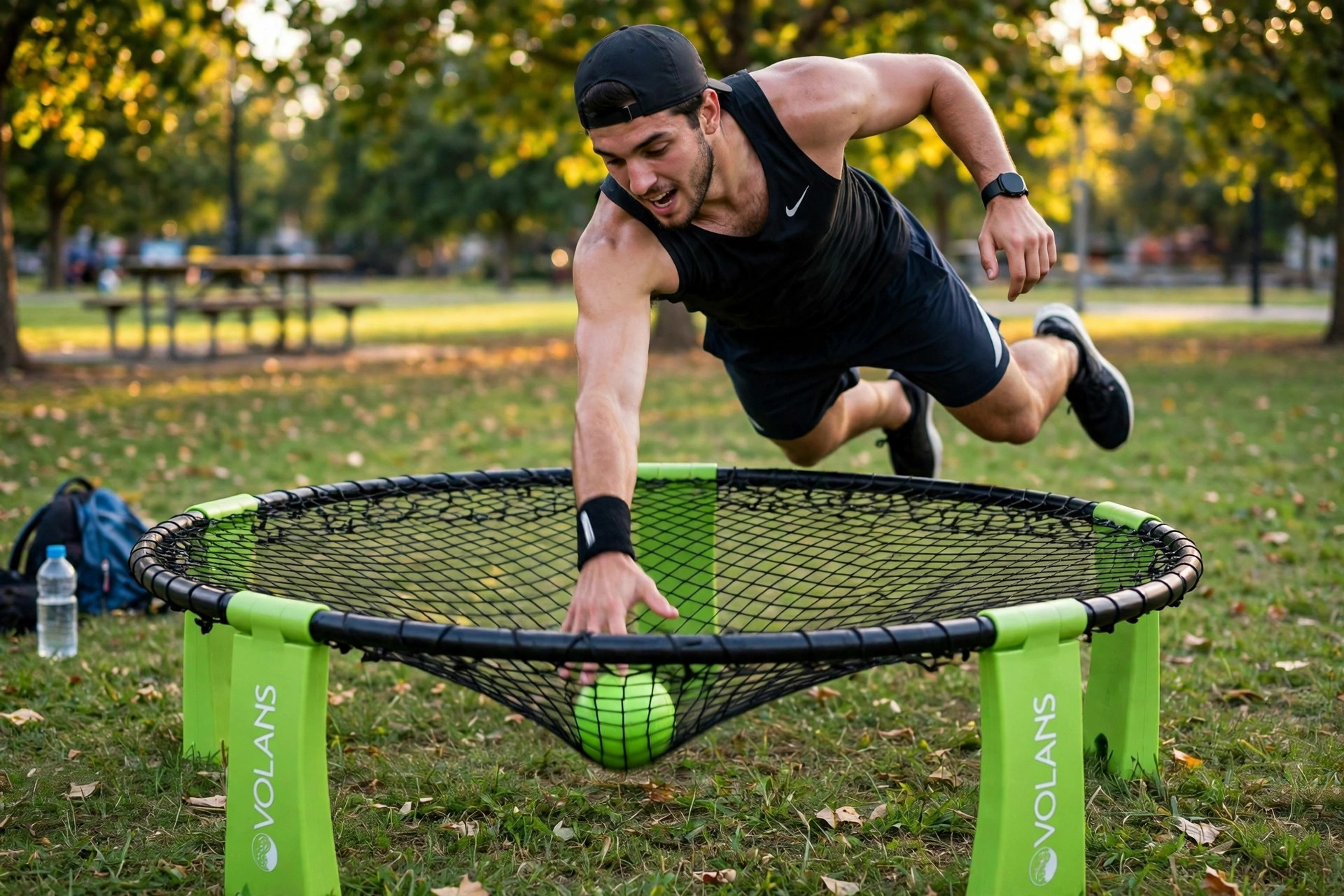
Spiking is the fun part, but spikeball spiking drills work best when placement comes before power. A hard spike at a defender is a free pass back; a medium spike into open space is a point.
Drill 5: Call Your Corner
Your partner sets, and before the ball reaches you, they call a target: near side, far side, or back corner. You hit the called spot. Start at half speed until your accuracy holds, then add pace. Track makes out of ten.
Drill 6: Cut Shot Control
Practice the cut shot at low speed: approach from the side, contact the ball off-center, and roll it across the net so it leaves at a sharp angle. Twenty controlled cuts per player, alternating sides.
A 45-Minute Practice Plan Using These Spikeball Drills
String the drills together and you have a complete session. Rest a minute between blocks and keep the ball count high.
| Drill | Players | Focus | Time |
|---|---|---|---|
| Fifty Clean Catches | 2 (cooperative) | Soft first touch, streak counting | 8 minutes |
| High Pass Target | 2 (feeder + worker) | High, directed passing | 6 minutes |
| Set to the Shoulder | 2 (alternate setter) | Set placement at hitting height | 8 minutes |
| Off-Net Recovery Sets | 2 (feeder + worker) | Setting broken plays | 6 minutes |
| Call Your Corner | 2 (setter + hitter) | Spike placement under light pressure | 8 minutes |
| Cut Shot Control | 2 (alternate hitter) | Angle and touch on the spike | 6 minutes |
That is 42 minutes of work plus short rests. Finish with three minutes of free hitting so the session ends on the fun part. Short on time? Cut the plan in half rather than rushing every drill.
Turning Drills Into Game Skill
Drills only pay off if they show up in games. The bridge is positioning, so pair this session with our guide to Spikeball defense positioning and practice starting each drill from a real defensive stance. Add one constraint game per week: play a normal game, but a point only counts if the rally includes a high pass or a called shot. Track something simple, like your Fifty Clean Catches streak. And when your net or ball finally wears out from all this practice, the firmer sets in our best Spikeball sets roundup are the ones that survive daily drilling without going soft.
Common Mistakes When Running Spikeball Drills
- Feeding too hard: the feeder sets the difficulty; feeds the worker cannot handle teach nothing but flailing.
- No switching roles: both players need every skill; alternate on a timer.
- Skipping the boring drills: passing feels basic right up until a bad first touch loses a game point.
- Full speed, all the time: most touch skills are learned at seventy percent speed, then sped up.
- Ending without a game: always close with a few real rallies so the day’s work connects to actual play.
Frequently Asked Questions
Can you practice Spikeball with only two players?
Yes, and in some ways it is better than games. Two players can run passing, setting, and spiking drills with far more touches per minute than a four-player game allows. Every individual skill that makes up rally play can be drilled with a partner.
How often should you run spikeball drills?
Two or three sessions a week of thirty to forty-five minutes will show clear improvement within a month for most players. Consistency matters more than marathon sessions.
What is the best first drill for beginners?
Fifty Clean Catches. It teaches the soft first touch everything else builds on, it needs no special setup, and the streak counter keeps it interesting. Start close to the net and keep the feeds gentle.
Do you need a special net for two player spikeball practice?
No special net, but an evenly tensioned one matters more in drills than in games, because you are hitting the same bounce repeatedly. Any standard set works; just tension it evenly and run a quick bounce test before you start.
How do you make spikeball drills harder as you improve?
Add pace, add movement, and add decisions. Feed from farther away, make the worker move before the touch, call targets later, and shrink the margin for what counts as a make.
Final Thoughts
Two players and a plan beat four players and no plan. Run these spikeball drills in short blocks, switch roles on a timer, track one number, and finish with real rallies. Within a few weeks your first touch will feel calmer, your sets will land where your partner wants them, and your spikes will start going to places instead of at people.

Complete Guide to the History of Spikeball
How to Set Up a Spikeball Net So It Does Not Sag or Wobble