Common Spikeball Faults Explained: Rims, Pockets, Carries and Self-Hits9 min read
Most arguments in roundnet are not about who played better. They are about spikeball faults nobody agreed on before the game started.
One player calls a rim, the other says play on, and a fun rally turns into a rules debate. The fix is simple: learn the five calls that cover almost every stoppage: rims, pockets, carries, self-hits, and net interference.
This guide explains each fault in plain language and tells you the call that follows. If you are still choosing equipment, our roundup of the best Spikeball sets covers the firm, even nets that prevent half the faults on this page before they happen.
Our top picks, compared:
Spikeball Faults at a Glance
Here is every major fault in one table.
| Fault | What It Looks Like | Call / Consequence |
|---|---|---|
| Rim | The ball strikes the plastic rim instead of bouncing cleanly off the net | Fault. On a serve, the serving team loses the serve or the point; in a rally, the hitting team loses the point |
| The ball sinks deep into a loose spot in the net and pops out at a strange, changed angle | Fault on a serve. In a rally, the point goes against the hitting team or is replayed by house agreement | |
| Carry | A player scoops, holds, or guides the ball instead of striking it with one clean touch | Fault. The carrying team loses the rally |
| Self-hit | The ball hits the net and rebounds into the player who just hit it, or a player touches the ball twice in a row | Fault. The rally ends and the other team wins the point |
| Net interference / illegal serve receive | A player touches the net or rim during play, or a receiver is struck by a serve before it bounces | Fault. The interfering team loses the rally; an illegal serve receive is a fault on the serving team |
One theme runs through the whole table: the team that caused the fault loses the rally.
Rim Hits: The Most Common of All Spikeball Faults
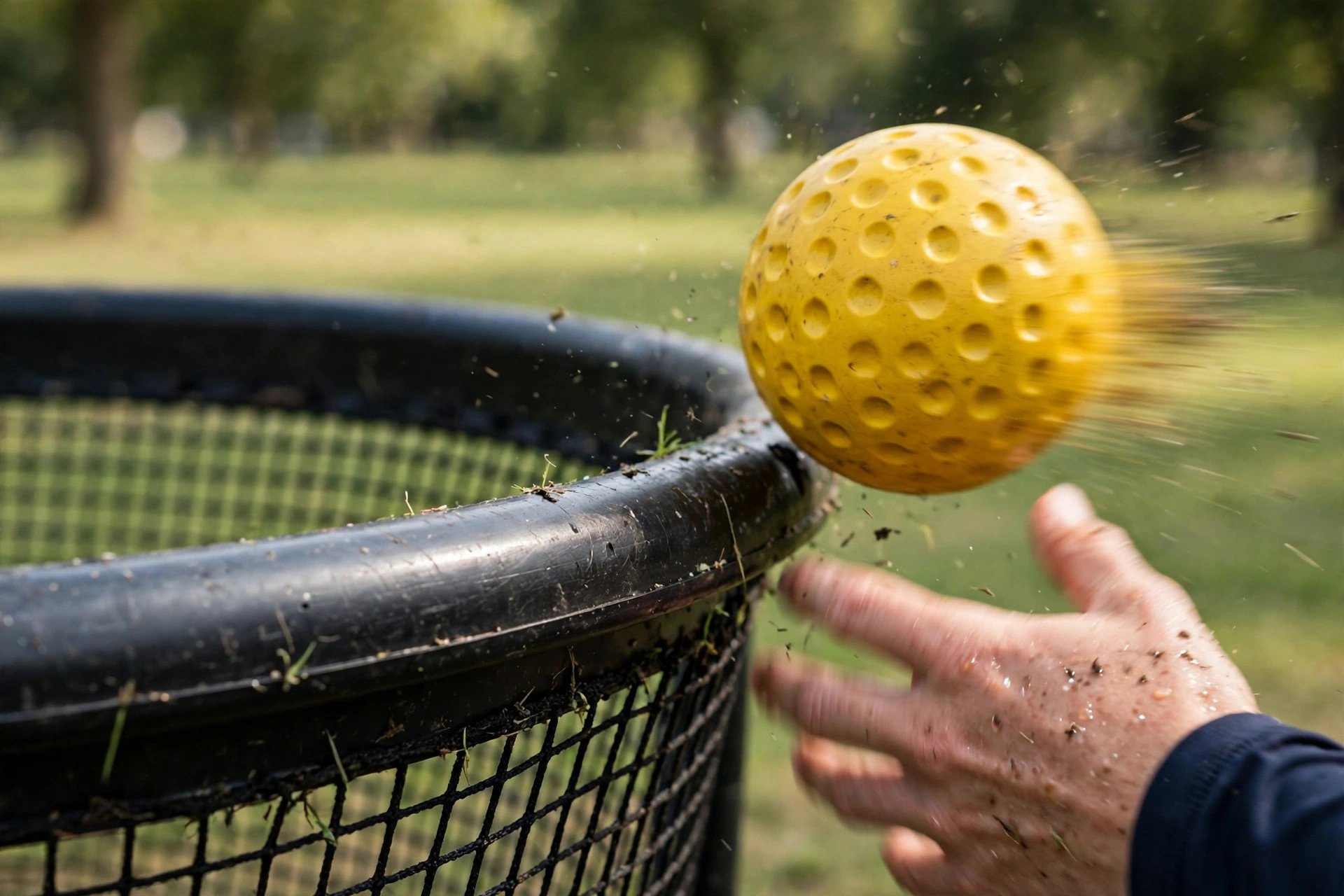
The spikeball rim rule is the first call every player learns. The ball clips the hard plastic ring around the net instead of bouncing off the netting, and it skips away flat and fast. You can usually hear a rim before you see it: a clean net bounce makes a soft thump, while a rim makes a sharp clack. On a serve, a rim is an illegal serve and the serving team loses the point under rally scoring. During a rally, the team that hit the rim loses the point on the spot. There is no gray area and no replay: if the ball touched rim, the play is dead.
Pockets: When the Net Steals the Rally
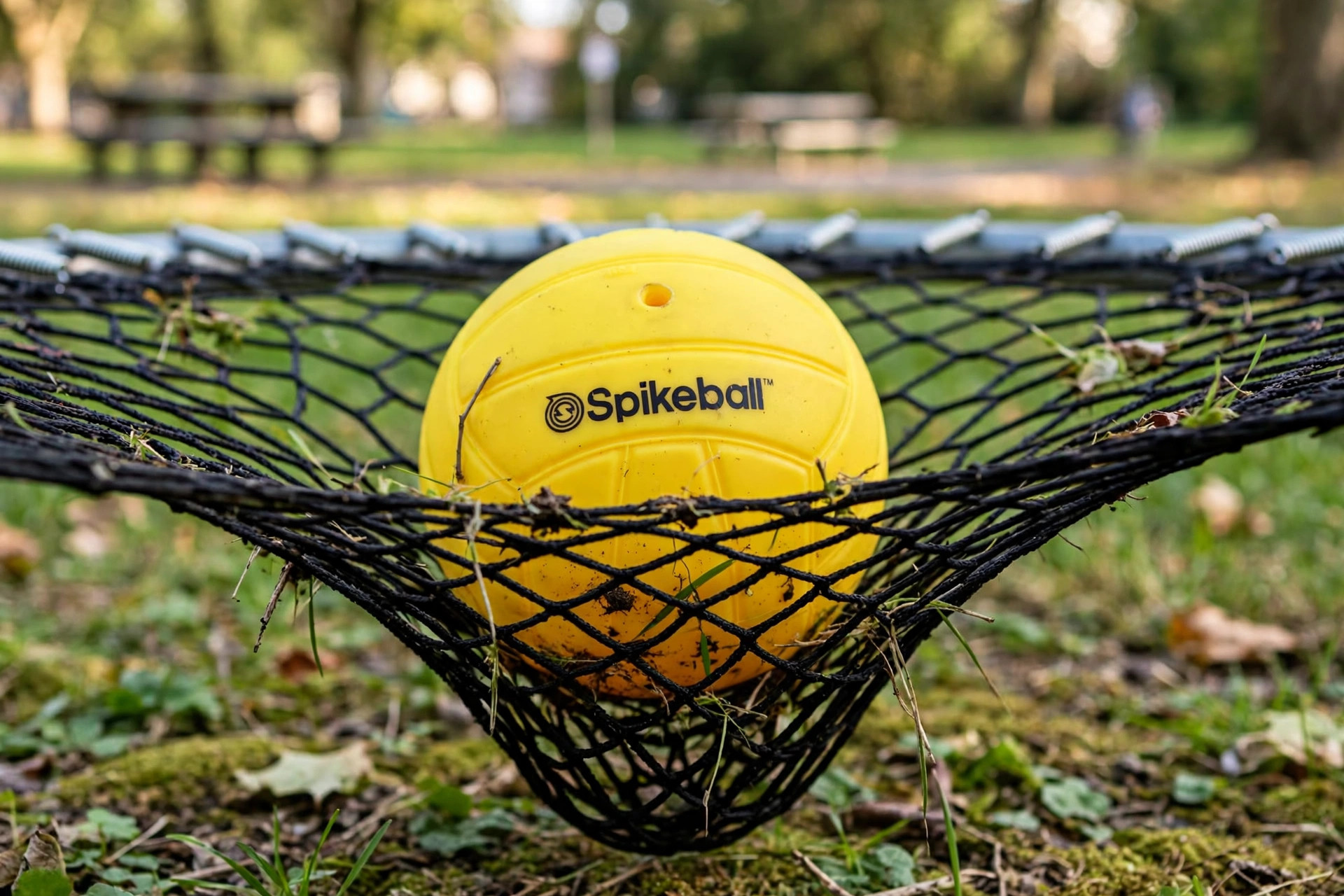
The spikeball pocket rule covers the strangest bounce in the game: the ball lands in a loose area of the net, sinks in deeper than it should, and rolls or pops out in a new direction, so the receiver never had a fair chance. On a serve, a pocket is a fault, just like a rim. In a rally, tournament play generally awards the point against the hitting team, while casual groups often replay the point. Pockets are mostly an equipment problem: a net stretched evenly, with no loose patches, produces far fewer of them.
Carries: Scooping, Holding and Double Touches
The spikeball carry rule is about how the ball leaves your hand: every touch must be one clean strike. The ball cannot rest in your palm, get scooped upward, or be guided toward the net. Carries happen most on defense, when a defender gets a hand under a low, hard spike late and cradles it for a split second. The same rule covers double touches: one player cannot hit the ball twice in a row. Ask one question: did the ball bounce off the hand, or did the hand move the ball? Bounces are legal; moving is a carry, and the carrying team loses the rally.
Self-Hits: When the Ball Comes Back at You
The spikeball self-hit rule handles the rally’s most awkward moment: you spike the ball onto the net, it rebounds straight back, and it hits you, the player who just struck it. That is a fault on your team, because your touch already counted, so the rebound striking you is effectively a second touch. The defense against self-hits is positioning: hit the ball and clear the space above the net immediately, so rebounds become your partner’s play.
Net Interference and Illegal Serve Receives
Net interference is any touch of the net or rim by a player while the ball is live: brushing the rim as you dive, steadying the set with a hand, or landing on the frame after a spike. The interfering team loses the rally. The illegal serve receive is the mirror image: a serve must bounce off the net before any receiver touches it, and if a served ball hits a receiver on the fly, the fault is on the serving team. Both calls share one habit: freeze when you are near the set.
How Spikeball Faults Are Called in Backyard vs Tournament Play
The faults themselves do not change between your yard and an event; what changes is how strictly they are called. Our comparison of backyard Spikeball vs tournament rules shows the full picture: tournaments call every rim and pocket, expect self-hits and carries to be called on yourself, and rarely replay points. Backyard groups often replay anything close, which is fine as long as everyone agrees before the first serve. A good middle ground: call rims and self-hits strictly, and replay pockets and borderline carries.
Preventing Faults: Net Tension and Clean Technique
Start with the net: pockets and many rim arguments come from a soft, uneven net. Tension the net evenly all the way around, and replace a stretched net before it starts stealing rallies. The firmer models in our guide to the best Spikeball sets hold their tension far longer. Then clean up technique: hit down through the ball instead of swiping across it, and rim hits drop; set with a flat, firm hand instead of open fingers, and carries drop.
Frequently Asked Questions
Is hitting the rim in Spikeball a fault?
Yes. A ball that strikes the rim instead of bouncing cleanly off the net is dead. On a serve it is an illegal serve, and during a rally the team that hit the rim loses the point. Rim hits are the easiest of all spikeball faults to call, because you can usually hear the sharp clack.
What is a pocket in Spikeball and how is it called?
A pocket happens when the ball sinks into a loose spot in the net and pops out at a changed angle instead of bouncing cleanly. On a serve, a pocket is a fault. During a rally, strict play awards the point against the hitting team, while many casual groups replay the point by agreement.
What counts as a carry in Spikeball?
A carry is any touch where the ball rests in the hand, gets scooped, or is guided instead of struck cleanly. It happens most on late defensive plays where the ball is lifted rather than popped up. Carries also cover double touches, where one player contacts the ball twice in a row.
What happens if the ball hits me after I spike it?
That is a self-hit, and it is a fault on your team. Your spike already used your touch, so the rebound striking you counts as a second contact and ends the rally. The fix is to clear the space over the net right after you hit.
Can you touch the net in Spikeball?
No. Any contact with the net or rim by a player while the ball is live is net interference, and that player’s team loses the rally. This includes brushing the rim on a dive or steadying the set with a hand.
Final Thoughts
Rims, pockets, carries, self-hits, and interference cover nearly every stoppage you will ever see. Learn what each one looks like, agree on how your group calls the two judgment calls, pockets and carries, and spikeball faults stop being arguments. What is left is the game itself: fast rallies, clean bounces, and points that are won instead of debated.

What is Spikeball: The Rules and How to Play

Complete Guide to the History of Spikeball