Best Delta Kites for Kids and Beginners8 min read
If you are buying a first kite, buy a delta. The triangular shape is the most forgiving design in the air: it launches with a short run or a helper holding it up, corrects itself after gusts, and stays flying in the light, uneven wind most parks actually get. Diamond kites look simpler and cost less, but they need steadier wind and more correction from the flyer. This guide explains how delta kites behave, which sizes suit which ages, and how to match a kite to your local wind. The picks below also appear in our guide to the best kites for beginners, narrowed here to the delta shape alone.
Our top picks, compared:
Why Delta Kites Are the Easiest First Kite
A delta has a keel, a triangular fin of fabric running down its center, and a spreader bar that holds the wings open. The keel works like the feathers on an arrow. When a gust pushes the kite sideways, the keel catches the wind and swings the nose back into line without the flyer doing anything. That self-correction is the whole reason beginners succeed with deltas and struggle with diamonds, which have no keel and rely on a long tail and constant small adjustments to stay pointed into the wind.
The swept wings help too. Instead of meeting a gust head-on across a flat sail, a delta spills some of the gust off its angled leading edges. The result is a kite that wobbles in rough air but rarely loops or dives, and a dive is what ends most first outings early. Our overview of the main types of kites shows where the delta sits next to sleds, box kites, and parafoils if you want the full picture before choosing a shape.
Deltas also fly across a wider wind window than most beginner shapes. A typical family delta lifts somewhere around 5 mph and stays manageable into the mid teens. A diamond of similar price usually needs a steadier 8 mph or more before it behaves. Wider windows mean fewer ruined outings, because the wind at a park rarely matches the forecast for long.
What Size Delta Kite Should You Buy?
Wingspan is the number that matters, and bigger is not automatically better. A large sail generates more lift in light wind, but it also pulls harder as the wind builds, and pull is what a small child actually feels through the line. Match the span to the flyer first and the wind second.
| Wingspan | Best for | What to expect |
|---|---|---|
| Under 45 in | Ages 3 to 5, with an adult launching | Gentle pull, needs a cleaner breeze to stay up |
| 45 to 60 in | Ages 5 to 8, and adult beginners | The all-round band, easy launch and moderate pull |
| 60 to 75 in | Ages 8 and up, teens, adults | Strong light-wind lift, firm pull in fresh wind |
| Over 75 in | Experienced flyers | Display presence, too much pull for young kids |
These bands are guidance, not rules. Two kites of the same span can pull quite differently depending on sail area and how flat the sail sits. If you are between sizes for a child, choose the smaller one. A kite a child can hold comfortably in a fresh gust gets flown again, and one that drags them across the grass does not.
Match the Kite to Your Wind
Wind is the variable beginners misjudge most. The National Weather Service Beaufort wind scale translates speeds into things you can see: at 4 to 7 mph (Force 2) wind is felt on your face and leaves rustle, at 8 to 12 mph (Force 3) leaves and small twigs stay in motion, and at 13 to 18 mph (Force 4) small branches move and dust lifts. Most beginner deltas do their best work in Force 2 and 3. Force 4 is flyable for a larger delta with an adult on the line, and beyond that most family kites should stay in the bag.
Ground conditions matter as much as the number. Wind that has passed over trees, houses, or a hill arrives in rolling turbulence, and a kite flown in that disturbed air surges and stalls no matter how good it is. A useful rule is to stand well clear downwind of obstacles, ideally a distance of several times their height, and to launch in the cleanest air you can find. Beaches and open fields forgive a lot of beginner technique for this reason.
The Pick With a Track Record Here
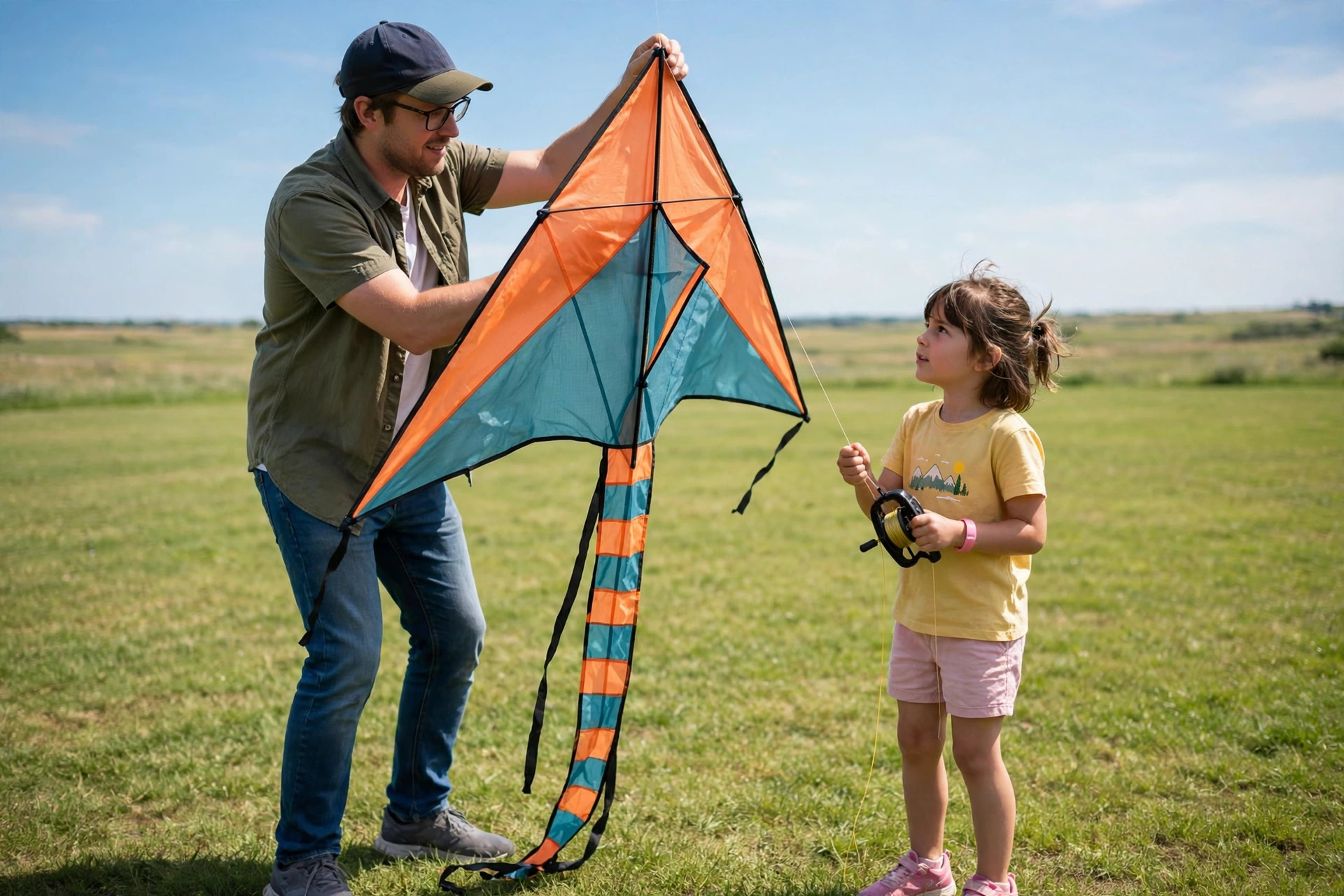
One kite in the table above has earned its place in a way the others have not. The Mint’s Colorful Life Rainbow Delta Kite is the best-selling product on this site: in last year’s affiliate sales data, roughly one in ten readers who clicked through to it bought one, a conversion rate near 10 percent and the highest of any product we track. That is sales evidence, not a test result, and we have not flown every delta in the table side by side. It is still meaningful. Products that disappoint beginners do not keep converting at that rate, because the listing gets abandoned for the next shiny option.
The kite itself fits the pattern this guide recommends. At 61 inches wide it sits in the span band that suits older kids and adult beginners, the manufacturer rates it for 5 to 18 mph, and it arrives as a complete kit with 300 feet of line on a handle and six ribbon tails. Nothing about it is exotic. It is a standard, well-sized delta that people buy, fly, and apparently do not regret.
For the other deltas in the table, judge them against a short checklist rather than the artwork on the sail:
- Sail fabric listed as ripstop nylon or polyester, not unspecified plastic
- Fiberglass or carbon frame spars, which flex instead of snapping
- Line and a handle or winder included in the box
- A stated wind range that starts at 6 mph or lower
- Attachment points for a tail, in case your local wind is gusty
Delta vs Diamond: Where the Diamond Still Wins
The honest counterargument is price and tradition. A basic diamond costs less than most deltas, folds smaller, and a child who learns on one learns real line feel, because the kite asks more of the flyer. In a steady coastal breeze, a well-tuned diamond with a long tail is a pleasant, calm flyer. Our comparison of the best kite shapes for beginners scores each shape on stability, wind range, and ease of launch if you are still deciding between shapes.
The diamond loses on the conditions beginners actually face: inland parks, gusty afternoons, and short outings where a kite that needs three launch attempts and constant correction eats the whole session. The delta’s keel and wide wind window are worth more than the price difference for a first purchase.
Mistakes That Make a Good Delta Fly Badly
Most failed first flights are site and setup problems, not kite problems. Running with the kite is the classic one. A short pull against the wind launches a delta, and sprinting just drags it through turbulent ground air and tires the flyer. Let out only 30 to 50 feet of line for the launch, get the kite above the ground turbulence, then feed line out gradually.

The second mistake is handing a big kite to a small child as the wind builds. Pull rises fast with wind speed, and a 65-inch delta in 15 mph wind is an adult handful. Swap roles instead: the adult holds the line in fresh wind and the child handles launches and landings. The third is packing a damp kite into its bag, which mildews the sail and weakens stitching. Dry it flat at home and it will last seasons.
If you want the wider shortlist beyond the delta shape, our guide to the best kites for beginners covers sleds and parafoils for very young kids alongside the deltas featured here.
Frequently Asked Questions
Can a 4-year-old fly a delta kite?
Yes, with an adult doing the launch and staying within reach of the line. Choose a delta under 45 inches, fly in 6 to 10 mph wind, and let the child hold the handle with both hands while the adult manages line length. The kite will still feel like theirs, and the adult absorbs the gusts.
Do delta kites need a tail?
Most fly well without one. The keel does the stabilizing work that a tail does on a diamond. A tail still helps in gusty inland wind, where it slows the kite’s movement and adds drag, and many deltas include ribbon tails or attachment points for that reason. Add one if the kite hunts side to side.
How much wind does a delta kite need?
Most beginner deltas are rated from about 5 mph, and the comfortable band for families is roughly 8 to 15 mph. Below 5 mph even a light delta will sink unless the flyer keeps moving. Above the rated maximum, pull and frame stress rise quickly, so check the rating printed for your specific kite.

Our Recommendations for the Best Stunt Kites that Will Blow You Away

How to Repair a Torn Kite and Broken Spars at Home