How to Fix a Slow or Sticky Carrom Board Surface10 min read
Few things kill a game faster than a slow carrom board. The striker dies halfway across the surface, coins stop a finger’s width short of the pocket, and every shot needs more force than it should.
The good news is that a slow carrom board is almost never a dead board. The usual causes are old powder, surface grime, humidity, or a tired finish, and each one has a fix that takes minutes rather than money. This guide works through the symptoms in order: a proper clean, fresh powder used correctly, polish for a worn finish, and the humidity fix most players never think of. If the board turns out to be warped or worn beyond home care, our roundup of the best carrom boards covers what to look for in a replacement.
Our top picks, compared:
Slow Carrom Board Symptoms at a Glance
Match what your board is doing to the likely cause before you start fixing. Treating the wrong problem, like adding powder to a dirty board, usually makes the slide worse.
| Symptom | Likely Cause | Fix |
|---|---|---|
| Striker stops short | Old, compacted powder and surface grime adding friction | Clean the surface thoroughly, then apply a fresh, light dusting of powder |
| Coins drift off line | Uneven powder, thicker in some patches than others | Brush off all the old powder and reapply one thin, even layer |
| Patchy slide | Skin oil, drink rings, or sticky spots on the finish | Spot-clean the dull patches with a barely damp cloth, dry fully, then dust lightly |
| Powder clumps | Too much powder, or powder that has absorbed humidity | Remove the lot, dry the board, and store the powder sealed in a dry place |
| Board feels rough | Grit worked into the finish, or a finish that has worn through | Polish the surface; if the roughness survives polishing, the finish needs professional attention |
Work down the table in order. Most boards are fixed by the first two rows, and the rest of this guide is the detail behind each fix.
Why Boards Slow Down
A carrom surface is polished plywood, and it stays fast only while that polish stays clean and dry. Every game works against it a little: powder packs down into the finish, fingers leave oil along the baselines, and dust settles into the grain.
Humidity is the quiet cause. Plywood absorbs moisture from damp air, the surface swells almost invisibly, and friction climbs. A board that plays beautifully in winter can turn sticky in a humid summer without anything being spilled on it.
Age finishes the list. Years of strikers crossing the same lines wear the polish thin, and once the bare wood shows through, no amount of powder restores the original glide. That is a different problem from dirt, and it needs polish, or eventually a new board.
Step 1: How to Clean a Carrom Board the Safe Way
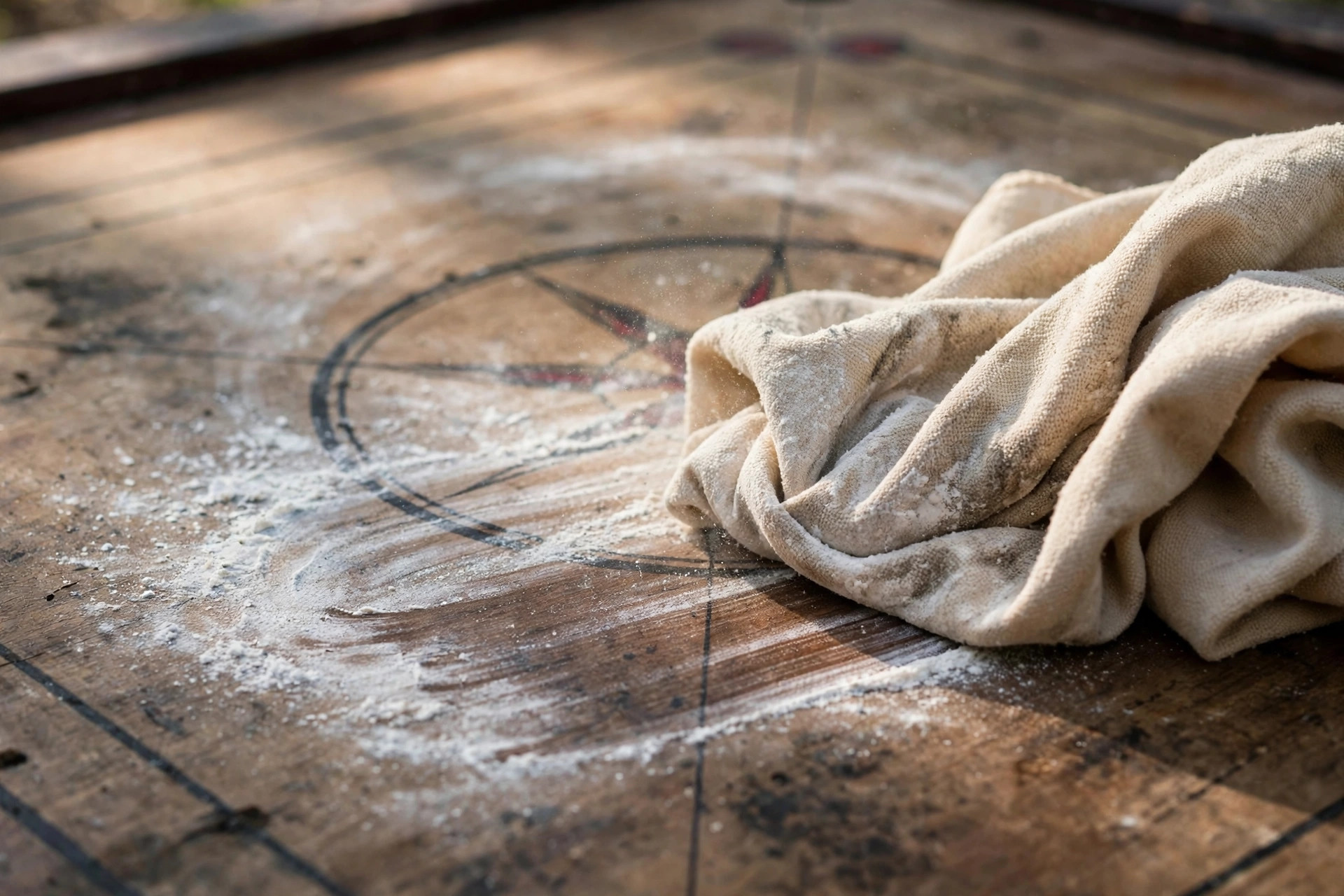
Knowing how to clean a carrom board properly is the fix for most slow boards, and it comes before powder or polish. Start dry: wipe the whole surface with a soft cloth, working from the centre outward, to lift dust and loose old powder. For grime that stays behind, use a cloth that is barely damp with water, nothing more. Wipe the dull areas, then dry the surface immediately with a second cloth. Never soak a carrom board, never use household cleaners or solvents, and never play on a surface that still feels cool and damp. Let the board sit for a few minutes after cleaning so any trace of moisture is gone. Powder applied to a damp surface clumps on contact, which trades one problem for another.
For the full routine beyond this quick fix, our carrom board maintenance guide covers powder, polishing, warping and storage on a regular schedule.
Step 2: Carrom Board Powder, Used Correctly
Fresh carrom board powder is what makes a clean surface fast, but only in a thin layer. Use a fine boric acid based powder made for carrom boards, sprinkle a small pinch across the surface, and spread it evenly with your palm or a soft cloth. Then brush off the excess: the right amount is a dusting you can barely see. More is not faster. A thick layer clumps under the striker, slows coins unpredictably, and works grit into the finish. If your board was slow with powder already on it, the old layer was probably the problem, which is why cleaning always comes first.
Skip household substitutes entirely. Talc, flour, and starch powders absorb moisture, cake onto the surface, and can stain the finish. Proper carrom powder is cheap and lasts a long time precisely because so little is used.
Step 3: Carrom Board Polish for a Worn Finish
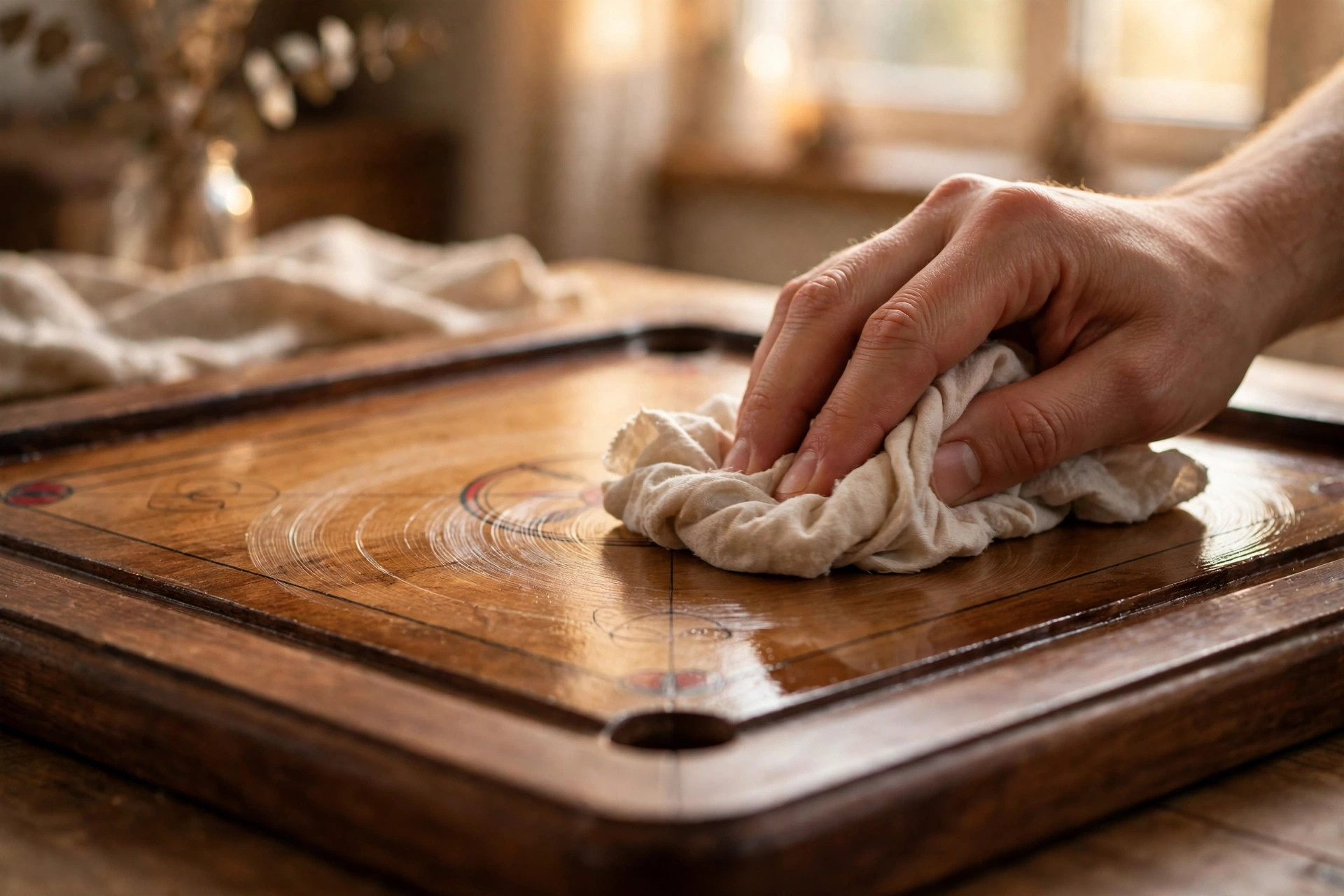
When a clean, correctly dusted board still drags, the finish itself is tired, and carrom board polish is the next step. Apply a small amount of polish made for carrom boards, or a plain car wax, in a thin layer with a cotton cloth, following the product’s directions. Let it haze, then buff it off thoroughly. The surface should feel slick and completely dry afterwards, never greasy. Residue left behind grabs the striker, which is the exact opposite of the goal, so buff longer than feels necessary.
Polish only every few months at most. It restores a worn finish; it does not rebuild one. If a board still plays slow after a proper clean, fresh powder, and a polish, the finish has likely worn through, and that is beyond a home fix.
The Sticky Carrom Board Fix for Humidity and Heat
If your board slows down every summer and recovers every winter, humidity is your culprit, and the sticky carrom board fix is about storage and patience rather than products. Move the board to a dry, indoor room and let it sit flat for a day or two before judging the surface; plywood needs time to give up absorbed moisture. Never force the drying with heat. A board parked beside a radiator or dried in direct sun can warp or crack its finish, turning a sticky board into a ruined one. Gentle, dry air and time are the whole treatment.
Prevention beats the cure. Store the board indoors, flat or upright on its edge, away from damp walls and unheated rooms, and keep the powder in a sealed container. A board stored dry rarely needs the rest of this guide.
When the Problem Is the Board, Not the Surface
Sometimes a slow carrom board is telling the truth about itself. Lay a straight edge across the surface: a rocking straight edge, or light showing under it, means the board has warped, and a warped surface will never slide evenly again. Check the finish too. Pale, rough patches where the polish has worn through, cracks in the surface, or frame joints that have loosened all point the same way.
Home care maintains a sound board; it cannot rebuild a failed one. When that day comes, replacement is the honest fix, and the boards in our guide to the best carrom boards are the ones with finishes and frames built to stay fast for years.
Frequently Asked Questions
How do I fix a slow carrom board?
Start with a clean. Wipe the surface with a dry cloth, then a barely damp one if grime remains, and let it dry fully. Apply a thin, even dusting of proper carrom powder and brush off the excess. If the board still drags, polish the finish. Most slow boards are fixed by the clean and the fresh powder alone.
Can too much powder make a carrom board slower?
Yes, and it is one of the most common causes. A thick layer clumps under the striker, drags on the coins, and packs grit into the finish. The correct amount is a dusting you can barely see. If in doubt, brush some off: less powder, evenly spread, slides faster than more.
What is the best powder for a carrom board?
A fine boric acid based powder made specifically for carrom boards. It is ground to reduce friction without harming the polished finish. Avoid talcum powder, flour, and other household substitutes, which absorb moisture, cake onto the surface, and can stain the plywood over time.
How often should I clean my carrom board?
Give the surface a quick wipe with a soft, dry cloth after every session, and a more thorough clean whenever the slide feels uneven or the powder starts clumping. That thirty-second habit after each game is what keeps a board fast between deeper maintenance sessions.
Can a warped carrom board be made fast again?
Not reliably. A slight bow sometimes eases if the board rests flat in a dry room for a few days, but a truly warped board will never slide evenly, because the surface itself is no longer flat. Powder and polish cannot fix geometry. Dry, flat storage is the prevention, and replacement is the cure.
Final Thoughts
A slow carrom board is usually a dirty, damp, or over-powdered board, not a broken one. Clean it properly, dust it lightly with the right powder, polish it when the finish tires, and store it dry. Do those four things in that order, and the glide comes back, along with the shots that were stopping short.
Carrom Striking Techniques: Grip, Aim and the Basic Shots

Carrom Rules Variations Around the World: Family, Tournament and Duboo