
How to Choose a Carrom Striker: Weight, Size and Material10 min read
The carrom striker is the only piece of equipment you actually shoot with, yet most players use whatever came in the box and never think about it again. That is a missed opportunity. The striker’s weight, size and material decide how it slides across the board, how hard it drives the coins, and how much feel you keep on soft shots.
Choose a carrom striker that matches your hand, your flick and your board, and shots you already know how to play suddenly become more reliable. Pick badly, and even a good board feels clumsy. This guide breaks the choice down into the three things that matter, weight, size and material, and ends with the tournament limits every striker has to respect. If you are still choosing the board itself, our roundup of the best carrom boards covers the surfaces these strikers are made to glide on.
Our top picks, compared:
Why the Right Striker Changes Your Game
Every shot you play travels through the striker. A striker that is too heavy for your flick ploughs through delicate positions and scatters coins you meant to nudge. One that is too light stops dead on long shots and leaves rebounds short. The right striker also protects your technique. When the weight suits your natural flick, you stop forcing shots, and the clean striking motion described in our guide to carrom striking techniques becomes much easier to repeat. Think of the striker the way a golfer thinks of a putter. It is a small, cheap piece of equipment that touches every single shot, so it deserves more attention than it usually gets.
Carrom Striker Weight, Size and Materials at a Glance
Here is the whole market in one table. The sections below explain how to pick your row.
| Striker Type | Weight | Best For |
|---|---|---|
| Standard acrylic | About 13 to 15 g | All-round home and club play; the balanced default most players should start with |
| Heavy striker | 15 g and above for casual sets | Power breaks, long rebounds and players with a strong, fast flick |
| Light striker | About 7 to 10 g | Fine cuts, soft touch shots, children and players who value feel over force |
| Ivory-style / bone | About 10 to 15 g | Traditional feel and a smooth glide; classic sets and collectors |
| Metal | About 15 g and above | Durability and weight in a slim profile; check tournament legality before buying |
Two limits frame the whole table. Under the International Carrom Federation laws, a tournament striker may weigh no more than 15 g and measure no more than 4.13 cm across. Anything heavier or wider is a casual-play piece only.
Choosing Carrom Striker Weight: Light, Standard or Heavy
Carrom striker weight is the single biggest difference you will feel. Weight controls momentum: a heavier striker carries more energy into the coins, holds its line through clusters, and keeps travelling after contact. A lighter one slows down faster, which is exactly what you want when a coin sits an inch from a pocket.
Standard strikers around 13 to 15 g suit most adults and most boards. They break a packed centre well, rebound honestly, and still allow a soft touch with practice. If you only ever own one striker, own one of these.
Light strikers, roughly 7 to 10 g, reward a delicate game. They make fine cuts and drop shots easier to judge, and children find them far simpler to flick. The trade-off shows up on the break and on long rebounds, where a light striker can die before it arrives.
Heavy strikers at or above 15 g are specialists. They smash open stubborn clusters and drive coins from distance, but they punish sloppy aim and are harder to stop near a pocket. Note that anything over 15 g breaks tournament carrom striker rules, so keep heavy strikers for home games.
Carrom Striker Size: Diameter and Thickness Explained
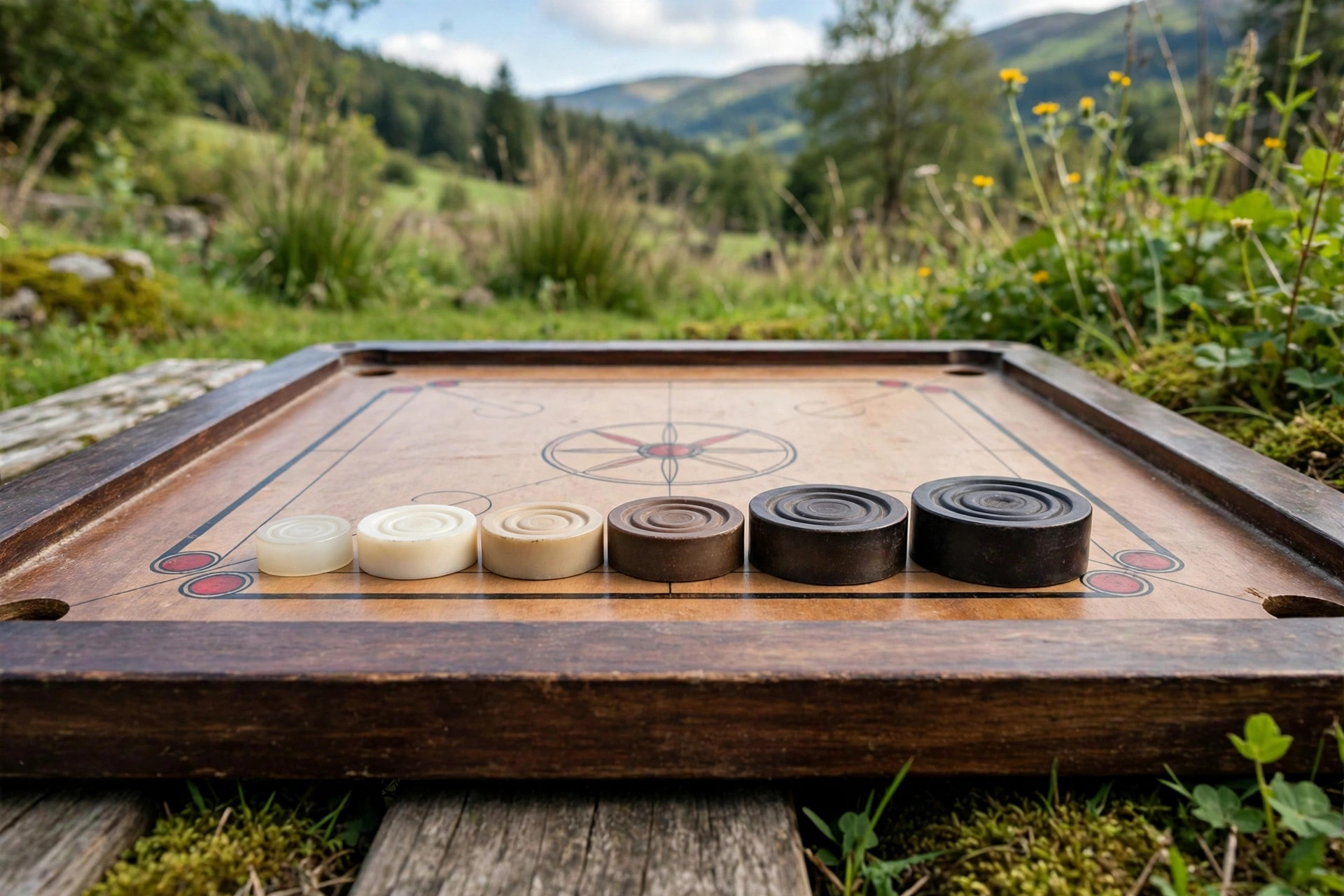
Striker size comes down to two measurements: diameter and thickness. Most strikers sold for home and club play measure between about 3.5 cm and 4.13 cm across, with 4.13 cm the tournament maximum. A wider striker presents a bigger striking face, which makes straight shots forgiving and helps the striker hold its line. Smaller strikers feel nimble and are easier for small hands to control, which is why junior sets often include them. Thickness matters less, but it is not nothing. A slightly thicker striker sits taller under your finger and gives the flick more to push against. A very thin striker can slip or tilt under a hurried shot. Whatever size you choose, the edge should be smooth and rounded, never sharp, so it slides instead of digging in.
The Best Carrom Striker Material for Your Game
Ask five experienced players about the best carrom striker material and you will hear five answers, because material changes feel more than performance. Still, each option has a clear character.
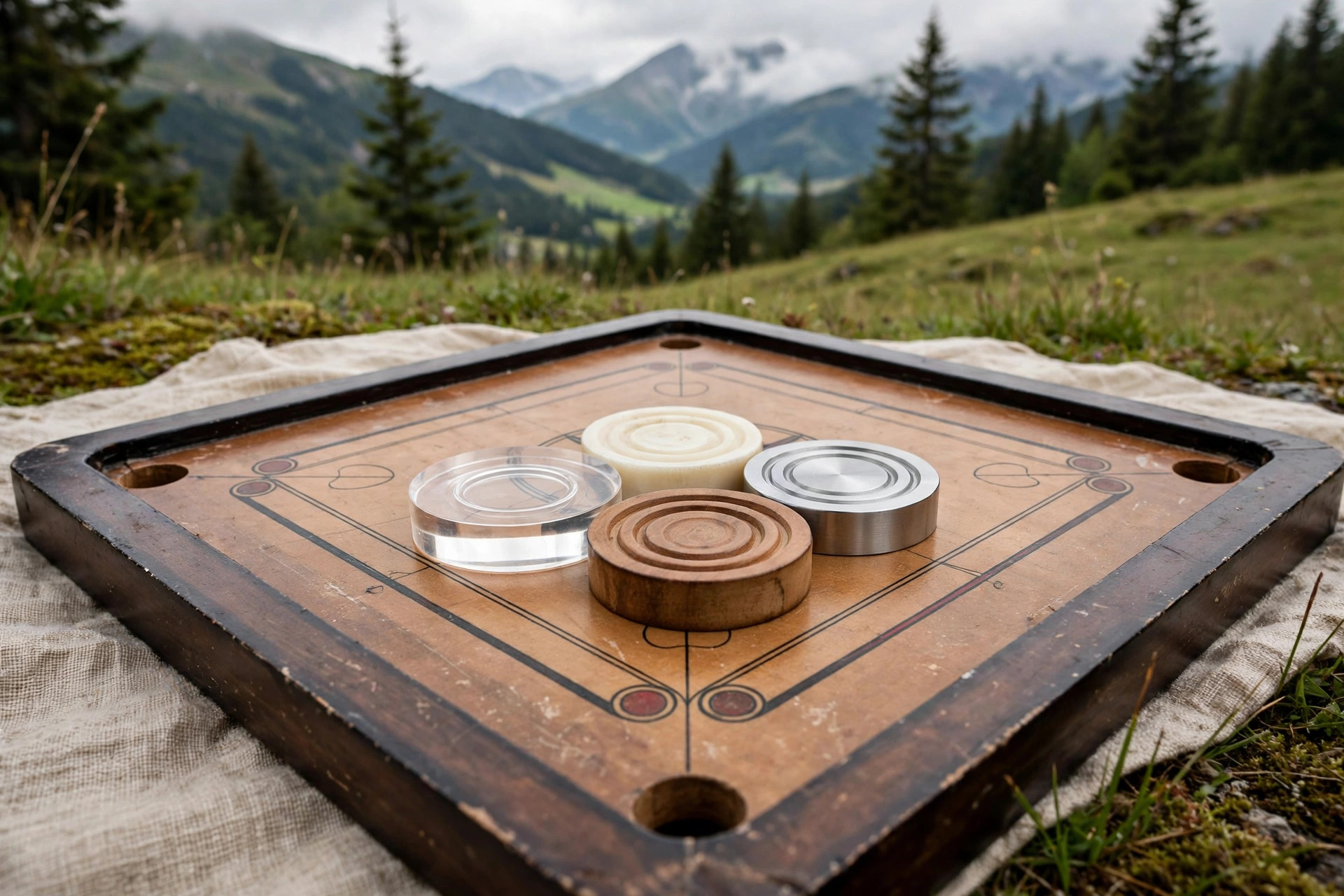
Acrylic is the modern default. It is consistent, affordable, slides predictably, and shrugs off the small knocks that chip natural materials. Most standard and light strikers are acrylic.
Ivory-style and bone strikers are the traditional choice. They feel dense and smooth in the hand and glide beautifully on a polished board. Genuine ivory is neither legal nor ethical to buy new, so look for bone or quality ivory substitutes, and expect to pay more and care for them gently.
Metal strikers pack the most weight into the slimmest profile. They are nearly indestructible and drive coins hard, but many players find them harsh on fine shots, and they may not be permitted in organised play.
Wood strikers appear in inexpensive sets. They are light and kind to the board, but they wear, warp slightly with humidity, and slide less consistently than acrylic.
Tournament Carrom Striker Rules: Weight and Size Limits
If you plan to play in any organised event, the tournament rules narrow your choice before you start. Under the Laws of Carrom set by the International Carrom Federation, the striker must weigh no more than 15 g and must not exceed 4.13 cm in diameter, and officials can check both before a match. That has two practical consequences. First, a striker sold as extra heavy for home power play is simply illegal in a tournament, however well it works in your living room. Second, it pays to practise with the striker you would actually be allowed to use, so your touch in casual games matches your touch under tournament conditions. Casual players can ignore all of this, of course. But buying a 15 g striker from the start keeps every option open at no cost to your home game.
Match the Striker to Your Board and Style
The board matters too. A fast, freshly powdered board makes even a standard striker feel lively, while a slow or worn surface may need a heavier striker to carry coins home. The tournament-grade boards in our guide to the best carrom boards have the flat, polished finish that lets a lighter, more skilful striker shine. Your style matters just as much. Power players who attack the break and shoot long rebounds lean heavy. Touch players who live on cuts, drops and doubles lean light or standard. Honest beginners should start standard and only move once they know which shots they actually play most. If you can, own two: a standard striker for everyday games and one specialist, light or heavy, for the shots your main striker handles worst.
Striker Buying Mistakes to Avoid
Buying the heaviest striker in the shop. Weight feels impressive in the hand and ruins delicate shots on the board. Power you cannot control is just scatter.
Ignoring the diameter. A striker wider than 4.13 cm is barred from tournament play, and very wide strikers also crowd the baseline for smaller hands.
Judging by looks alone. Decorative carving and shiny finishes mean nothing if the edge is rough. Run a fingertip around the rim: it should be perfectly smooth.
Using a chipped striker. Even a small chip changes how the striker leaves your finger and meets the coin. Retire damaged strikers; they are cheap to replace and expensive in lost games.
Frequently Asked Questions
What weight carrom striker is best for beginners?
A standard striker of about 13 to 15 g is the best starting point. It is heavy enough to break the centre and hold a line on rebounds, yet light enough to learn soft shots without fighting the equipment. Move lighter or heavier only after a few months of regular play.
What size is a standard carrom striker?
Most standard strikers measure roughly 4 cm across, and the tournament maximum diameter is 4.13 cm under International Carrom Federation rules. Thickness varies by maker, but a striker that sits comfortably under your flicking finger without tilting is the right size for your hand.
Are heavier carrom strikers better?
Not better, just different. A heavy striker drives coins harder and holds its line through clusters, which suits power players and slow boards. It also scatters delicate positions and is harder to stop near a pocket. Above 15 g it is illegal in tournament play, so heavier is not automatically an upgrade.
What is the best material for a carrom striker?
For most players, acrylic is the best all-round material: consistent, durable, affordable and predictable on any board. Bone and ivory-style strikers offer a traditional feel and a lovely glide for players who value touch. Metal suits players who want maximum weight and durability in a slim profile.
Can I use any striker in a tournament?
No. Tournament rules cap the striker at 15 g in weight and 4.13 cm in diameter, and officials may measure and weigh it before a match. Strikers that exceed either limit, including many heavy metal designs sold for home use, cannot be used in organised competition.
Final Thoughts
Learning how to choose a carrom striker takes ten minutes and pays off in every game you play afterwards. Start with a standard acrylic striker near 15 g, respect the 4.13 cm size limit if tournaments are in your future, and add a light or heavy specialist only when your style tells you to. The striker is the smallest purchase in carrom and the one your fingers will notice most.

2-Player vs 4-Player Carrom: Strategy Differences That Matter

Carrom Queen Rules Explained: Covering, Points and Common Disputes
