
Carrom Board Maintenance: Powder, Polishing, Warping and Storage10 min read
A carrom board that glides beautifully one month can feel sticky and slow the next, and the difference is almost never the board itself. It is upkeep. Carrom board maintenance is simple, quick work: the right powder, an occasional polish, a few checks, and storage that keeps the plywood flat. Skip that routine and the surface collects grime, the striker grips instead of sliding, and the board can warp beyond what any powder can save. Occasional care protects a board for years. Good boards reward the effort most, because their polished plywood surfaces are built to stay fast. If you are still choosing one, our roundup of the best carrom boards covers the surface finishes and frame builds that hold up best over time.
Our top picks, compared:
Why Carrom Board Maintenance Matters
Carrom is a game of tiny margins. The striker and coins move on a near-frictionless surface, and anything that changes that friction, dust, skin oil, humidity, old powder caked into the finish, changes the game. Shots that should glide stop short, and rebounds come off the frame at odd speeds. The playing surface is plywood with a polished finish, and plywood is wood: it absorbs moisture, reacts to heat, and wears where the striker passes most. Maintenance is really moisture and friction management, and both are easy when you stay ahead of them. If you are new to the game itself, our guide on how to play carrom covers setup and rules, so this article can stay focused on keeping the board itself in shape.
Carrom Board Maintenance Schedule at a Glance
None of this is frequent or difficult. Here is the whole routine on one schedule:
| Task | How Often | What You Need |
|---|---|---|
| Powder application | A light dusting before each session, only as needed | Carrom board powder (boric acid based), a soft cloth for spreading |
| Surface polishing | Every few months, or when the slide feels uneven | Carrom board polish or a small amount of car wax, soft cotton cloth |
| Frame check | Every few months | Screwdriver for loose screws, eyes on joints and rebound surfaces |
| Pocket net check | Every few months, and whenever coins stop dropping cleanly | Replacement nets if torn, a quick shake-out of dust and debris |
| Storage | After every session | A dry, flat or upright spot indoors, away from sun and damp |
The pattern: powder is per-session, everything else is a few times a year, and storage is a habit rather than a task.
Powder: The Right Amount, the Right Way
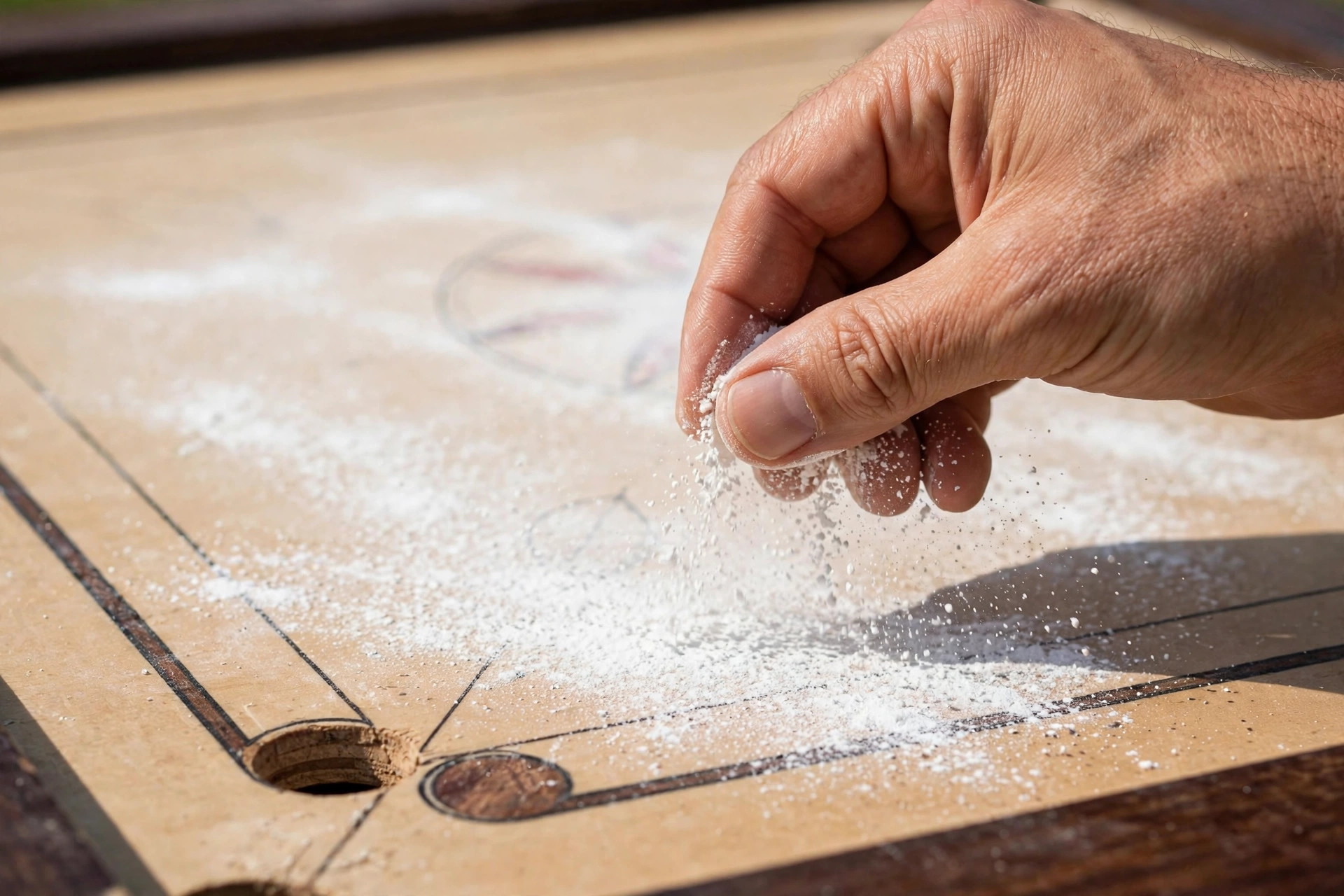
Carrom board powder is what makes the surface fast. The standard is a fine boric acid based powder made for carrom; it reduces friction without damaging the finish. Spread a small pinch evenly across the playing surface with your palm or a soft cloth, then brush off the excess. The mistake most players make is using too much. A thick layer feels fast for two shots, then clumps, slows the coins, and works grit into the finish. A light, even dusting that you can barely see is the right amount. If the striker leaves a visible trail, you have overdone it. Never substitute household powders. Talc, flour, and starch-based powders absorb moisture, cake onto the surface, and can stain the finish. When in doubt, less proper powder beats more of the wrong kind.
How to Polish a Carrom Board Surface
Knowing how to polish a carrom board brings back the glide when powder alone stops helping. Start by wiping the surface with a dry, soft cloth to lift dust and old powder. If the surface feels grimy, a cloth barely dampened with water is enough; never soak the plywood. Apply a small amount of polish made for carrom boards, or a plain car wax, in a thin layer with a cotton cloth. Let it haze, then buff it off thoroughly. The surface should feel slick and dry, not greasy. Leftover polish residue grabs the striker, which is the opposite of what you want. Polish every few months at most. The finish on a good board is durable, and polishing is about restoring it, not rebuilding it. If a board still plays slow after a proper clean and polish, the finish itself may be worn, which is a board problem, not a maintenance one.
Frame and Pocket Net Checks
The frame does more than hold the board square. Its inner faces are the rebound surfaces, so dents, warping, and loose joints all change how coins bounce. Run your hand along each frame rail now and then, and tighten any screws that have worked loose. Check the corner pockets too. The nets underneath catch every potted coin, and they tear, stretch, and fill with dust over time. A torn net drops coins on the floor mid-game; a clogged one slows the drop. Shake the nets out during your regular check, and replace them when the mesh tears. They are cheap, standard parts. These checks take two minutes and belong in the same session as polishing, which keeps carrom board maintenance to a handful of short sessions a year.
Preventing and Fixing Warping
Warping is the one problem maintenance cannot fully reverse, so prevention matters most. Plywood warps when one face absorbs more moisture than the other, or when the board is stored leaning under uneven pressure in a damp or hot spot. Keep the board out of damp basements, unheated garages, and direct sun through a window. Never leave drinks or wet items sitting on the surface. If you play outdoors, bring the board back inside the same day. As a warped carrom board fix for a slight bow, laying the board flat with the convex side up and resting gentle, even weight on it for a few days in a dry room sometimes eases it back. Severe warping, though, is permanent: the surface will never play true again, which is why storage, covered next, is the real fix.
Carrom Board Storage That Protects the Surface
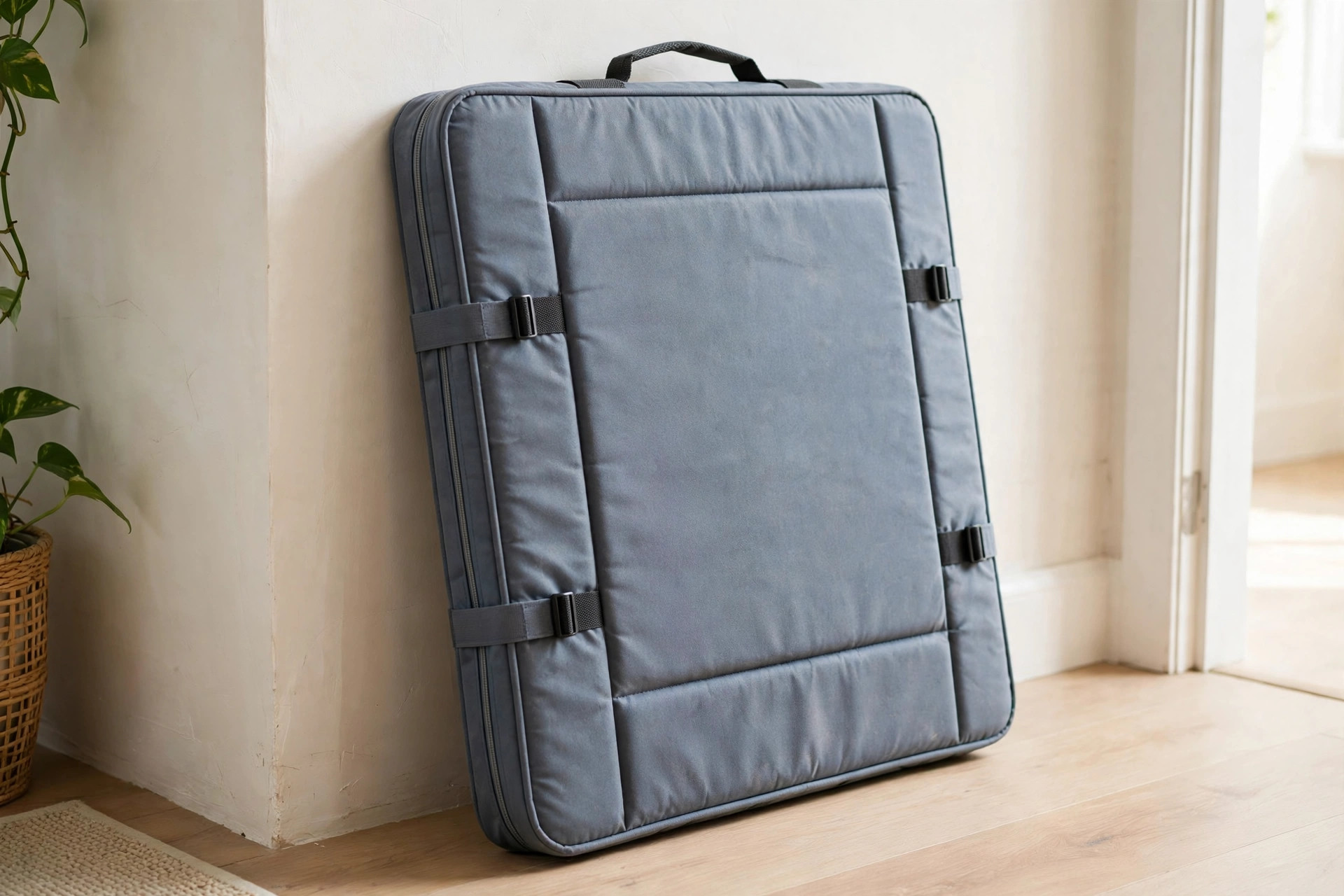
Carrom board storage has one goal: keep the board flat, dry, and unstressed between games. Store it flat on a level surface, or upright on its edge against a wall, never leaning at an angle on two corners, which twists the frame over time. Keep it indoors in a dry room, away from radiators, sunny windows, and damp exterior walls. If you store it upright, a board cover or even an old bedsheet keeps dust off the surface and stops anything leaning against it from scratching the finish. Wipe the board down before you put it away, and leave old powder off a stored board: brush it clean, because powder left sitting for months absorbs moisture and cakes. Stored this way, the boards in our guide to the best carrom boards will keep the fast, even surface they had on day one.
Mistakes That Ruin a Board
- Water on the surface: washing a carrom board or playing with wet hands swells the plywood and ruins the finish; dry cloths only, barely damp at most.
- The wrong powder: household powders cake, stain, and slow the board; use powder made for carrom, sparingly.
- Storing it damp or leaning: a board put away wet, or left leaning in a garage corner, is a warped board in waiting.
- Skipping the wipe-down: dust and old powder left on the surface grind into the finish with every shot; thirty seconds with a cloth after a session is the cheapest maintenance there is.
Frequently Asked Questions
How often should I apply carrom board powder?
Only as needed, and lightly. A small pinch spread evenly before a session is plenty when the surface feels like it is gripping. If the board still slides well from last time, skip it. Too much powder clumps and slows play, so judge by feel rather than habit, and always brush off the excess.
What powder is best for a carrom board?
Use a fine boric acid based powder made specifically for carrom boards. It is ground to reduce friction without harming the polished finish. Avoid talcum powder, flour, and other household substitutes, which absorb moisture, cake onto the surface, and can stain the plywood over time.
Can a warped carrom board be fixed?
A slight bow can sometimes be eased by laying the board flat, convex side up, with gentle even weight on it for a few days in a dry room. Severe warping is permanent, because the plywood layers have deformed unevenly. Prevention, meaning dry, flat or properly upright storage, is the only reliable answer.
How should I store a carrom board when not in use?
Store it flat on a level surface or upright on its edge indoors, in a dry room away from sunlight, radiators, and damp walls. Wipe it clean first and brush off old powder. A cover keeps dust and scratches off the finish. Never lean it at an angle or leave it in a damp garage.
How do I clean a carrom board without damaging it?
Wipe the surface with a soft, dry cloth to remove dust and old powder. For grime, use a cloth barely dampened with water and dry the surface straight away. Never soak the board, use harsh cleaners, or scrub the finish. A clean, dry surface plus the right powder keeps the glide without risking the plywood.
Final Thoughts
Carrom board maintenance is a small set of habits: a light dusting of the right powder, a polish a few times a year, quick frame and net checks, and dry, flat storage. Do those consistently and the board stays fast, true, and ready for the next game, year after year.
How to Fix a Slow or Sticky Carrom Board Surface

9 Best Carrom Boards to Play Your Next Game
