Spikeball Strategy 101: When to Hit On 2 and When to Play It Safe9 min read
Your team gets three touches to return the ball, but the rally is often decided on the second one. Hit on 2 and you attack before the defense is ready. Use all three touches and you get a cleaner, more controlled shot. Good spikeball strategy is mostly knowing which of those two choices fits the moment. Beginners tend to pick one style and stick with it; better players make the decision fresh on every rally, based on the set, the defense, and the score. None of it requires a fancy set, though a firm, even net like the ones in our roundup of the best Spikeball sets makes every touch more predictable.
Our top picks, compared:
Spikeball Strategy Starts With the Second Touch
Every rally gives your team a receive, and then a choice. The second touch can be a set for your partner’s third-touch attack, or it can be the attack itself. That choice is the heart of spikeball strategy because it controls the tempo of the rally. A third-touch attack gives the defense time to get into position, but it is usually the harder, better-placed shot. An attack on 2 trades power and placement for surprise and speed. Neither option is correct in general; each one is correct in specific situations.
What Hitting On 2 Actually Does
To hit on 2 means your team’s second contact is the shot onto the net, skipping the set entirely. Done well, it does three things:
- It steals time: defenders expect a set first, so they are still moving into position when the ball is already coming off the net.
- It punishes lazy defense: a team that drifts or watches the set gets beaten by early attacks.
- It changes the angle: a quick touch near the net can be dropped short or pushed wide before the defense spreads out.
The cost is control: the second touch usually comes from a less balanced position, so your error rate climbs. Hitting on 2 is a calculated risk, not a free one.

When to Hit On 2: The Green-Light Situations
The set lands right at the net: if the first touch pops the ball up tight to the net with a clean angle, the second touch is already in attacking position.
The defense is out of position: watch for a defender turned around, backpedaling, or both defenders stacked on one side.
The serve receive is predictable: when the serving team keeps putting the ball in the same spot, the receiver can plan the on-2 attack before the serve is even hit.
You need a momentum change: after losing several rallies in a row, an aggressive on-2 attack can break the pattern and forces the other team to respect the early hit for the rest of the game.
When to Play It Safe and Use the Third Touch
The first touch is off the net: a receive that lands several feet away cannot be attacked well on 2; set it and keep the rally alive.
The defense is set and reading you: against a strong defensive team already in position, an on-2 hit is just an easier ball for them to dig.
The score is tight late: late in a close game, an unforced error on 2 gives away a point you cannot afford.
Your partner has the better angle: if your teammate is in perfect position for the third touch, forcing your own on-2 attempt wastes the best look your team will get.
Read the Defense Before You Decide
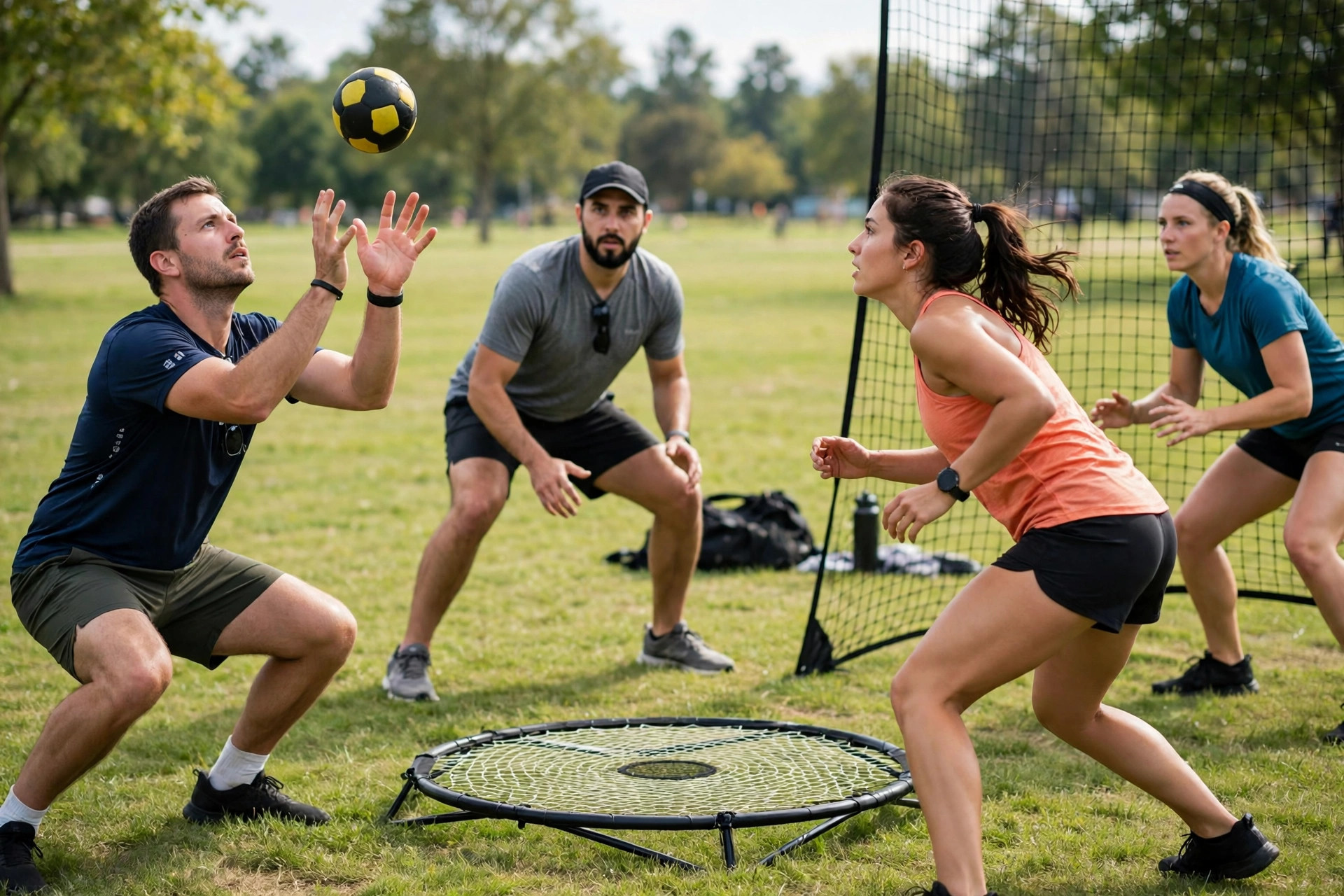
The decision should start before your team even touches the ball. As the serve or shot comes over, glance at both defenders. If they are split wide and set, the middle and the set attack are your friends. If they are cheating toward one side, the early hit to the open side is there. If one defender is clearly weaker, both options should be aimed at that player. Positioning cuts both ways: the same reads apply when your team is defending, and our guide to Spikeball defense positioning covers how good defenders take the on-2 option away from you.
The Hit On 2 Decision Chart
Here is the whole decision in one table. Run through it in order during a rally and the right choice usually becomes obvious.
| Situation | Hit On 2? | Why |
|---|---|---|
| Perfect set at the net | Yes | The ball is already in attacking position; setting again only helps the defense |
| Off-net set | No | A second-touch attack from distance is low percentage; set it for a balanced third touch |
| Strong defensive team | Rarely | A set, positioned defense digs early hits easily; use the third touch to aim away from them |
| Weak server receiving | Yes | Attack the weaker receiver early, before they can settle into the rally |
| Late in a close game | No | An unforced error costs more now; take the controlled shot and make them earn the point |
Spikeball Setting Tips That Make Both Options Work
- Set to the net, not to your partner: a set that arrives tight to the net gives the hitter the choice of attacking on 2’s timing or taking a full third-touch swing.
- Call it early: a simple “you” or “mine” on the second touch stops the hesitation that ruins both options.
- Use a soft first touch: a controlled receive that pops up instead of spraying sideways creates the perfect set at the net.
- Practice the fake: occasionally shaping up for a set and hitting on 2 instead keeps defenders honest.
A sagging net ruins all of this, because sets bounce unpredictably. If your set is worn out, the firmer models in our best Spikeball sets roundup keep touches true enough for these decisions to matter.
Common On-2 Mistakes
- Deciding before the rally: if you plan to hit on 2 no matter what, the defense reads it and the surprise is gone.
- Swinging from too far out: an on-2 attempt from several feet off the net is a low-percentage prayer.
- Telegraphing the hit: a big wind-up tells the defense exactly what is coming; the best on-2 hits look like sets until the last moment.
- Forgetting the score: aggression that makes sense at 10-4 is a gift to your opponents at 19-19.
Frequently Asked Questions
What does hit on 2 mean in Spikeball?
It means your team’s second touch is the attack onto the net, skipping the set. Instead of receive, set, hit, the rally goes receive, hit. It is legal under the normal three-touch rules, and its value is surprise: the defense expects a set first.
Is hitting on 2 legal in tournament Spikeball?
Yes. Nothing in the rules requires a team to use all three touches. A team may hit the ball onto the net on its first, second, or third touch, as long as the touches alternate properly between partners and no player touches the ball twice in a row.
When should you hit on 2 in Spikeball?
Hit on 2 when the first touch puts the ball tight to the net, when a defender is out of position, or when the defense is cheating toward one side. Avoid it when the receive is off the net, the defense is set and balanced, or the score is tight late.
How does the third touch fit into spikeball strategy?
The third touch is your team’s most controlled attack: a receive and a set let the hitter swing from balance and aim away from the defense. In sound spikeball strategy it is the default option, and hitting on 2 is the change-up that works because defenses expect the third touch first.
How do you practice hitting on 2?
Start with a partner feeding easy balls tight to the net while you attack on the second touch from a ready position. Then add a defender who knows what is coming, and finally mix on-2 attempts into normal games, calling your decision out loud after each rally.
Final Thoughts
Spikeball strategy is not about always attacking early or always playing safe. It is about making the second-touch decision on purpose: hit on 2 when the set is tight and the defense is moving, take the third touch when you need control or the defense is set. Make that read honestly on every rally, and your team will win points it used to give away.

Spikeball Defense Positioning: Where to Stand on Every Serve

Common Spikeball Faults Explained: Rims, Pockets, Carries and Self-Hits