Indoor Bocce: How to Play Safely Inside in Winter9 min read
Indoor bocce sounds like a good way to lose a security deposit, right up until you change the balls. The game itself, roll a ball close to a smaller target ball, works anywhere there is a flat stretch of floor. It is the heavy resin balls that do not belong inside. With soft or light balls and a shortened lane, indoor bocce becomes a genuine winter game for hallways, basements, and gyms. The strategy survives the move indoors. The dents and scuffs do not have to. This guide covers the safe ball options, where to set up a lane, the shortened rules that suit indoor distances, and how to protect your floors, walls, and furniture while you play.
Our top picks, compared:
Why Standard Resin Balls Are a Floor Hazard
A standard bocce ball is solid resin, roughly the weight of a small brick. Dropped on hardwood, tile, or laminate, it can dent, chip, or crack the surface. Rolled balls cause quieter damage: scuffed baseboards, chipped paint, a cracked tile where a hopping shot lands. None of this is a reason to skip the game, just a reason to play the indoor version with balls made for floors. If your outdoor set needs replacing anyway, our roundup of the best bocce ball sets covers the standard sizes and weights.
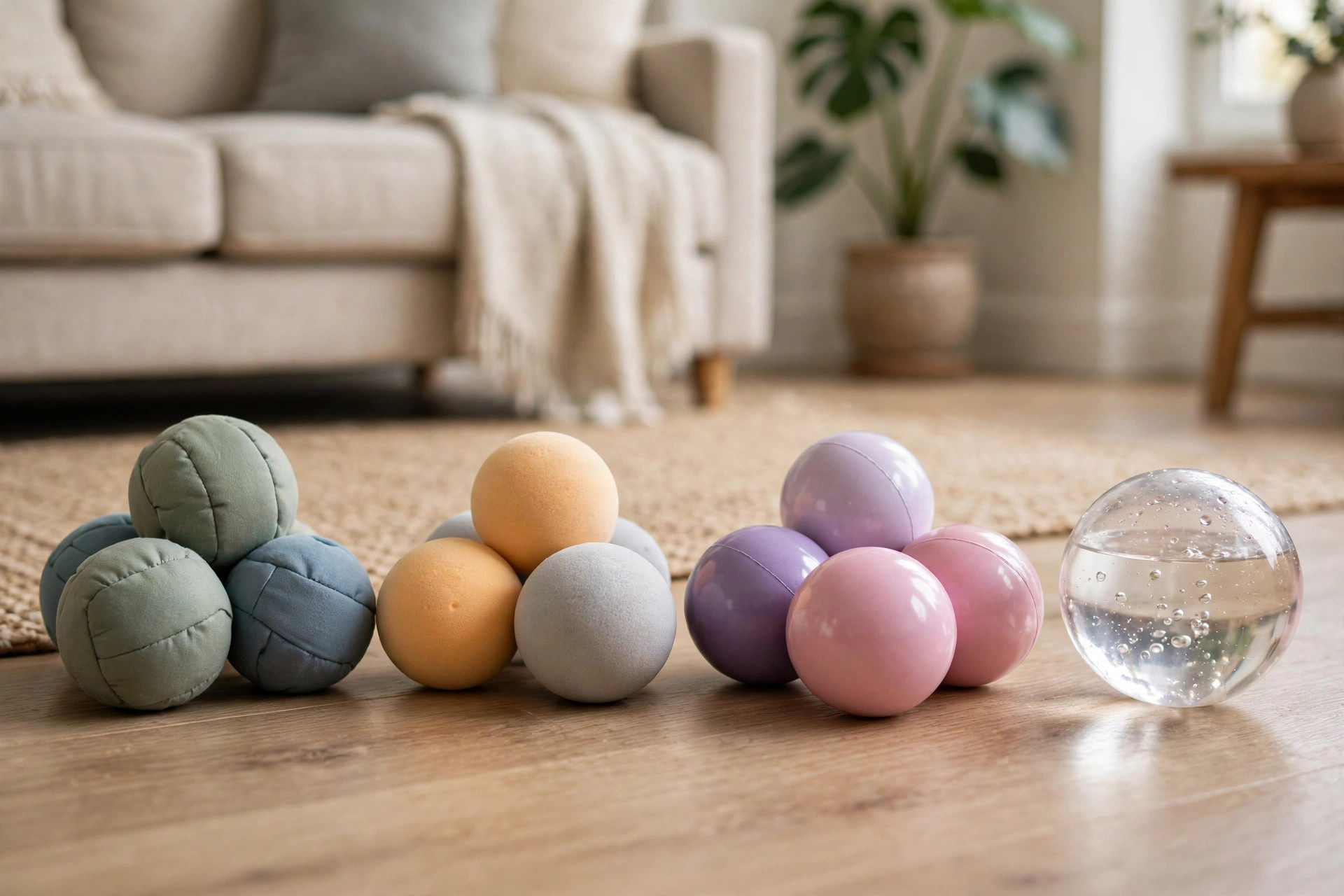
Indoor Bocce Balls: Safer Options Compared
Indoor bocce balls trade weight for softness. None rolls exactly like resin, so pick by floor first and feel second.
| Ball Type | Floor Safety | Feel and Roll |
|---|---|---|
| Foam balls | Excellent, safe on hardwood and tile | Very light, slows quickly, best for short lanes and kids |
| Soft vinyl or rubber balls | Very good, gentle on most floors | Closest to a real roll, moderate weight, good control |
| Lightweight plastic balls | Good on carpet, riskier on tile | Hollow and bouncy, can hop on hard landings |
| Water-filled balls | Very good, soft landing | Heavier, slower roll, stays low and resists bouncing |
Foam is the toddler-and-hardwood choice: nearly weightless, which limits travel, but fine on a 15-foot lane. Soft vinyl and rubber balls are the best all-round indoor option, with enough heft to roll true and enough give to forgive a dropped ball. Water-filled balls are the sleeper pick for basements and gyms: the liquid weight keeps them rolling low instead of bouncing. Whatever you choose, buy the whole set in one material; mixing foam and vinyl makes every comparison roll meaningless.
Where to Play: Hallway, Basement, and Gym Setups
The Hallway Lane
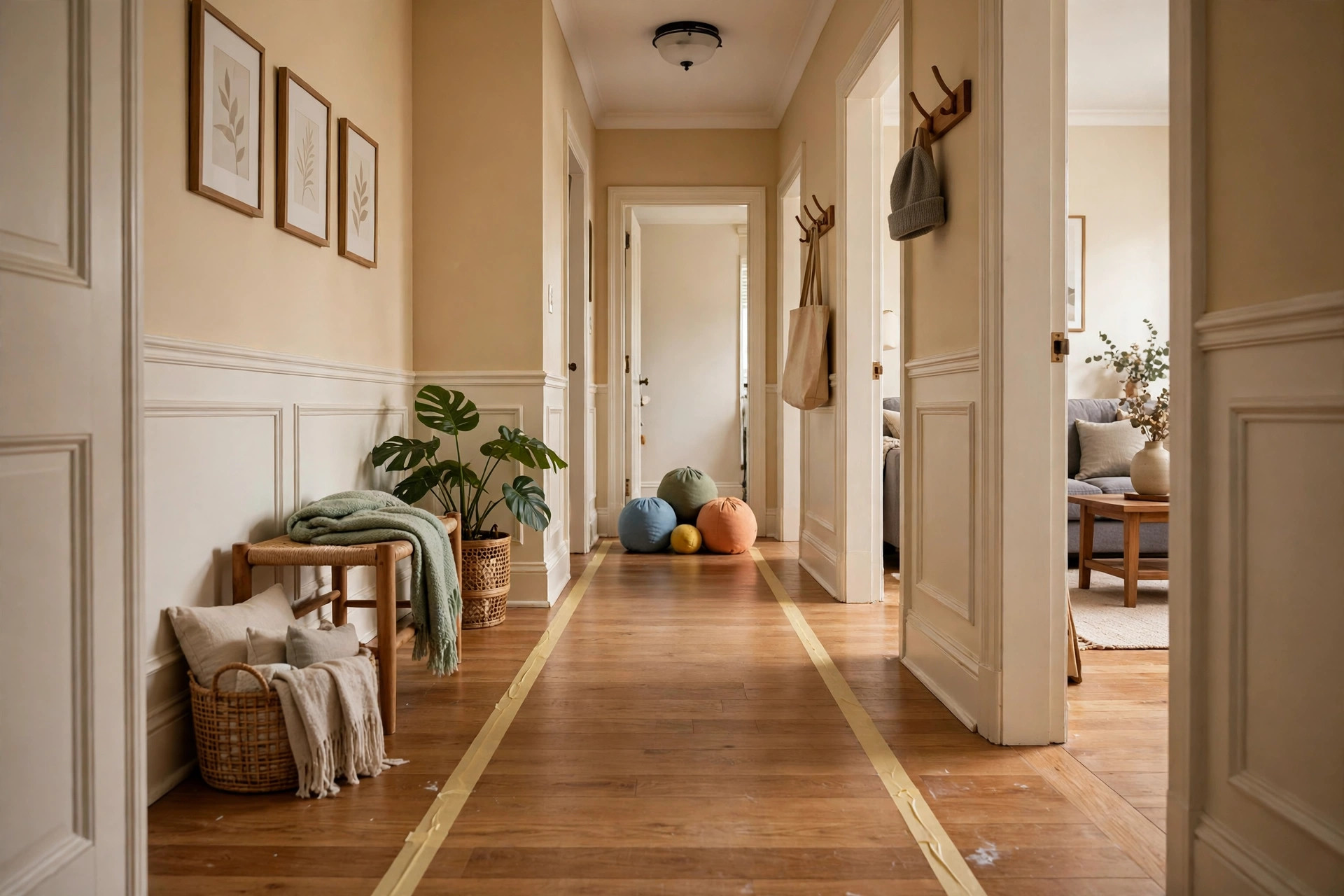
A hallway is the natural indoor court. Set the pallino zone about two-thirds of the way down and roll from behind a taped foul line. Close the doors along the hall before you start.
The Basement Lane
Basements offer length and forgiving floors, but watch for drains, support posts, and floor slope. Roll a test ball first; if it curves on its own, rotate your lane 90 degrees. Carpet tiles and low-pile carpet play like a slow outdoor court; bare concrete plays fast and loud.
The Gym or Garage Lane
A gym, community hall, or cleared garage gives near-full distances. Mark the lane with painter’s tape, keep spare balls behind the foul line, and you can play something close to the full game. Whichever space you use, remove anything breakable at ankle height before the first roll.
Indoor Bocce Rules: The Shortened Version
Indoor bocce rules are the outdoor rules with distances and force turned down. If you know the full game from our guide on how to play bocce ball, these adjustments are all you need.
Play to 7 points instead of 12.
Roll everything underhand and keep every shot a roll, never a toss; any airborne shot is a foul and gets replayed.
Score the same way as outdoors: closest ball earns a point, plus one for each additional ball closer than the opponent’s best; measure close calls with a string.
Set a house rule for walls before you start; most indoor groups play walls as out of bounds and replay the shot.
Protecting Floors, Walls, and Furniture
Most indoor damage happens at the far end of the lane. A folded blanket, foam mat, or row of couch cushions behind the target zone absorbs nearly all of it. Tape a visible foul line and target line with painter’s tape. Move lamps, plant stands, and anything on wheels out of the lane entirely. On hardwood, play in socks or soft slippers during setup and measuring to keep grit from being ground in.
Indoor Bocce Game Variations: Target Games and Bocce Bowling
Target Toss
Skip the pallino and play to a taped circle or towel. Any ball stopping inside the target scores a point, and a ball touching the center mark scores two. Distance stops mattering, so all ages compete evenly.
Bocce Bowling
Stand empty plastic bottles or foam pins at the end of the lane and roll to knock them down, one point per pin. The best first indoor game for anyone who finds “closest to the little ball” too abstract.
Closest Wins the Round
Place a favorite object at the end of the lane and play closest-wins with no scoring beyond the round. Rotate who places the target. Families playing with younger children will find the age-by-age sizing in our bocce for kids guide carries straight over to hallway play.
Storing Your Indoor Set
Wipe foam and vinyl balls with a damp cloth and let them dry fully before bagging, since foam stored damp picks up odors. Keep the set in a soft bag or bin near the lane you use most. Store water-filled balls away from radiators and sunny windowsills. And when spring comes, the outdoor sets in our best bocce ball sets roundup will be waiting.
Frequently Asked Questions
Can you play bocce indoors without damaging floors?
Yes, with the right balls. Foam, soft vinyl, and water-filled balls are light and forgiving enough for hardwood, tile, and laminate. Standard resin balls are the hazard: heavy enough to dent wood and crack tile when dropped. Add cushions behind the target zone and the risk drops further.
What are the best indoor bocce balls for hardwood floors?
Foam balls are the safest choice on hardwood because they are nearly weightless and cannot dent the surface. Soft vinyl balls are the better pick if you want a truer roll and more control. Avoid hollow plastic balls on bare hardwood, because they bounce.
How long should an indoor bocce lane be?
A hallway lane of 15 to 25 feet suits most homes and most soft balls. Foam balls run out of momentum past about 20 feet, while vinyl and water-filled balls handle 30 feet or more in a basement or gym.
What are the basic indoor bocce rules for beginners?
Roll the pallino down the lane, then take turns rolling your balls to stop closest to it. Score one point for the closest ball, plus one for each of your balls closer than the opponent’s best. Play to 7 points, roll everything underhand, and replay any shot that leaves the floor or touches a wall.
Is indoor bocce a good game for kids in winter?
It is one of the better ones. Soft balls remove the injury and damage worries, the rules shrink to “roll it close,” and a hallway game takes minutes to set up. Shorten the lane, skip the score for the youngest players, and let them measure close calls with a string themselves.
Final Thoughts
Indoor bocce is not a compromise version of the game. It is the same aiming, judging, and gentle rivalry, played with balls your floors can forgive. Pick the softest set your space needs, tape down a lane, and agree on the wall rule before the first roll.

Bocce for Kids: Shorter Courts, Lighter Balls and Simpler Rules
Bocce Scoring Disputes Solved: Measuring, Ties and the Kiss Explained