Shuffleboard Drills: 6 Practice Games to Improve Your Aim10 min read
Most shuffleboard improvement does not come from playing more full games. It comes from deliberate repetition, and that is exactly what shuffleboard drills give you. A full game might give you eight meaningful shots. Twenty minutes of focused practice games can give you eighty. The six shuffleboard drills below work on any table length, need nothing beyond your normal weights and wax, and scale from solo practice to a competitive partner session. Each drill lists the setup, the rules, how to score it, and the skill it trains. Pick two or three per session, write your scores down, and your touch shots will get boringly reliable.
How These Shuffleboard Drills Work Best
Short, focused sessions beat occasional marathon practice. Aim for 20 to 30 minutes, two or three drills per session, and score everything. A drill without a score is just shooting around. Before you start, make sure the table is not fighting you. A table that drifts left teaches you a bad correction. Our guide to shuffleboard table leveling and climate adjusters takes five minutes and makes every score below honest. Use the same four weights all session, and note the wax speed. Scores are only comparable across sessions when the setup stays the same.
Drill 1: The Foul-Line Ladder
Setup: Four weights, empty table, your normal wax.
How to play: Shoot your four weights in order, each one stopping in a deeper target than the last. Weight one stops just past the foul line. Weight two stops in the 1 zone. Weight three stops in the 2 zone. Weight four stops in the 3 zone.
Scoring: One point per weight in its intended zone, plus a bonus point if all four land in order: maximum five per round. Play five rounds, total out of 25.
What it trains: Pure speed control. The foul-line shot is the hardest touch in table shuffleboard, and the ladder forces you to find four distinct speeds instead of your one comfortable pace.
Drill 2: Knock-Off Practice
Setup: Place two weights of the opposite color in scoring position, one in the 2 zone and one in the 3 zone. You shoot with four weights.
How to play: Knock both target weights out of scoring position. Bonus style points if your shooting weight stays in the zone the target left.
Scoring: One point per target removed, plus one point if your weight replaces it in the same zone. Eight attempts per set, three sets per session. Track your best set.
What it trains: Takeout accuracy and controlled power. The knock-off is the shot that swings ends, yet most players only try it when a game forces them to. This drill makes it routine.
Drill 3: The Hanger Challenge
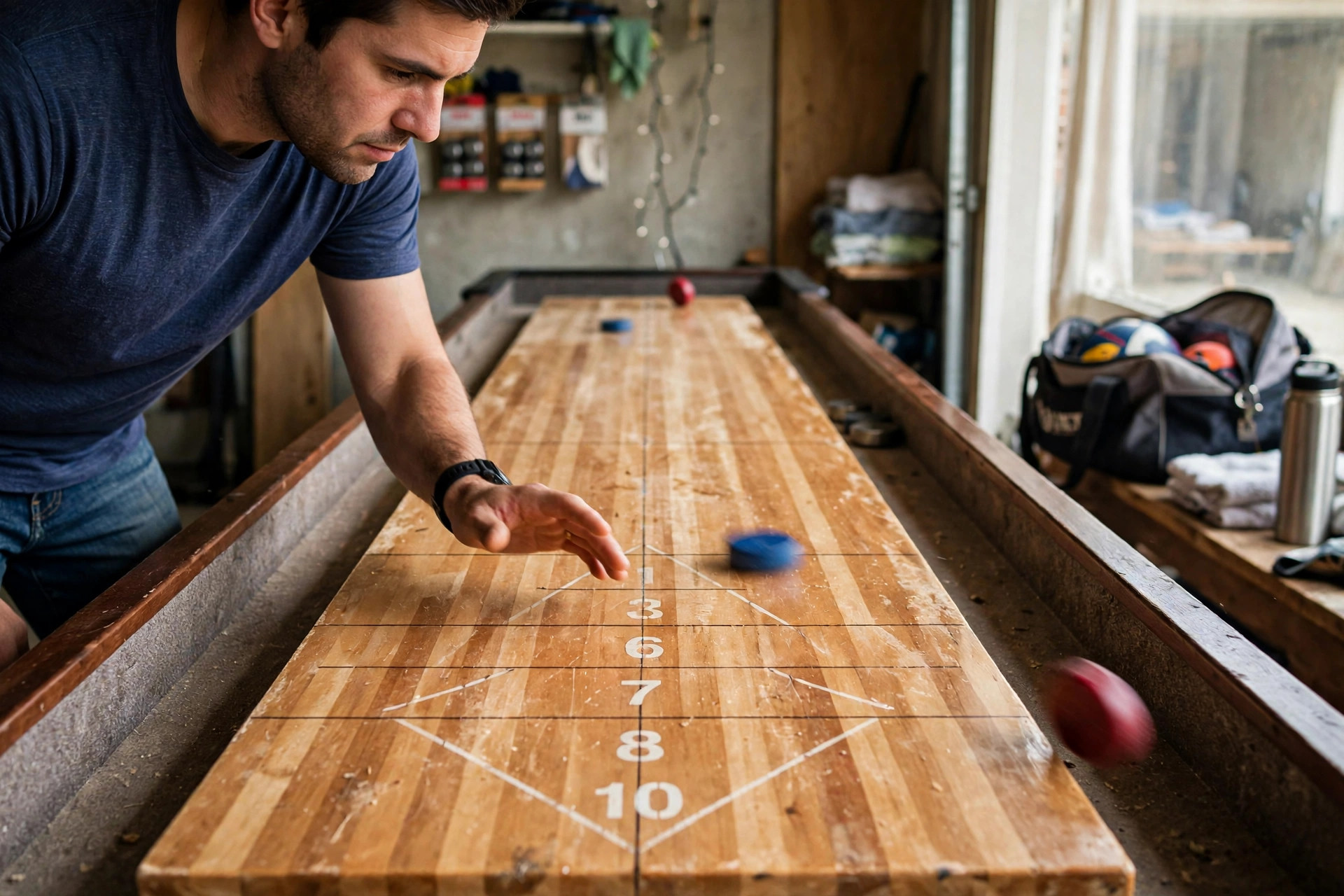
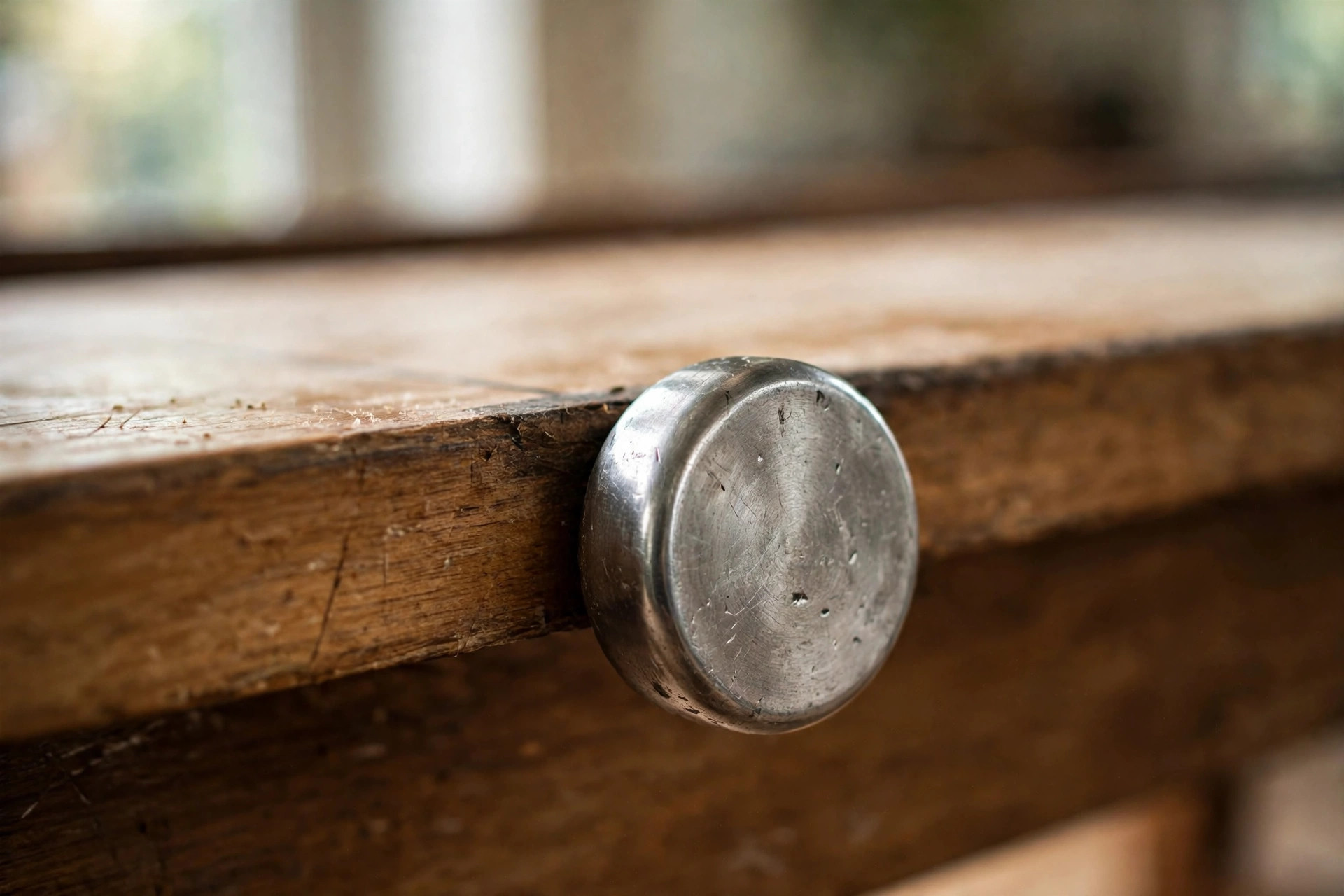
Setup: Empty table. In table shuffleboard, a weight left hanging over the back edge of the playfield scores four points, more than any zone.
How to play: Shoot all four weights at the back edge. The goal is a hanger, a weight stopped with part of it hanging over the end line.
Scoring: Three points for a true hanger, one for a weight fully inside the 3 zone, zero for anything shorter or off the end. Four rounds, maximum 48, and expect single digits at first.
What it trains: The finest speed control on the table. Hangers live in the last few inches of pace judgment. Wax speed changes this drill completely, so check our shuffleboard wax speed chart and note which speed you used.
Drill 4: Around the Zones
Setup: Empty table, four weights per turn, and a scorecard.
How to play: Score a counting weight in the 1 zone. Then score one in the 2 zone, then one in the 3 zone, in that order. A weight in the wrong zone does not count, and you keep shooting until you complete the set.
Scoring: Count the total weights you needed to complete all three zones. Under eight is strong. Under six is excellent. Play three full sets and keep your best.
What it trains: Distance control across the full table. Most players own one reliable distance and guess at the others. Around the Zones exposes exactly which distance is lying to you.
Drill 5: Call Your Shot
Setup: Two players, four weights each, any scoring format you like.
How to play: Before every shot, the shooter calls it out loud: the zone, and one detail such as the side of the table or a knock-off target. Then they shoot exactly that shot, nothing else.
Scoring: Two points for making the called shot exactly. One point for the right zone but the wrong detail. First player to 12 wins the round.
What it trains: Shot selection and honest self-knowledge. Calling your shot removes lucky accidents from your score, so you learn which shots you actually own and which ones you have just been getting away with.
Drill 6: The Speed Control Ladder
Setup: Empty table. Mentally divide the playfield into thirds: near third, middle third, far third.
How to play: Stop one weight in the near third, one in the middle third, and one in the far third, in any order. Then repeat the set at a brisker overall pace, then again slower, as if the wax speed had changed.
Scoring: One point per weight that stops fully inside its target third. Nine weights per set, three sets, track your total out of 27.
What it trains: Adaptation. League nights, friends’ tables, and fresh wax all change how fast a table plays. This drill teaches your arm to recalibrate in three shots instead of three ends.
Solo vs Partner: Getting the Most From Each Drill
Solo practice is for volume and honest scoring. Work the ladder drills (1, 4, and 6) alone, keep a written log, and compete against your own last score. Nobody watching means no excuses, which is the point. Partner practice is for pressure. Call Your Shot and Knock-Off Practice sharpen up when someone is waiting to beat your score. Alternate shooters on the Hanger Challenge too: watching a partner leave a hanger raises the stakes in a way solo reps never will. A good split is one solo session to build a skill, then one partner session to test it. If a drill score collapses under partner pressure, that skill is not finished yet.
A 30-Minute Shuffleboard Practice Session Plan
Here is a complete shuffleboard practice session built from the drills above. It fits in half an hour and covers touch, distance, and pressure in that order.
| Time | Drill | Focus |
|---|---|---|
| 0:00 to 5:00 | Warm-up slides, then Foul-Line Ladder | Touch and speed control |
| 5:00 to 12:00 | Around the Zones | Distance control, all three zones |
| 12:00 to 19:00 | Knock-Off Practice | Takeout accuracy |
| 19:00 to 25:00 | Hanger Challenge | Fine pace judgment at the back edge |
| 25:00 to 30:00 | Call Your Shot (or solo ladder rematch) | Pressure and shot selection |
Swap the Hanger Challenge for the Speed Control Ladder in week two, and keep the same plan for a month. Consistency turns session scores into a trend you can trust.
Pucks, Wax and a Level Table: The Practice Multiplier
Drills only work if your gear is consistent. A mixed set of weights with different wear patterns will scatter your results and hide your progress. Our guide to the best shuffleboard pucks and weights explains what to look for in a matched set for practice and play.
Keep your wax speed consistent during a training block. Change one variable at a time: test a new speed, or train your arm, never both in one session.
Frequently Asked Questions
How often should I practice shuffleboard drills?
Two or three short sessions a week beat one long one. Twenty to thirty minutes gives meaningful repetitions without form getting sloppy from fatigue. Keep a written score log: week-to-week comparison is where the motivation and the useful information live.
What are the best shuffleboard practice games for two players?
Call Your Shot is the best partner game because it forces honest shot selection and creates pressure on every weight. Knock-Off Practice also works well head to head: set the same two target weights for both players and compare how many attempts each of you needs to clear them.
Do these drills work on a short 9-foot table?
Yes. Every drill here is based on zones and proportions, not absolute distance, so they scale from 9-foot tables up to 22-foot tables. On a short table the Hanger Challenge gets easier and the Foul-Line Ladder harder, so weight your session time toward the ladder.
How long does it take to improve shuffleboard aim with drills?
Most players see their ladder and zone scores climb within three or four weeks of twice-weekly sessions. Game results lag a little behind drill scores, because match pressure is its own skill. Expect your takeouts and touch shots to feel noticeably calmer within the first month.
What does a good solo table shuffleboard drills routine look like?
Start with the Foul-Line Ladder to dial in touch, move to Around the Zones for distance, and finish with the Hanger Challenge while your arm is warm and calibrated. Score all three, log the totals, and repeat the same routine for several sessions before changing it.
Final Thoughts
Shuffleboard rewards the players who practice on purpose. Rotate two or three of these drills per session, keep score honestly, and test yourself against a partner once a week. Your aim will not improve by accident, but with this routine it will improve on schedule.

The Best Shuffleboard Table Brands of 2020

Table Shuffleboard Scoring Rules in a Nutshell