
How to Clean and Maintain a Shuffleboard Table Playfield10 min read
A shuffleboard table is one of the lowest-maintenance game tables you can own, but only if you stay ahead of the powder. Old wax, dust and grit build up quickly, and a neglected playfield turns slow, streaky and eventually damaged. Learning how to clean a shuffleboard table properly takes about fifteen minutes, and it protects the finish for years.
The good news is that the job is simple: no harsh chemicals, no professional service. What matters is the order: remove the old surface material first, clean the bare playfield gently, then rebuild the surface with fresh wax. This guide walks through the full routine, from a two-minute pre-game tidy to seasonal deep care, plus the mistakes that quietly ruin playfields.
Our top picks, compared:
Your Shuffleboard Table Care Routine at a Glance
Most owners do too little, too late. Knowing how to clean a shuffleboard table on a schedule beats one heroic deep clean a year, because grit does its damage every time a puck slides over it.
| When | Tasks | Time Needed |
|---|---|---|
| Before every session | Brush loose powder into the gutters, check puck bottoms for burrs, wipe the rails | 2 minutes |
| Weekly with regular play | Vacuum the gutters, damp-wipe rails and cradle, look for grit or sticky spots | 10 minutes |
| Monthly | Full powder removal, gentle playfield clean, fresh wax, quick level check | 20 to 30 minutes |
| Seasonally, 2 to 4 times a year | Deep clean, silicone treatment if your finish allows it, climate adjuster and humidity check | About 45 minutes |
Scale the routine to use: a busy rec room table may need the weekly step twice a week, while a lightly played home table can stretch the monthly step to every other month.
Step 1: Remove the Old Wax and Powder First
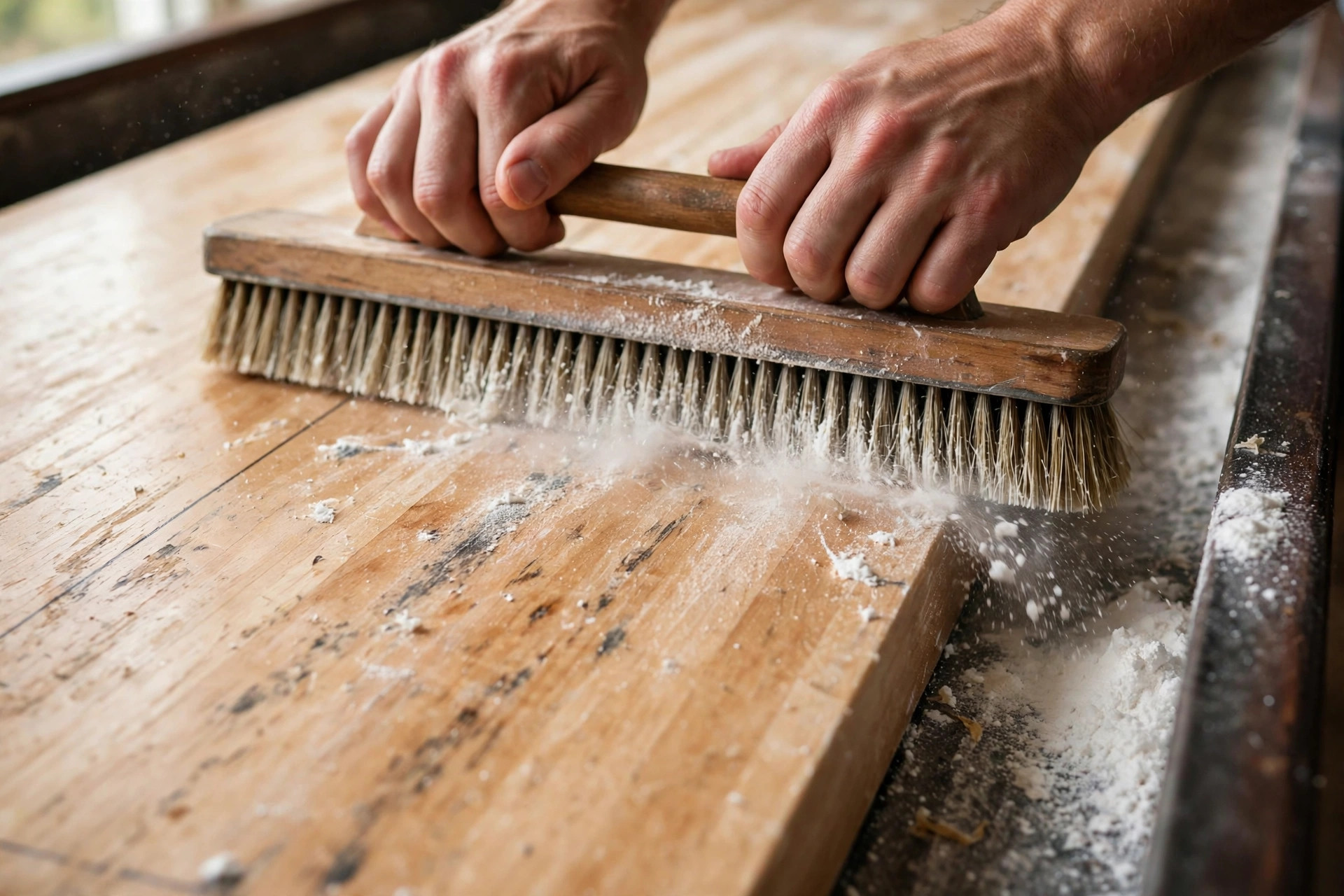
Every proper clean starts the same way: strip the surface back to bare finish. Fresh powder laid over old powder clumps, streaks and plays at two speeds at once, so take the time to remove wax from shuffleboard table surfaces completely before you clean or re-wax.
- Brush all loose powder toward the gutters with a shuffleboard table brush, working the full length in long strokes.
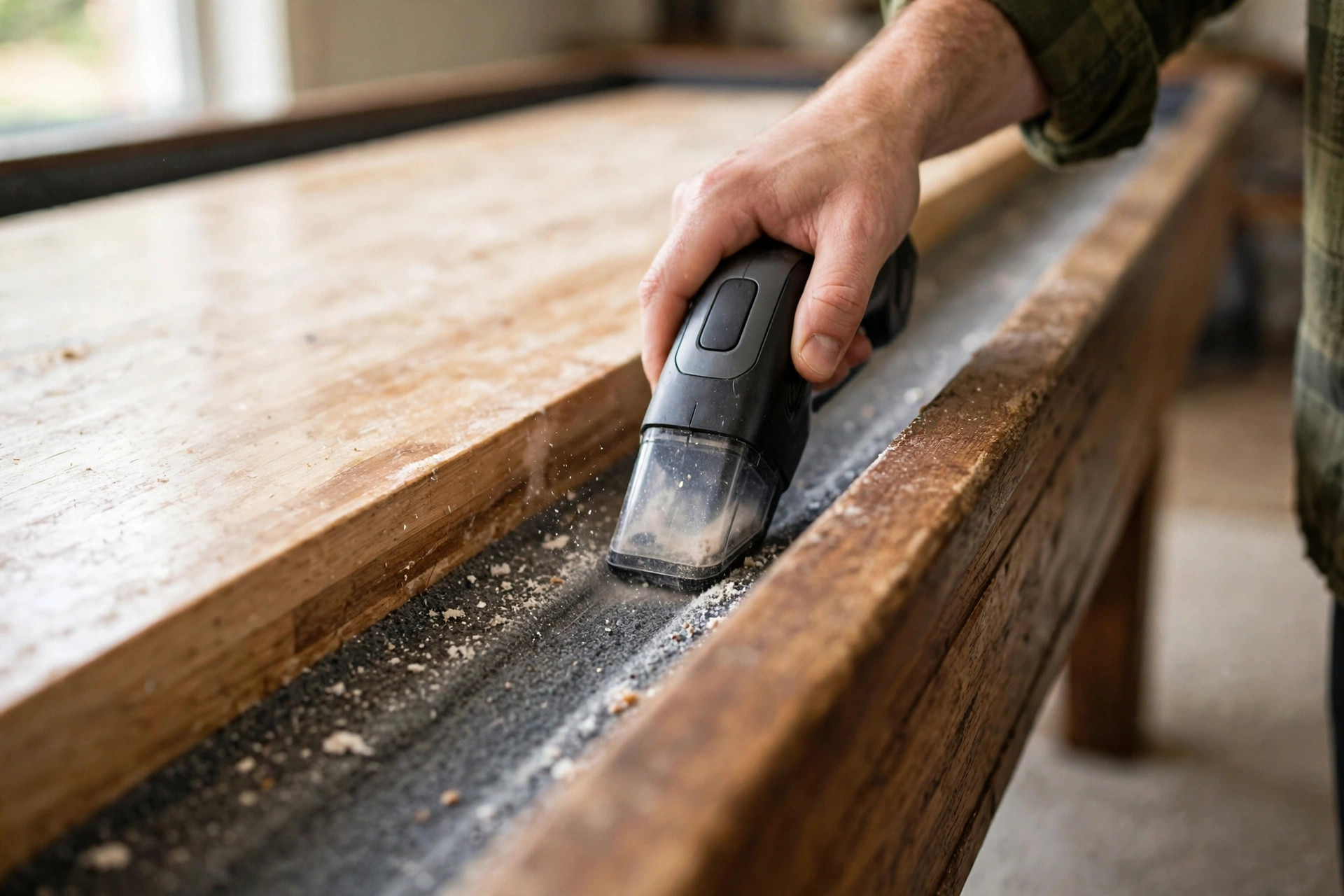
- Vacuum the powder out of the gutters with a soft hose attachment, never the brush roll.
- Wipe the playfield with a dry or barely damp microfiber cloth to lift the film the brush leaves behind.
- Run your palm lightly over the surface; any gritty or sticky patches need a second pass.
Never scrape the playfield with a hard edge, and never use a household vacuum directly on the surface. Both can scratch the finish, and scratches collect dirt faster than the original problem did. Our shuffleboard wax speed chart explains why fresh wax only plays at its rated speed on a clean surface like this one.
Step 2: How to Clean a Shuffleboard Table Playfield by Finish Type
With the powder gone, you can clean the shuffleboard playfield itself. The right method depends on your finish, and using the wrong one is how most cleaning damage happens.
Polymer and Epoxy Finishes
Most modern home tables use a thick polymer or epoxy finish, and it is the most forgiving type. Wipe it with a microfiber cloth dampened with plain water or a cleaner made for shuffleboard playfields. Work in sections, dry as you go, and never flood the surface. Standing water finds seams and edges, even on a tough finish.
Traditional Lacquer and Wood Finishes
Older and higher-end tables may have a lacquered wood playfield. Treat it like fine furniture: a cloth that is barely damp, no soaking, and no all-purpose sprays. If the maker supplied care instructions, follow those over any general advice, because lacquer repairs are specialist work.
Outdoor and Laminate Surfaces
Outdoor tables and laminate playfields handle mild soap and water well. Wash, rinse with a damp cloth, then dry fully before re-waxing, because damp powder clumps and plays slow.
Do Not Forget the Gutters, Cradle and Rails
Players stare at the playfield, but most of the dirt lives around it. Powder migrates into the gutters on every shot, and a gritty gutter drops that dirt straight back onto your clean surface.
- Vacuum both gutters fully, including the corners under the score unit.
- Wipe the cradle and rails with a damp cloth, then dry them.
- Clean the abacus or electronic score unit gently, without spraying liquid near it.
- Check the carpet or lining in the gutters for packed powder and brush it loose.
What Not to Use on a Shuffleboard Playfield
Half of learning how to clean a shuffleboard table is knowing what to keep away from it. The wrong product does more harm than a month of skipped cleaning:
- Glass cleaner and ammonia-based sprays, which can cloud some finishes
- Abrasive pads, scouring powders and magic-eraser style sponges
- Furniture polish, which builds up unevenly and changes the speed
- Soaking water, steam cleaners and pressure of any kind
- Anything with grit in it, including powdered cleansers
If you are unsure about a product, test it on a hidden corner of the cradle first, and when in doubt, plain water on a microfiber cloth is the safe default.
Check Humidity and Climate Adjusters While You Clean
A clean table that plays crooked is usually a humidity problem, not a dirt problem. Wood playfields expand, contract, crown and dip as room humidity swings, which is why seasonal cleaning is the right moment for a shape check. Roll a puck slowly down each side and watch for drift. Check that the room sits in a normal indoor humidity range, and adjust humidifiers or dehumidifiers before you blame the table. If the surface has moved, our guide to leveling a shuffleboard table and using climate adjusters walks through the correction step by step.
Shuffleboard Table Maintenance Habits That Prevent Damage
Cleaning fixes the present. Good shuffleboard table maintenance habits stop most damage from happening at all:
- Cover the table when it is not in use, even a simple fitted cover keeps dust and sunlight off.
- Wipe puck bottoms before play and set aside any puck with a burr or nick, because one damaged puck scratches like sandpaper.
- Keep drinks off the rails and out of the cradle area entirely.
- Use silicone spray or playfield dressing only as often as your finish maker recommends, not as a shortcut around cleaning.
- Restock consumables before you run out, so a game night never tempts you to play on a bare, gritty surface.
When it is time to restock, our guide to the best shuffleboard wax and powders compares the main types, speeds and brands in one place.
When Cleaning Is Not Enough: Resurfacing and Replacement
Some problems are beyond soap and cloth. Consider resurfacing a shuffleboard table or professional help when you see:
- Finish worn through to bare wood in the main sliding lanes
- Deep scratches or gouges you can feel with a fingernail
- Permanent dead spots where pucks consistently stop or drift
- Warping or delamination that leveling and climate adjusters cannot correct
Resurfacing means sanding and refinishing the playfield, a specialist job that costs real money. Weigh it against the table’s value: for an older entry-level table, putting the same money toward one of the models in our best shuffleboard tables guide can make more sense, while a quality wood table is usually worth refinishing.
Frequently Asked Questions
How often should you clean a shuffleboard table?
Brush the surface and clear the gutters before every session, and do a full powder removal and gentle clean about once a month with regular play. Tables in busy spaces need it more often. Seasonal deep care, including humidity and climate adjuster checks, keeps the playfield shape true.
Can you use glass cleaner or household sprays to clean shuffleboard playfield surfaces?
It is safer not to. Ammonia-based glass cleaners can cloud some playfield finishes, and all-purpose sprays leave residues that change puck speed unevenly. A microfiber cloth dampened with plain water, or a cleaner made specifically for shuffleboard playfields, handles almost every cleaning job.
How do you remove wax from a shuffleboard table completely?
Brush all loose powder into the gutters with a table brush, vacuum the gutters out, then wipe the playfield with a dry or barely damp microfiber cloth to lift the remaining film. Run your palm over the surface to check for gritty patches. Never scrape or use a vacuum brush roll on the finish.
Should you use silicone spray on a shuffleboard table?
Only if your table’s finish is made for it, and only at the interval the maker recommends. Silicone spray and playfield dressing condition the surface between powder applications, but they do not replace powder for speed, and overuse builds up a film that plays inconsistently and is hard to remove.
What is the best shuffleboard table care routine for a table that is rarely used?
Cover it, and clean it before play rather than on a calendar. Dust settles even on an unused table, so brush, wipe and check for grit before the first game after a break, confirm the surface still plays level, then apply fresh wax.
Final Thoughts
How to clean a shuffleboard table comes down to order and gentleness: strip the old wax, wash the finish the way its type demands, clear the gutters, then rebuild the surface. Fifteen steady minutes a month keeps a playfield fast, true and worth playing on.

How to Play Shuffleboard: A Shuffleboard 101 Guide

Shuffleboard Table Room Size Guide: Clearance You Actually Need
