Shuffleboard for Beginners: 9 Common Mistakes and How to Fix Them10 min read
Every new shuffleboard player makes the same handful of mistakes. The good news is that shuffleboard for beginners is mostly a game of small corrections: once you see what you are doing wrong, most fixes take a single practice session to stick.
This guide covers the nine mistakes we see most often, grouped into setup, technique, and strategy, with a simple fix for each one. None of them require new gear. If you are still shopping for a first table, our guide to the best shuffleboard tables explains what makes a table forgiving for new players.
Shuffleboard for Beginners: The 9 Mistakes at a Glance
| # | Mistake | The Fix |
|---|---|---|
| 1 | Playing on an unlevel table | Level the legs and climate adjusters first |
| 2 | Ignoring wax speed | Match wax speed to your table length |
| 3 | Never cleaning the playfield | Wipe down and re-wax on a routine |
| 4 | Pushing too hard | Use a slow, pendulum-style push |
| 5 | Gripping the puck too tightly | Rest the puck on relaxed fingers |
| 6 | Standing square with no step | Stagger your feet and step into the shot |
| 7 | Aiming at pucks instead of zones | Aim for open scoring space |
| 8 | Wasting the hammer | Save your last shot for the best opening |
| 9 | Only playing full games | Practice with short solo drills |
Read the table, then work through the sections below in order. Fix the setup mistakes first, because no technique survives a crooked, dirty table.
Setup Mistakes
Mistake 1: Playing on an Unlevel Table
New players blame their aim when pucks keep drifting sideways, but the table is often the culprit. A slightly tilted playfield pulls every shot the same way, and beginners “correct” for it until their natural aim is ruined. The fix: Put a puck at center table and watch whether it creeps. Then work through the leg levelers and climate adjusters until shots track straight. Our guide to shuffleboard table leveling and climate adjusters walks through the full process in under an hour.
Mistake 2: Ignoring Wax Speed
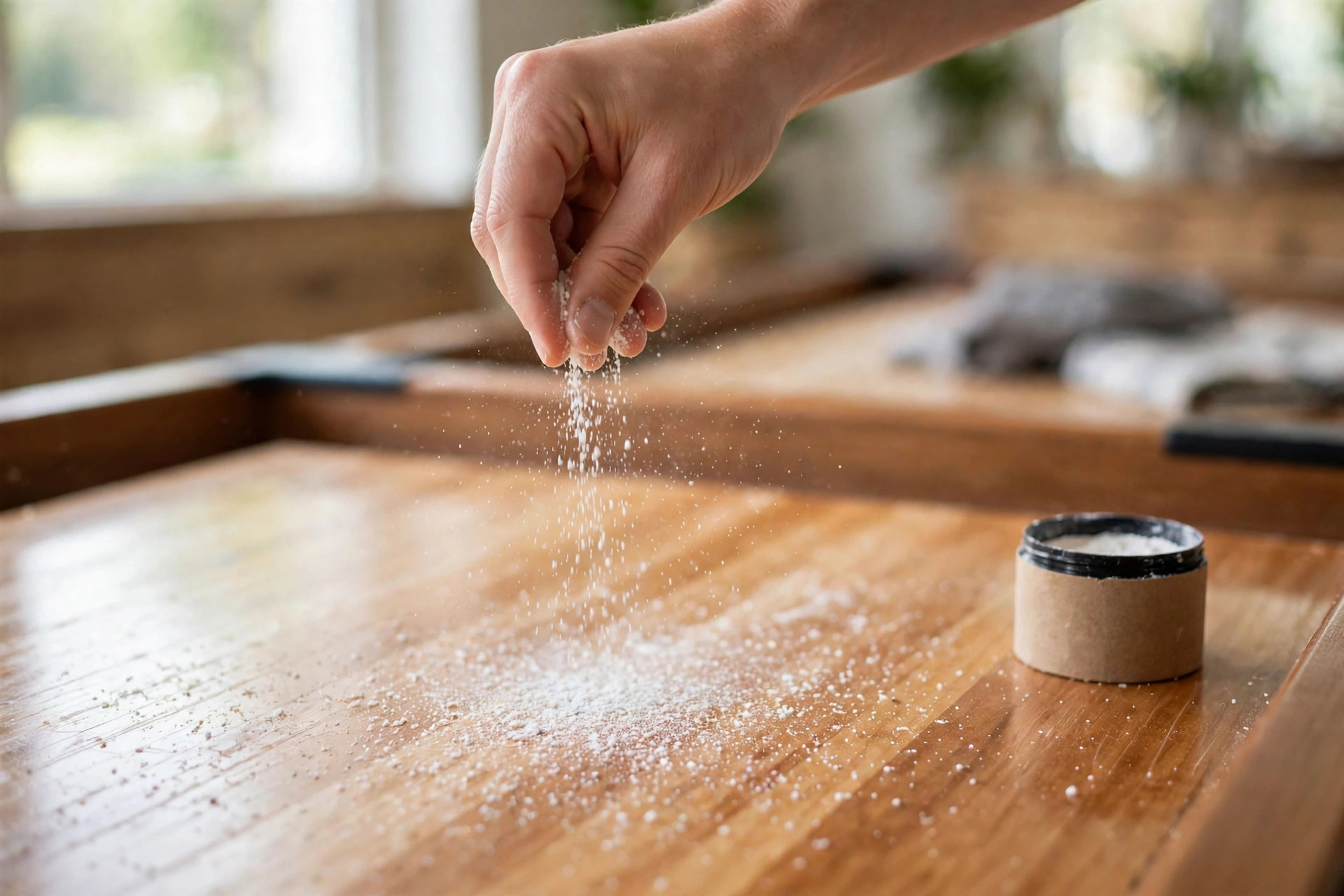
Shuffleboard wax (the silicone-based powder or spray system your table uses) controls how fast pucks glide. Beginners use whatever came with the table, on any table length, and then wonder why shots either die halfway or fly off the end. The fix: Match the wax speed to your table. Shorter home tables need slower speeds; long tables need faster ones. Our shuffleboard wax speed chart breaks down which speed suits which length, and it is the single cheapest upgrade to how a table plays.
Mistake 3: Never Cleaning the Playfield
Old wax and silicone build up into sticky patches. Pucks glide, grab, glide again, and beginners assume the table is just “like that.” The fix: Wipe the playfield down with a soft cloth before sessions, use a proper playfield cleaner when buildup appears, and re-wax lightly afterward. Five minutes of care makes every other fix in this guide easier to learn, because the surface finally behaves consistently.
Technique Mistakes
Mistake 4: Pushing Too Hard
The classic beginner shuffleboard technique error: treating every shot like it needs to reach the far end with force. Hard pushes make pucks hop, wobble, and sail past the scoring zones. The fix: Think pendulum, not punch. Draw the puck back smoothly and let your arm swing forward at a pace that feels almost too slow. Most scoring shots need far less speed than you expect, especially on a freshly waxed table. Practice sending pucks that stop in the 2 zone; distance control beats power every round.
Mistake 5: Gripping the Puck Too Tightly
A white-knuckle grip tenses your whole arm, and tension makes your release jerky. The puck leaves your hand with a little sideways spin you never intended. The fix: Rest the puck on your fingertips with your thumb steadying the side, and keep your hand relaxed enough that the puck could almost slide off. Your fingers guide the puck; they do not clamp it. A relaxed hand produces a flat, straight release.
Mistake 6: Standing Square With No Step
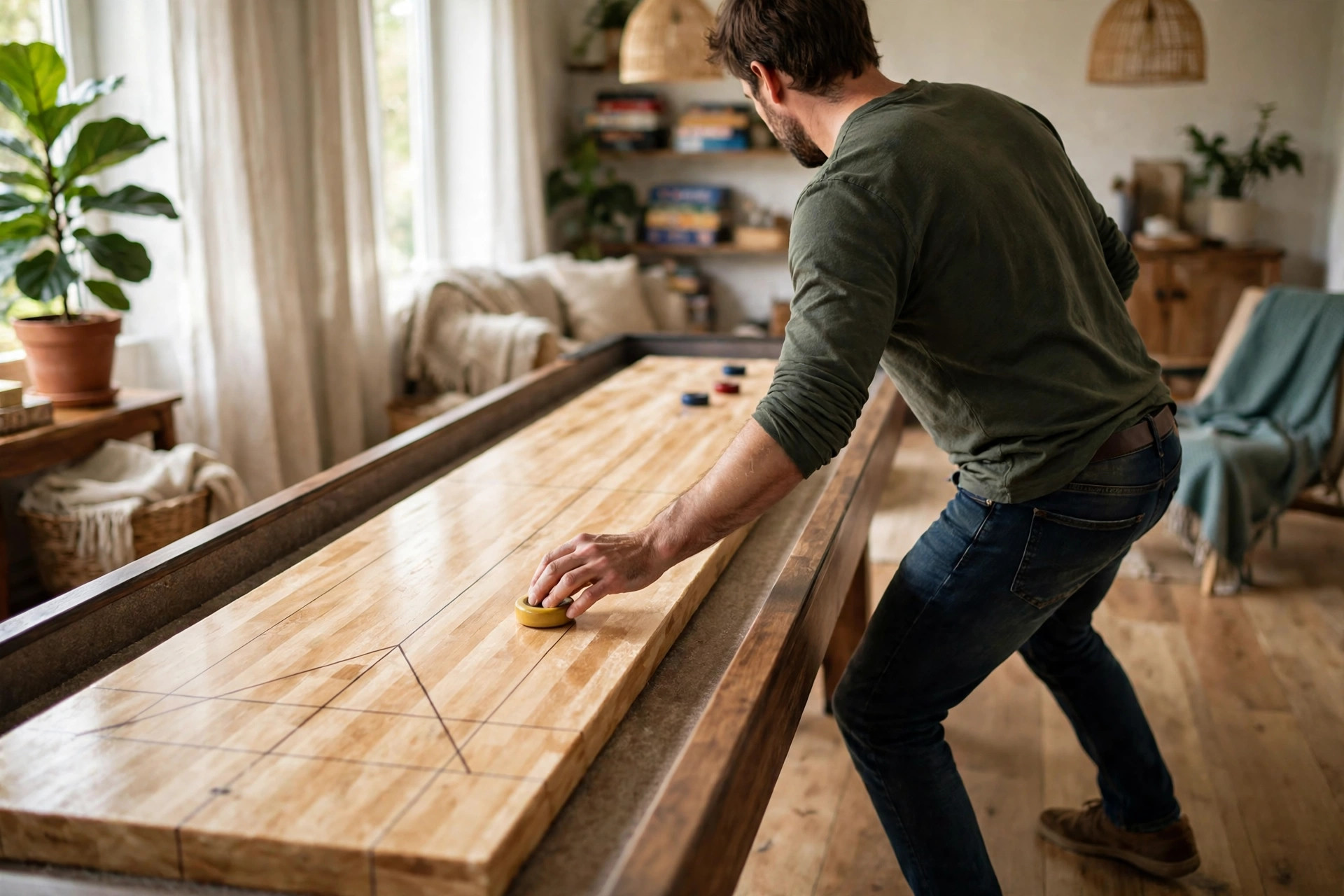
Beginners often stand square to the table, feet side by side, and push from the shoulder. That stance gives you no balance and no natural follow-through, so shots spray left and right. The fix: Stagger your feet, with the foot opposite your shooting hand slightly forward. As you release, take one small step forward with your back foot and let your arm follow through toward your target line. The step turns a shove into a smooth, repeatable stroke, which is the heart of good beginner shuffleboard technique.
Strategy Mistakes
Mistake 7: Aiming at Pucks Instead of Zones
New players aim directly at an opponent’s puck, trying to knock it out. Usually they glance off it, score nothing, and leave their own puck sitting in a bad spot. The fix: Aim for open scoring space first. A puck parked in the 2 or 3 zone is points on the board; a heroic knockout attempt is usually zero. Knockouts become a smart play later, when your distance control can actually deliver them. Until then, take the open zone every time.
Mistake 8: Wasting the Hammer
The hammer is the last shot of the round, and it is a real advantage because you shoot with full information. Beginners waste it by rushing, or by using it on a low-value shot early in their turn order without thinking. The fix: Slow down on the hammer. Look at the whole scoring area, pick the shot that gains or protects the most points, and use your normal pre-shot routine. If you are learning how to play shuffleboard table games with friends, calling out your hammer plan before you shoot is a great habit: it forces you to actually have one.
Mistake 9: Only Playing Full Games
Playing full games is fun, but it gives you very few repetitions of any single skill. A whole game might include two delicate short shots, so beginners improve slowly and keep their shuffleboard mistakes for months. The fix: Add ten minutes of drills before games. Send ten pucks aiming only for the 2 zone. Then ten trying to stop just past the foul line. Then ten gentle knockouts on a stationary puck. Focused repetitions build distance control faster than any full game. That, honestly, is the real secret of shuffleboard for beginners: short, deliberate practice beats long, casual games.
A Simple Practice Routine for Your First Month
Put it together in one short session, two or three times a week.
- Minutes 1-2: Wipe the playfield, check the level with a test puck, and confirm your wax speed suits the table.
- Minutes 3-6: Ten slow pendulum shots to the 2 zone, using your staggered stance and relaxed grip.
- Minutes 7-9: Ten shots to open space in the 3 zone, ignoring any pucks already there.
- Minute 10: Five hammer simulations: set up two pucks, then take one shot to gain or protect the most points.
That routine touches every fix in this guide in ten minutes, which is why it works for busy beginners.
Frequently Asked Questions
What is the most common mistake in shuffleboard for beginners?
Pushing too hard is the most common one. New players overestimate how much force a waxed playfield needs, so pucks overshoot the scoring zones or wobble off line. A slow, pendulum-style push with a relaxed grip fixes most of it within a single practice session.
How should a beginner hold a shuffleboard puck?
Rest the puck on your fingertips with your thumb resting lightly against the side for guidance. Keep your hand relaxed rather than clamped around the puck. A tense grip adds unintended spin and a jerky release, while a relaxed hand lets the puck leave flat and straight.
Does wax speed really matter for beginners?
Yes, more than most beginners expect. Wax that is too fast for a short table makes every shot feel out of control, and wax that is too slow on a long table makes shots die early. Matching wax speed to table length makes your practice consistent, which speeds up learning.
Should beginners aim at the opponent’s puck or at open zones?
Aim at open scoring zones first. A puck sitting in the 2 or 3 zone is guaranteed value, while a knockout attempt from a beginner usually scores nothing and leaves a poor position. Add deliberate knockouts later, once your distance control is reliable enough to hit them on purpose.
How often should a beginner practice shuffleboard?
Two or three short sessions a week beat one long one. Ten minutes of focused drills, distance shots, zone shots, and hammer practice, repeated regularly, builds a repeatable stroke quickly. Consistency of routine matters more than session length when you are building the basic motion.
Final Thoughts
Shuffleboard rewards calm, repeatable habits more than talent. Level the table, match your wax, relax your grip, and aim for open space, and your scores will climb faster than you expect. Work through one mistake at a time, use the ten-minute routine, and the beginner phase will be shorter than you think.

The Best Shuffleboard Wax & Powder for a Smoother Game

7 Shuffleboard Strategies that will Improve Your Game