
Memory Matching Games for Adults and Harder Variations8 min read
Memory Matching Games for Adults and Harder Variations
Memory matching games for adults live or die on set size. The kids’ version with 12 pairs is a warm-up; lay out 30 or more pairs and the same simple game starts beating grown-ups who were sure they had it. We play a lot of matching games in our house, and the adult version is mostly about removing the mercy: bigger grids, lookalike pictures, and rules where a match is harder to claim. The strategy basics are in our memory matching game strategies guide; this page is about making the game itself harder.
At a Glance: Set Size Changes the Game
| Set size | Pairs | Grid feel | Best for |
|---|---|---|---|
| Small | 12 pairs | You can hold most of it in your head | Warm-ups, playing with kids |
| Classic | 24 pairs | Memory starts to leak by mid-game | Most adult groups |
| Large | 36 pairs | Zones and systems, not raw memory | Players who want a real test |
| Double deck | 52 pairs (playing cards) | A full evening, not a filler game | Concentration purists |
Why the kids’ version stops working for adults
Adults do not beat matching games with better raw memory. We beat them with systems: sweeping in rows, naming positions out loud in our heads, and harvesting known pairs before exploring. A small set lets one system run the whole table, and the game ends before anyone’s memory is honestly tested.
Two changes break the system. The first is size, because past about 24 pairs you cannot hold the map and play the turn at the same time. The second is similarity. Pictures that are merely different are easy to file; pictures that differ in one detail, two birds at slightly different angles, are where adults start flipping cards they have already seen. If you are buying a set for adults, similar art on a large count beats cute art on a small one.
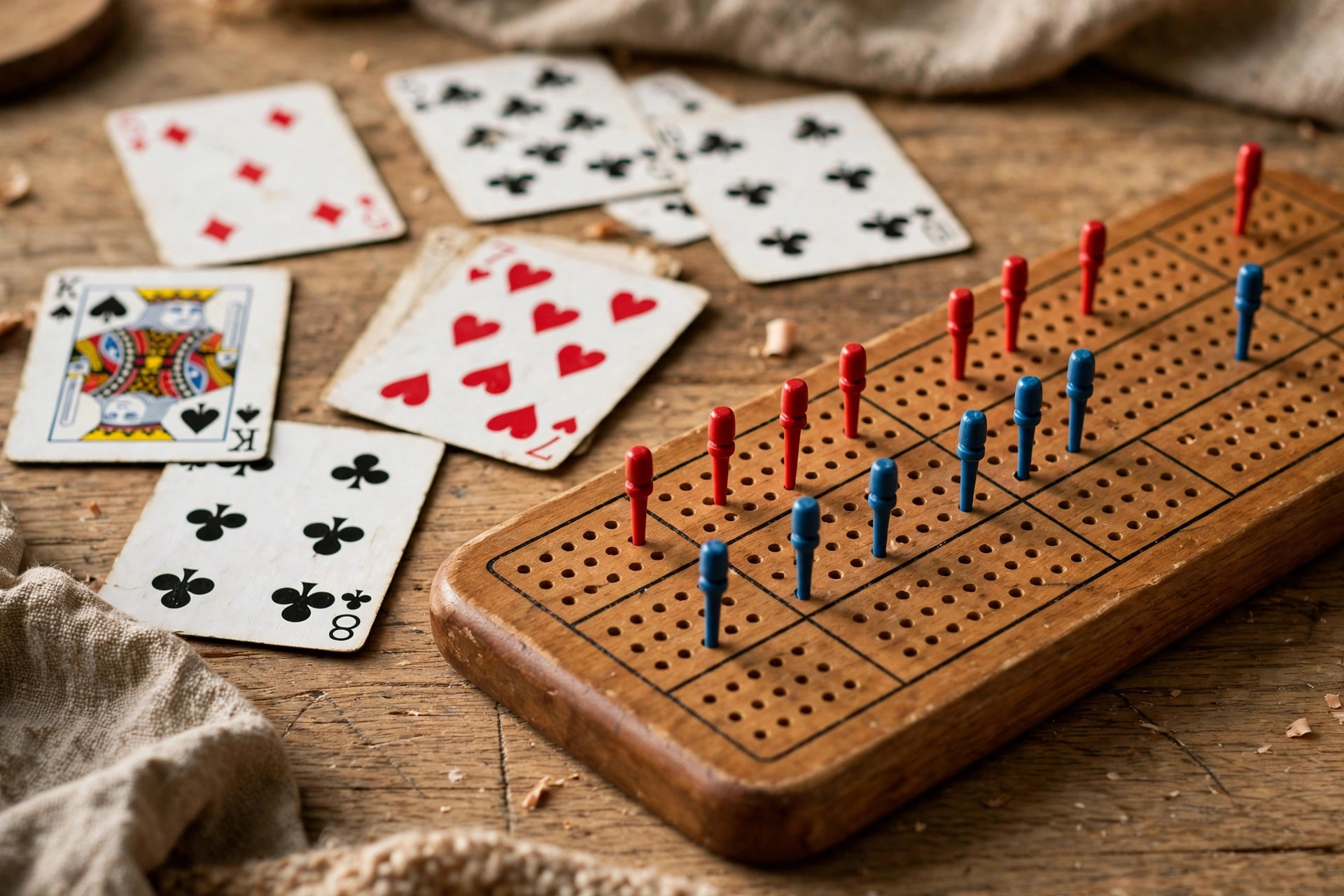
The playing card version: Concentration with a full deck
You do not need to buy anything to play the adult version tonight. A standard 52-card deck is 26 pairs by rank and color under classic Concentration rules, laid out in rows face down. Flip two; match rank and color and you keep the pair and go again; miss and they go back down in the same spots.
My house rules for adults:
- Match needs rank and color, not rank alone. Rank alone halves the difficulty.
- No table talk about locations you remember. Your memory is yours.
- A match earns another turn, which is where runs happen and leads flip fast.
- Play two decks shuffled together, 52 pairs, when the group wants the long version. Clear a big table first.
Five variations that make it harder
Same-color match. With picture sets, declare that a pair only counts when the backgrounds match too, if your set has varied backs or borders. It quietly doubles what you have to remember.
Silent game. No speaking, no mouthing locations, no pointing. Half of adult memory play is verbal rehearsal, and taking it away is the single hardest rule change I know.
One-flip scouting. On your first turn of the game only, you may look at three cards instead of two, then must close all three. It speeds the opening and punishes anyone who was not paying attention to someone else’s scout.
Memory tax. Every time you flip a card you have already seen in a wrong pairing, you lose one pair you have already won, set aside as a penalty pile. Suddenly the safe, lazy flip is expensive.
Timed solo. Solo against the clock on a 36-pair set, scoring yourself on moves rather than wins. The solo scoring method, fewest non-matching turns, is the traditional way to play Concentration alone, and it turns a party game into a personal record you keep trying to beat. For more ways to stretch the base game, our memory matching game strategies page covers the playing systems in detail.
Modern memory games worth knowing
The matching mechanic has grown up into proper party games. Ravensburger’s That’s Not a Hat is the one I would point adults to first: you pass illustrated gift cards around the table and have to remember, or bluff, what is under each wrapping. It is a memory game where the board moves, which breaks every grid system on this page. For a two-player night instead, our best card games for two players list has the games we rotate when matching is not the mood, and family card game night covers the mixed-age version of the evening.
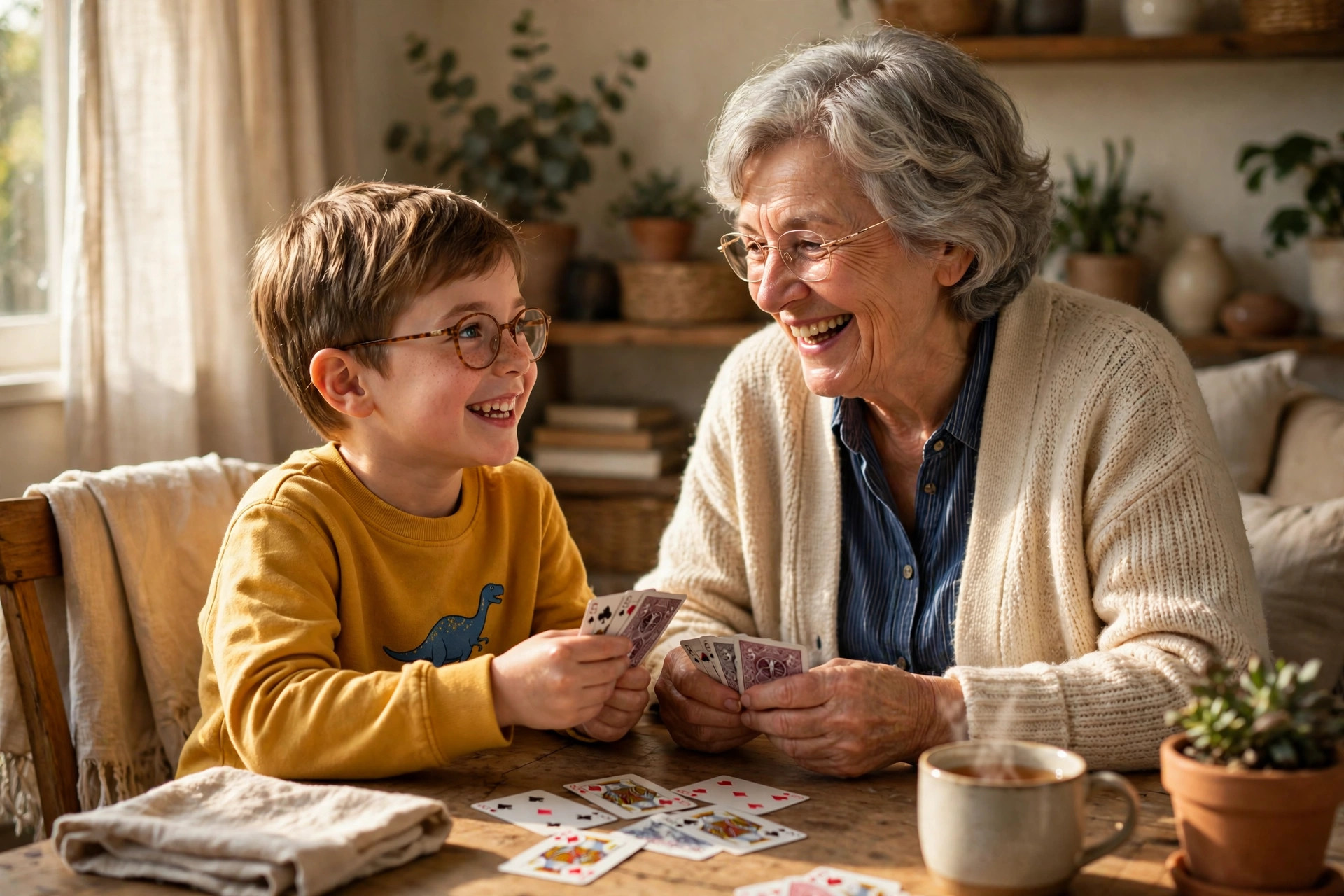
Setting up an adult game night round
Give a large game room to breathe. A 36-pair set wants a table you can walk around, because players remember locations partly by where they stood. Deal the grid in clean rows, agree the match definition before the first flip, and decide the extra-turn rule out loud, since that is the rule groups argue about afterward. With four or more adults, I would run two smaller games side by side over one giant one; the downtime between turns is what kills the big-table version.
Frequently Asked Questions
how many pairs should a memory game for adults have
Start at 24 pairs and go up from there. Twelve pairs is a kids’ warm-up that most adults can hold in their heads at once. At 36 pairs the game starts beating good memories, and a double-deck playing card game at 52 pairs is a full evening.
can you play memory matching with regular playing cards
Yes. A 52-card deck laid face down is the classic game of Concentration: flip two cards, keep them if they match in rank and color, and turn them back if they do not. It costs nothing and scales to two decks when your group wants a longer game.
how do you make a memory game harder for adults
Use a bigger set, use pictures that look similar, and change one rule: require rank and color with playing cards, ban table talk about locations, or add a penalty for re-flipping a card you have already seen. The silent game, with no verbal rehearsal allowed, is the hardest simple change.
is memory matching good brain exercise for adults
It honestly exercises working memory and attention for the length of the game, and a bigger set makes the exercise real. I would not claim more than that. The honest pitch is that it is a good game that happens to make you concentrate, not a training program.
Bigger Set, Stricter Match, No Mercy
That is the whole adult upgrade. Keep the game you learned as a kid, take away the small grid and the easy matches, and it will hold a table of adults longer than most party games twice its price.