How to Jump Rope Without Bothering Your Knees or Downstairs Neighbors8 min read
How to Jump Rope Without Bothering Your Knees or Downstairs Neighbors
You can jump rope in an apartment and keep both your knees and your downstairs neighbors on your side. The trick is not jumping less. It’s jumping lower, landing softer, and putting something forgiving between your feet and the floor. Most of the noise and most of the joint complaint come from the same habit, big bouncy jumps on a hard surface.
Start by picking your rope and surface together. The full range of jump rope styles matters here because a heavier beaded rope turns slower and lands quieter than a thin cable, and slower is what you want while you rebuild your landing.
At a Glance: The Quiet, Knee-Friendly Setup
| Lever | What to do | Why it helps |
|---|---|---|
| Jump height | Clear the rope by about an inch | Less landing force, less thud |
| Surface | Mat over hard floor, or a driveway or patio | Absorbs impact and sound together |
| Rope | Beaded or PVC, not a thin speed cable | Slower turn, softer floor contact |
| Session shape | Short intervals with rests | Joints adapt gradually, noise stays brief |
| Fallback move | Step-overs instead of hops | Near-silent on your worst days |
Land Like You’re Trying Not to Wake Someone
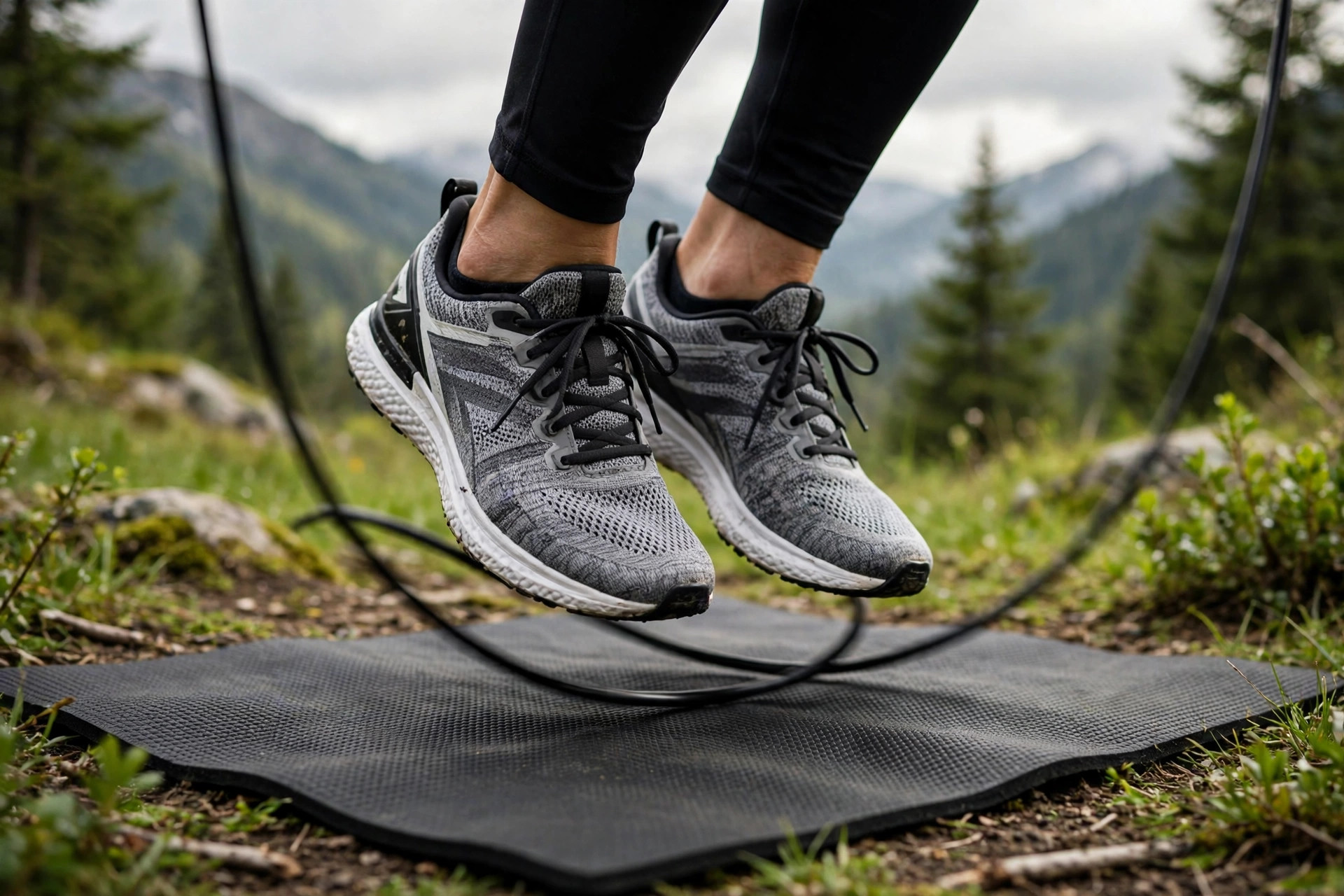
Land on the balls of your feet with your knees soft, and let your ankles and calves do the absorbing. I’d keep the bounce to about an inch off the ground. The rope is thin. It does not need daylight under your shoes, and every extra inch of height comes back down through your knees and through the ceiling below you.
The American Council on Exercise makes the same point in its jump rope workout guidance: warm up first, land softly, and add impact gradually because jumping rope can be hard on the joints. Gradual is the word I’d underline. Two or three short sessions a week beats one heroic session your knees talk about for days.
The Mat Does Two Jobs at Once
A thick jump rope mat is the single purchase that fixes both halves of this problem. It cushions the landing for your joints and it muffles the rope slap and footfall that carry through a floor. Put it over hard flooring, not over plush carpet, where your feet can roll.
Rope choice helps too. A beaded rope like the Sportbit clicks a little against bare floor but turns slowly and forgives sloppy timing, which keeps your jumps small. On a mat, a PVC rope like the BuyJumpRopes licorice rope is the quieter option because the solid cord does not rattle. A friend of mine jump ropes for boxing training, and even boxing gyms, which are not quiet places, put rope work on mats.
Pick Your Hour and Your Room
Technique gets you most of the way, but timing gets you the rest. Mid-morning and early evening sessions on a mat rarely bother anyone. A 6 AM session on a bedroom floor above a neighbor’s bedroom is a different story, whatever your form looks like.
If you have a choice of rooms, jump over the room least likely to sit above someone’s bed, ideally a kitchen or living room, or take the session to a garage, patio, or driveway. Outside, you can drop the mat and jump on smooth concrete or asphalt, though a mat still saves your rope and your joints on rough ground. Our guide to jump rope workouts for busy parents has a full quiet low-impact session built on these same rules.
Step-Overs: The Move That Makes No Sound at All
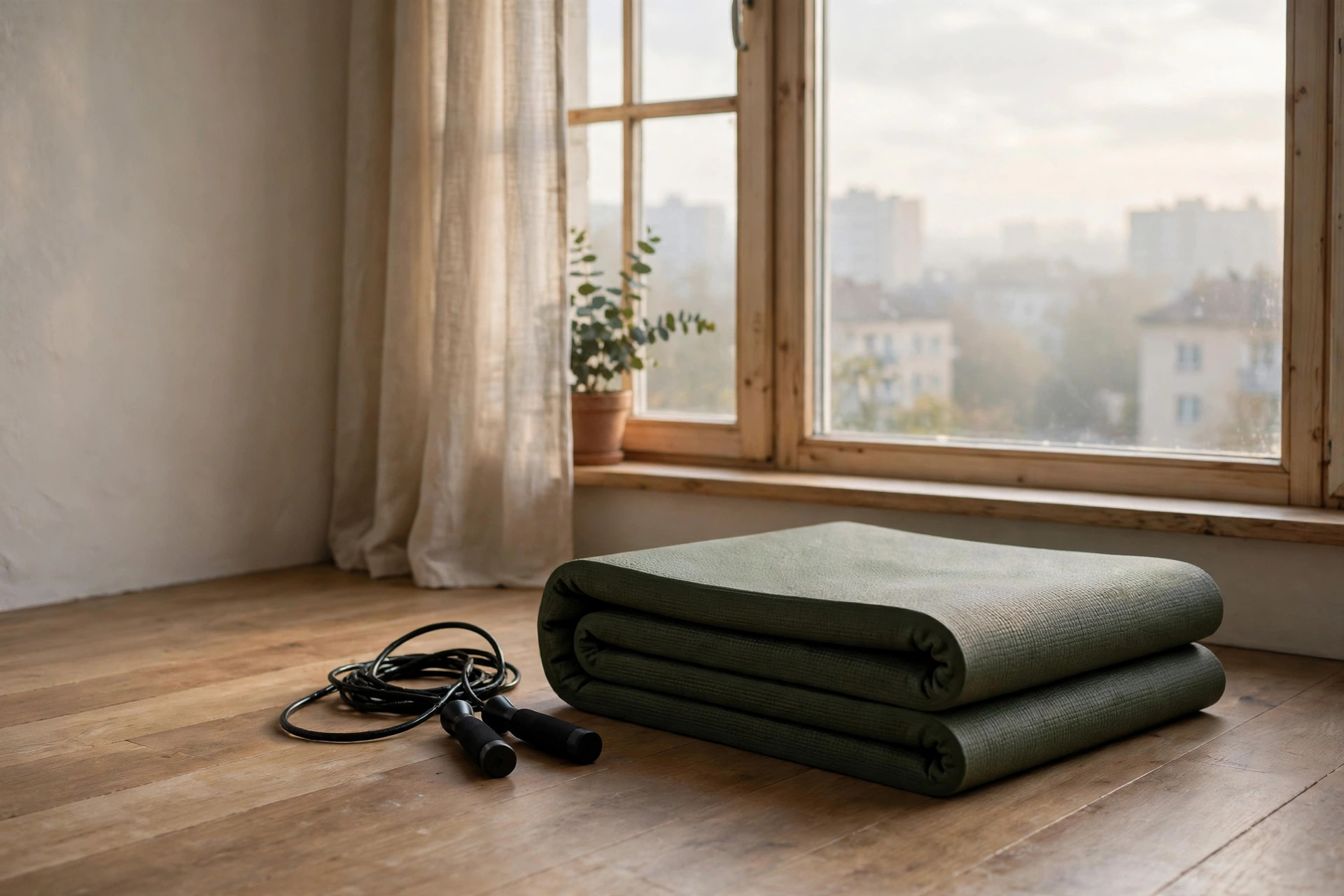
On days when your knees feel cranky or the house is asleep, swap hops for step-overs. Turn the rope, let it land in front of your feet, and step over it one foot at a time at a brisk walking pace. Your heart rate still climbs, your timing still improves, and the impact and noise drop to nearly nothing.
I’d mix step-overs into regular sessions too. Alternate 30 seconds of low hops with 30 seconds of step-overs and you get a session your knees can repeat three times a week, which matters more than any single workout. If the rope keeps catching while you learn, our breakdown of why your rope keeps hitting your feet sorts the usual causes in order.
Build Up Like Your Knees Are Keeping Score
They are, a little. Start with five to eight minutes total, in intervals of 20 to 30 seconds with equal rest, two or three days a week. Add a minute or two a week only if your knees feel the same the next morning as they did before the session. Soreness in your calves is normal early on. Sharp knee pain is a stop sign, not a challenge, and anyone with a joint condition or an old injury should check with a clinician before making jumping a habit.
Shoes help more than people expect. Wear trainers with a firm, fairly flat sole and cushioning under the forefoot, and skip barefoot jumping on hard floors. Once your base is solid, the starting skills in our jumping rope for beginners guide will feel easier than they would have on day one, and a second look at jump rope styles can match your next rope to the surface you actually use.
Frequently Asked Questions
is jump rope bad for your knees
It doesn’t have to be. The impact is real, but low hops, soft landings on the balls of your feet, a mat, and gradual progression keep it manageable for most people. ACE advises adding impact gradually because rope work can be hard on the joints. Sharp pain means stop and get checked.
how do I jump rope quietly in an apartment
Jump low on a thick mat, pick a PVC or beaded rope over a thin cable, and train at hours when a little muffled sound won’t matter. If your floors carry sound badly, step-overs remove the jumping noise entirely while keeping the workout.
what is the best surface for jump rope at home
A mat over a hard, flat floor is my first choice indoors. Outdoors, smooth concrete, asphalt, or a patio works, and a mat still helps on rough ground. Avoid plush carpet, which grabs the rope and can roll an ankle.
can I jump rope every day if my knees feel fine
I’d still build in rest days at the start. Calves and joints adapt to impact over weeks, not days, and three or four sessions a week delivers the fitness without stacking load on tired legs. Add frequency only after a few steady weeks.
Quiet Enough Is a Skill, Not a Compromise
Get the landing low, get a mat under you, and keep the first weeks short. Do that and the rope stops being the loud, jarring workout people picture. It becomes the one you can actually repeat in a small home, which is the whole point.
Jump Rope 101: Jumping Rope for Beginners

Jump Rope for Runners: A Simple Cross-Training Plan That Fits Marathon Training