Roundnet Around the World: How Spikeball Is Played in Other Countries7 min read
Roundnet around the world has grown from an American backyard game into a sport with leagues, national federations, and world championships. The net is the same everywhere, but the game around it is not; each country has bent the sport toward its own climate, spaces, and sporting culture. In the United States it is a tournament circuit, in Germany a club sport with structured training, in Australia it barely leaves the beach. Wherever you play, the equipment is the same starting point, and our roundup of the best spikeball sets covers the nets that travel well and hold tension on sand, grass, and gym floors alike.
Our top picks, compared:
Roundnet Around the World at a Glance
Here is the quick comparison before the country-by-country detail.
| Country/Region | Scene | Notable Difference |
|---|---|---|
| USA | Pro tour, college clubs, backyard leagues | Deepest tournament ladder, most divisions by skill level |
| Germany | University clubs and city leagues | Huge casual player base, strong club structure, big open tournaments |
| UK | Park pickup games and university societies | Weather-driven indoor seasons, smaller but tight-knit community |
| Australia | Beach-first, year-round outdoor play | Sand is the default surface, games run through winter |
| Philippines / SE Asia | Campus leagues and beach festivals | Fast-growing student scene, festival-style events with music and food |
The pattern underneath the table: the colder the country, the more organised the indoor season; the warmer the country, the more the sport stays a beach and park game.
The United States: Where Roundnet Started
Roundnet was commercialised in the United States, and the American scene is still the sport’s centre of gravity. The Spikeball tour structure, with ranked divisions from beginner to premier, gives US players a clear ladder to climb. College clubs feed that ladder, practising weekly and travelling to regional tournaments. Casual play is just as big, and backyard house rules vary by group, which is why American visitors are often surprised by how strict tournament officiating feels.
Germany and Europe: The Fastest-Growing Scene
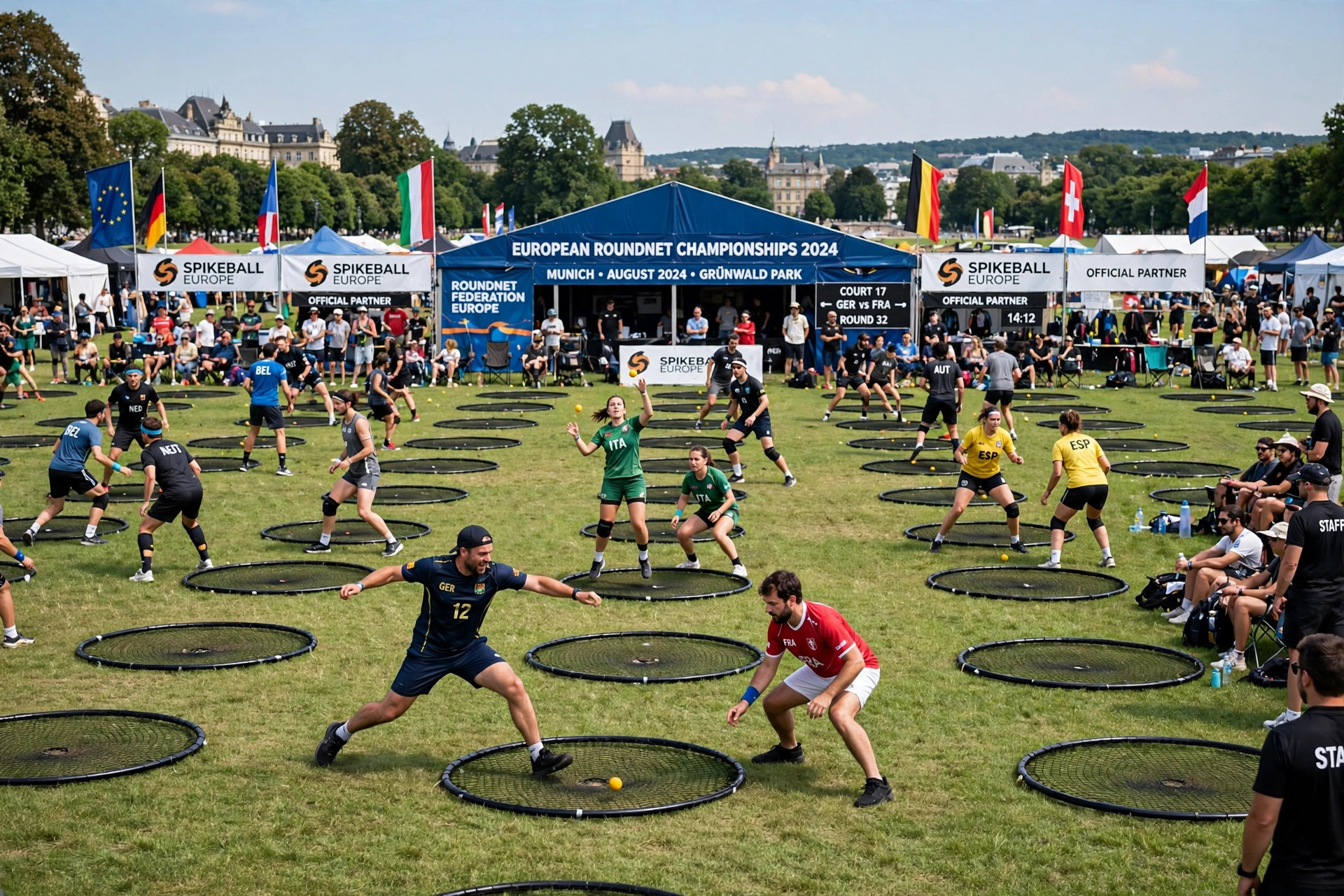
If the US is roundnet’s home, Germany is its boomtown. Spikeball Germany grew through university sport programmes and city clubs, and German open tournaments now draw hundreds of teams. The German style is noticeably structured: clubs run coached training sessions with drills, which shows in longer rallies and more deliberate setting. The rest of Europe follows a similar club model, with national communities in Belgium, France, and the Czech Republic.
The United Kingdom: Parks, Universities and Short Summers
The UK scene is smaller, but loyal. University societies are the backbone, and London parks host regular pickup sessions whenever the weather allows. That weather shapes the calendar: British roundnet runs an indoor season through the wet months in sports halls, and the indoor game is faster and lower, so UK players develop sharp defensive reactions. British tournaments are friendly and social first, with new players pulled into mixed divisions.
Australia: Beach Roundnet All Year
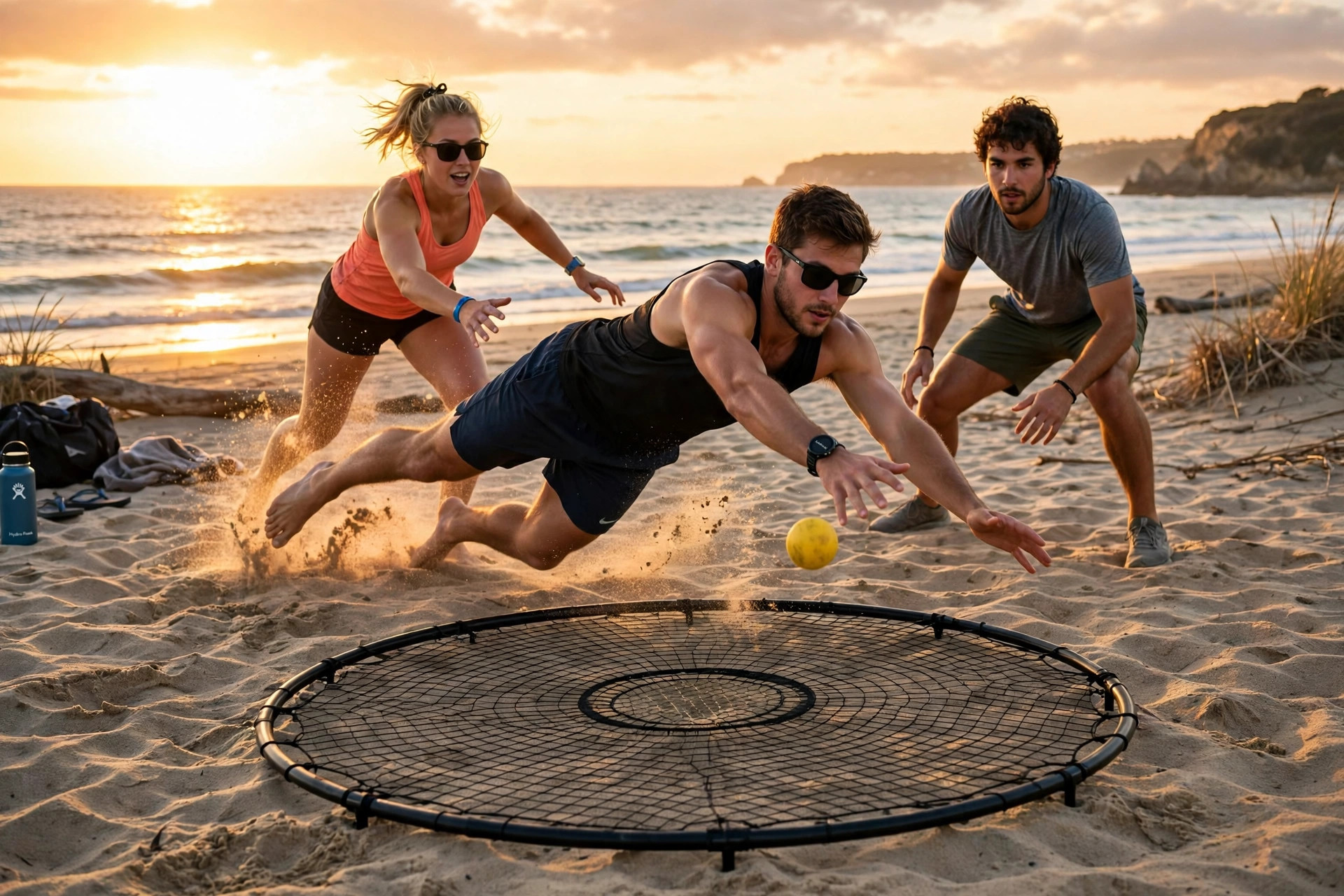
Australia took one look at roundnet and moved it to the beach permanently. With playable weather most of the year, Australian games run on sand from Sydney to Perth, and winter barely interrupts the calendar. Sand changes the game: diving is free, so defence gets spectacular, but the soft surface slows footwork and rewards placement over power. The Australian scene is social at its core: beach meetups, sunset games, and festival-style gatherings rather than a heavy tournament ladder.
The Philippines and Southeast Asia: Campus and Beach Growth
Southeast Asia is the newest chapter of roundnet around the world. In the Philippines, the sport spread through universities and beach towns, and campus leagues now give students regular structured play. The fit is natural: roundnet needs little space, little equipment, and four players, which suits crowded campuses and small beaches. Expect this region’s scene to keep growing fastest in percentage terms.
Roundnet Rules by Country: What Actually Changes
The core rules barely change: two versus two, three touches, hit the net, and the same fault calls apply almost everywhere. What changes is enforcement and house rules. American backyard games often allow soft serves and generous pocket calls; European club games tend to play stricter, closer to the official rulebook. Our comparison of spikeball backyard vs tournament rules breaks down exactly where casual and competitive rule sets split. Some countries also run more mixed and women’s divisions, and festival events in Asia often use shorter games.
What Visiting Players Can Steal From Each Scene
- From the US: a clear division ladder, so every game stays competitive.
- From Germany: coached club training, so skills improve on a schedule.
- From the UK: an indoor winter season, so the sport never fully stops.
- From Australia: a beach-first social scene, so new players keep showing up.
- From Southeast Asia: festival formats, so events feel like a day out.
If you are building a local scene, start with the gear that survives all of it: the nets in our guide to the best spikeball sets include the sturdier frames that handle sand, travel, and weekly club use.
Frequently Asked Questions
Is Spikeball played in other countries?
Yes. Spikeball, played under the sport name roundnet, is organised in dozens of countries across Europe, Asia, Australia, and the Americas. Germany has one of the largest player bases, and Southeast Asian campus leagues are among the fastest growing.
What is the difference between Spikeball and roundnet?
Roundnet is the name of the sport, and Spikeball is the best-known brand that makes the equipment. Tournaments and federations use the sport name roundnet, while most casual players simply call the whole game Spikeball.
Which country is best at roundnet?
The United States has historically produced the strongest top-end teams, thanks to its deep tournament ladder and college pipeline. European teams, especially from Germany and Belgium, have closed the gap quickly.
Do roundnet rules change by country?
The official rules are the same worldwide: two versus two, three touches per side, and standard fault calls. What changes is how strictly local games enforce them; US backyard games play looser, while European club games usually follow the rulebook closely.
Where can I find roundnet games when travelling?
Start with the local community’s social media groups and national roundnet association pages, which list weekly pickup sessions in most major cities. University clubs and beach meetups are the most welcoming entry points.
Final Thoughts
Roundnet around the world is one sport wearing five different cultures: America’s ladder, Germany’s clubs, Britain’s indoor winter grind, Australia’s beach scene, and Southeast Asia’s campus festivals. The net never changes, and that is the point: learn the game once, and you can find a match almost anywhere you land.

Where to Buy a Spikeball Set

Spikeball Drills for Two Players: Passing, Setting and Spiking Practice