Backyard Spikeball vs Tournament Rules: What Actually Changes9 min read
Your backyard game probably runs on friendly rules. Close calls get replayed, serves that hit a little rim slide by, and nobody measures anything. Then you show up to a tournament, and suddenly there is a serving line, a pocket call, and an opponent who expects every fault to count.
The good news is that spikeball tournament rules are not a different game. They are the backyard game with the gray areas removed. This guide shows what actually changes, rule by rule, so nothing surprises you.
If you have never played at all, learn the basics first in our Spikeball rules and how to play guide.
Our top picks, compared:
Backyard Spikeball vs Tournament Rules at a Glance
Here is the whole comparison in one table. The sections below explain each row.
| Rule | Backyard Play | Tournament Play |
|---|---|---|
| Serving line | Stand wherever feels fair | Serve from behind a marked serving line, commonly about 6 feet from the net |
| Serves per turn | Often one casual serve, re-dos allowed | Fault system: a missed or illegal serve counts, with limited second chances per the event format |
| Rim hits | Often replayed or ignored | Rim is a fault, point or serve loss follows the format |
| Pockets | Rarely called in casual games | A pocket, where the ball sinks into the net and changes direction sharply, is a fault |
| Scoring | Rally scoring to 21 is common, win by 1 or 2 by agreement | Rally scoring to 21, win by 2, with a hard cap set by the event |
| Rotation | Teammates often stay on one side | Partners rotate positions and serving order follows a set rotation |
| Self-hits and carries | Usually replayed among friends | Illegal touches lose the rally, no replays |
| Net tension and set | Whatever the set feels like | Firmer, even net expected; a quality set matters |
| Disputes | Replay the point | Call stands by agreement or an observer decides |
The Serving Line and Spikeball Serving Line Distance
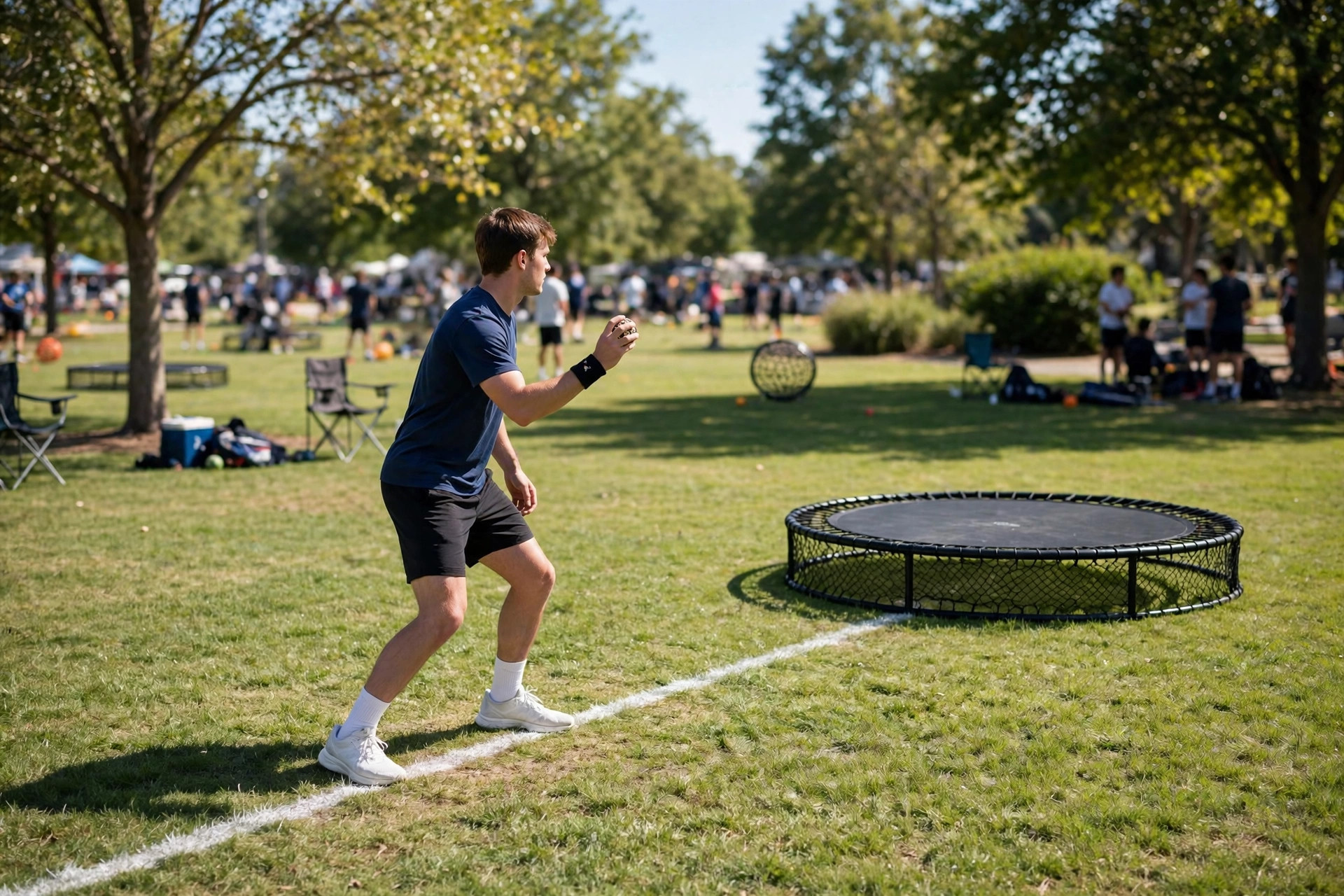
This is the change new tournament players notice first. In the backyard, you serve from wherever you happen to stand. In tournament play, you serve from behind a marked line set back from the net. That distance takes away the easy, close-range power serve and makes receiving fairer. It also changes your toss. A serve that works from close range may hit the rim or sail when you add distance, so practice from the line before your first event. Our guide to Spikeball serving techniques for beginners works from proper serving distance, which is one reason those serves transfer to events better than most backyard serves.
Faults, Rims, and the Spikeball Pocket Rule
Backyard games forgive a lot. Tournament games do not, and the spikeball pocket rule is the call that causes the most arguments. A pocket happens when the ball sinks deep into a loose part of the net and pops out at a strange angle. It is not the receiver’s fault the net misbehaved, so the serve is a fault. Rims are simpler: a serve that hits the rim is illegal, full stop. During a rally, a rim hit also ends the play against the team that hit it. Carries and double hits get the same treatment. One clean touch per player turn, and no holding or scooping the ball, even a little. If these calls come up in your home games too, our Spikeball FAQs answer the most common pocket, rim, and fault questions in plain language.
Spikeball Scoring Rules: Getting to 21 the Official Way
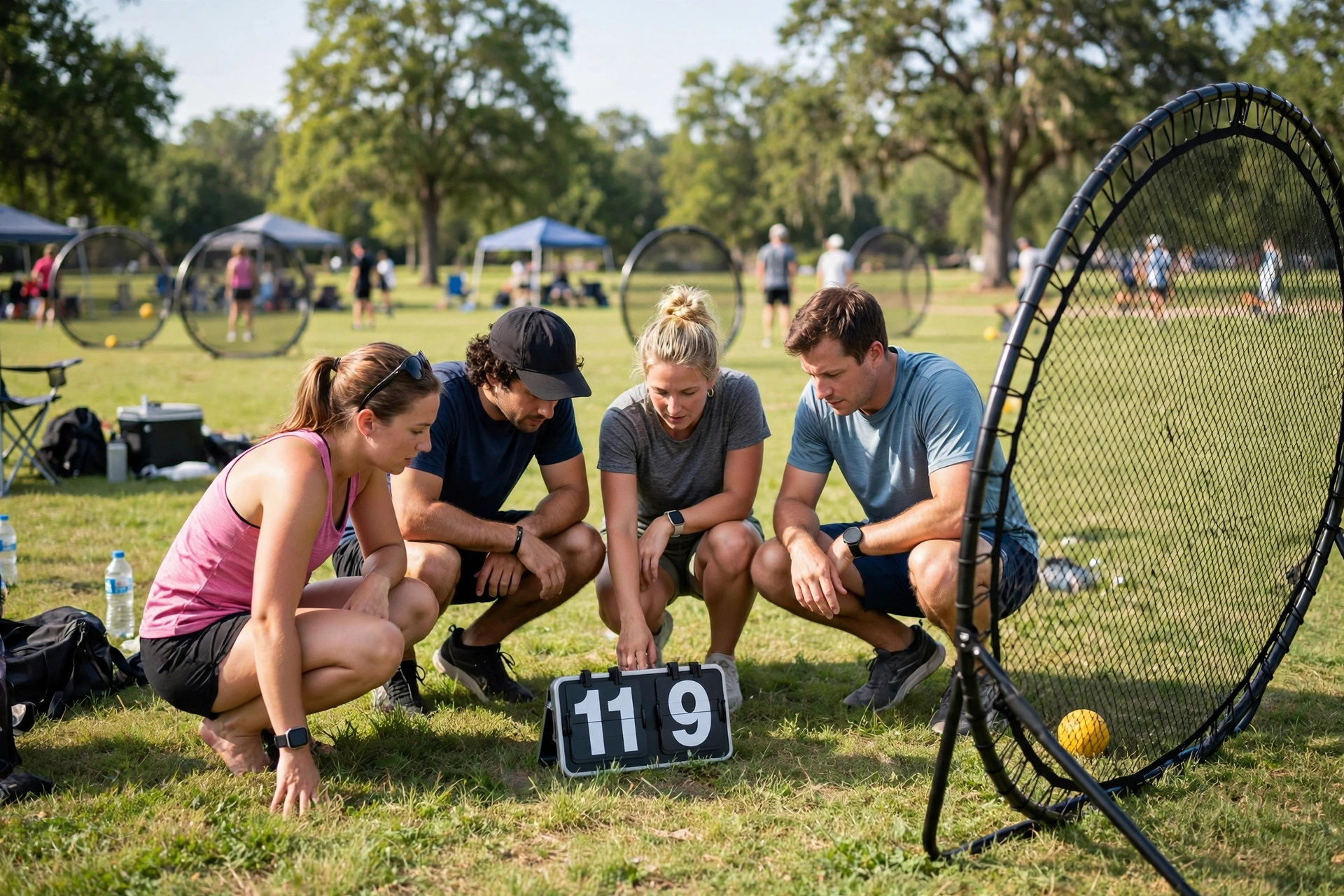
Most backyard games already use rally scoring, where every rally scores a point no matter who served. Tournament play keeps that, which is a pleasant surprise for most new players. The differences are at the finish. Games are played to 21, you must win by 2, and events use a hard scoring cap so matches stay on schedule. If the cap is reached, the next point can decide the game even without a two-point margin. Serving also rotates in a set order. Every player serves in turn, and the serve changes hands after each rally under rally scoring, so nobody can hide a weak server or feed a strong one. In the backyard, none of that structure matters. At an event, track the score and the serving order out loud. Most lost points at beginner events come from confusion, not from bad play.
Rotation, Positioning, and No Hiding on Defense
Casual partners often park themselves on one side and stay there. Tournament rotation does not allow that comfort. You will receive serves from both sides, defend every angle, and serve in a fixed order. A weakness your friends politely ignored will be found in about three rallies. That is a reason to practice receiving with your weaker hand before you enter. Play home games with a serving line and real fault calls for two weeks, and the tournament version stops feeling stricter. It just feels normal.
Equipment: Why Your Set Matters More at Events
Backyard sets forgive a lot because nobody is checking. At an event, the net is expected to be firm and even all the way around, because loose pockets create faults and arguments. A sagging rim or a stretched net changes how serves bounce, and experienced opponents will notice before you do. If your set is the soft, casual kind, look at the firmer options in our roundup of the best Spikeball sets before entering a competitive event. You do need a net that plays evenly, and a properly inflated ball.
How to Prepare: Turn Your Backyard Game Into a Tournament Game
You do not need a coach or a league. Make these five changes at home: 1. Mark a serving line and always serve from behind it. 2. Call every rim and pocket honestly, even in practice. 3. Play to 21, win by 2, and say the score before every serve. 4. Rotate serving order and switch receiving sides. 5. Stop replaying disputed points. Make a call and play on. Two or three weeks of that, and your first event feels like a normal game with better opponents, which is exactly what it should be.
Frequently Asked Questions
What is the spikeball serving line distance in tournaments?
Tournament serves are hit from behind a marked serving line set back from the net, commonly about 6 feet away. The exact setup can vary slightly by event, so check the line before your first match and practice your toss from that distance at home.
Are pockets legal in spikeball tournament rules?
No. A pocket, where the ball sinks into the net and changes direction sharply as it leaves, is a fault on a serve. During rallies, a pocket caused by a loose net is treated as a fault against the hitting team or replayed only if the event format allows it.
How does spikeball scoring work in tournaments?
Tournament games use rally scoring, so every rally is worth a point. Games are played to 21, you must win by 2, and most events set a hard cap so a game can end at the cap without a two-point margin. Serving rotates through all four players in a fixed order.
Can you replay a point in a tournament game?
Generally, no. Backyard games replay close calls, but tournament play expects a call to be made and the point to stand. If both teams genuinely cannot agree and no observer is present, a replay is the last resort, not the default way to settle every dispute.
Do I need a special set to play in a Spikeball tournament?
You need a set with a firm, even net and a properly inflated ball, because loose nets create pockets and unfair bounces. Most events provide or approve the sets used. If you bring your own, choose a firmer set rather than a soft, casual backyard set.
Final Thoughts
Backyard Spikeball and tournament Spikeball are the same game at heart. Tournaments simply measure the serving line, call the pockets and rims, and finish games to 21 with a real rotation. Add those habits to your home games for a few weeks, and there is nothing at an event that will catch you off guard.

Spikeball for PE Teachers and Youth Groups: Large-Group Variations

Roundnet Around the World: How Spikeball Is Played in Other Countries