Double Unders for Beginners Who Can Already Jump7 min read
Double Unders for Beginners Who Can Already Jump
A double under is one jump with two rope passes under your feet, and the part beginners get wrong is jumping harder. The jump barely changes. Your wrists speed up for one turn, then settle back. If your basic bounce is steady for a full minute, you’re ready to learn it, and the progression below gets most people their first clean rep without the welts-and-frustration phase.
Rope choice matters more for this skill than for basic jumping, so start with the full range of jump rope styles in mind. You want a rope that turns fast without much effort, and that usually means leaving the heavy beaded rope in the bag for this one skill.
At a Glance: What Actually Changes on a Double Under
| Element | Basic bounce | Double under |
|---|---|---|
| Jump height | About an inch | A little higher, still relaxed |
| Wrist speed | One turn per jump | Two turns in the same air time |
| Arms | Quiet, elbows close | Stay quiet; wrists do the work |
| Rhythm | Jump, jump, jump | Singles with one double mixed in |
| Rope | Any style works | Light cable or PVC turns easiest |
The One Skill to Check Before You Start
I’d want 60 seconds of unbroken basic bounce, a rope sized right, and jumps that stay in one spot. If you drift forward, kick your heels up, or trip every 20 seconds, fix that first with the causes in our breakdown of why your rope keeps hitting your feet. Double unders punish a sloppy base, and they reward a boring one.
Speed Comes From Your Wrists, Not Your Arms
The common beginner move is big arm circles and a huge jump. Both work against you. Big circles slow the rope down and pull it out of shape, and a huge jump gives you air time you don’t need at the cost of a landing you can’t repeat.
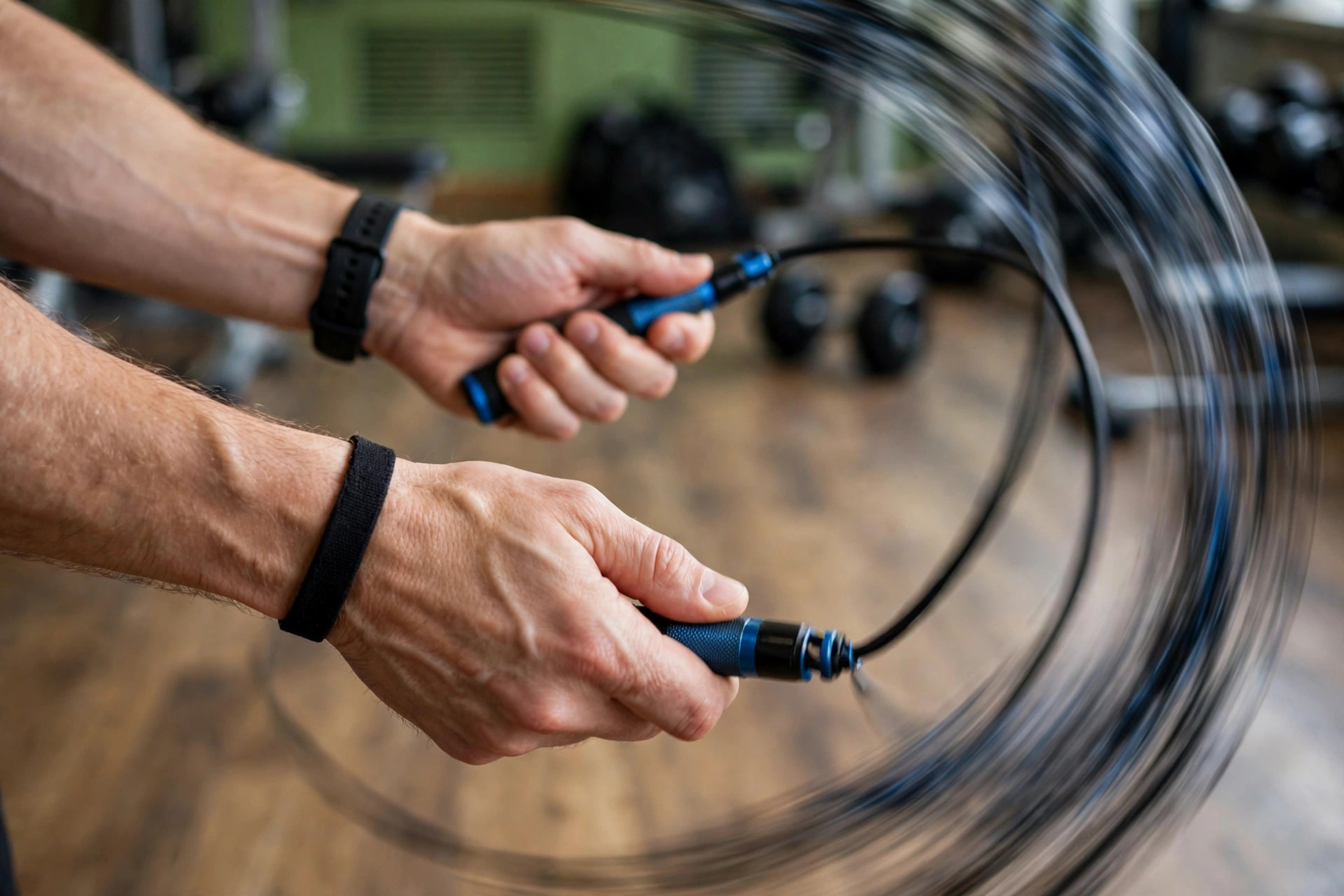
Keep your elbows close to your ribs and your hands slightly in front of your hips, then flick your wrists faster for exactly one jump. Think of turning two quick knocks rather than swinging harder. Your jump rises a little, maybe two or three inches, and stays springy off the balls of your feet. A friend of mine jump ropes for boxing training, and boxing coaches teach the double the same way: quiet arms, fast hands.
Pick a Rope That Wants to Turn Twice
A light cable or PVC rope spins up with a small wrist flick. A beaded rope turns slower and gives clearer feedback for basic skills, but that same weight fights you here. The rope I’d learn on is a speed rope like the Redify, used on a mat or smooth surface so the cable survives. If you only own a PVC rope, a PVC rope like the BuyJumpRopes licorice rope is a workable middle ground and kinder when it catches you, which it will.
Length matters too. A rope that’s too long drags and slows the second pass. Size it the standard way, handles reaching roughly your armpits when you stand on the middle, and check the sizing steps in our jumping rope for beginners guide if yours has never been fitted.
The Progression: Singles, One Double, Then Links
Don’t start by trying ten doubles in a row. I’d build it in three steps across a few short sessions.
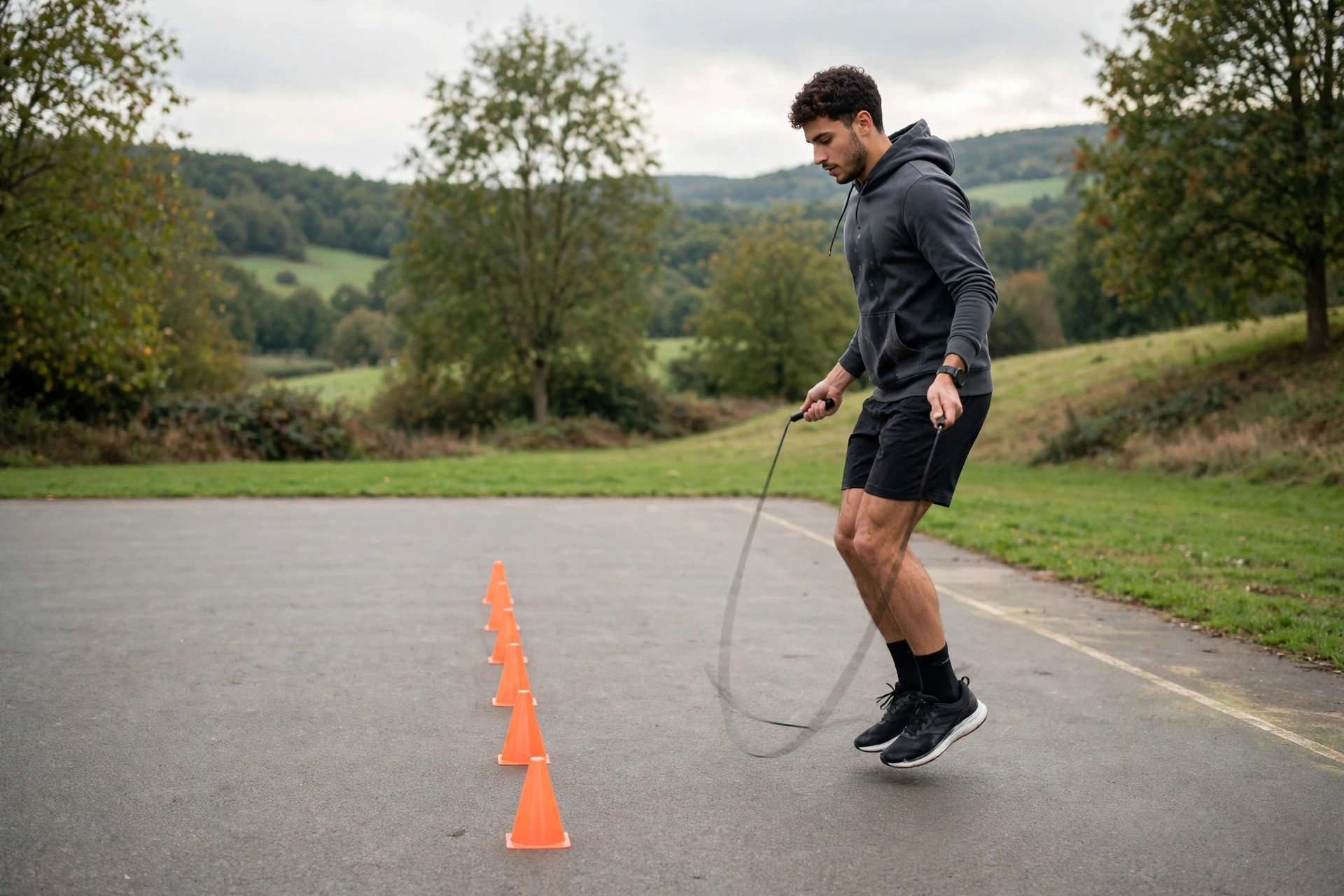
Step one is penguin taps without a rope. Jump softly and tap your thighs twice while you’re in the air. That teaches the timing your wrists need: two quick actions inside one calm jump.
Step two is single, single, double. Jump two normal singles, then attempt one double, then go back to singles whether it worked or not. Rest after a few attempts. Most first doubles happen inside this pattern because your rhythm never collapses.
Step three is linking. Once one double lands regularly, try double, single, double, and only then chase two doubles in a row. Keep attempts in short sets at the end of a normal session, like the mixed footwork format in our jump rope workouts for busy parents, and stop while your form still looks like jumping rather than surviving.
The Three Misses You’ll Hit, and What Each One Means
If the rope catches your toes on the second pass, your wrists slowed down mid-jump. Speed up the flick, not the jump. If it catches the back of your legs, your hands drifted behind your hips; bring them forward where you can almost see them. If you land on the rope, you jumped forward; practise against a line on the ground and stay behind it.
Getting whipped once or twice is normal. Long sleeves and a PVC rope make the learning week cheaper, and short attempts keep frustration from turning into sloppy volume.
When to Stop Chasing and Just Practise Singles
Ten focused attempts at the end of two or three sessions a week is plenty. Your base bounce is still the engine: the steadier your singles, the sooner the double shows up. A second look at jump rope styles is worth it if your only rope is heavy, because no drill fully compensates for a rope that won’t spin up.
Frequently Asked Questions
how long does it take to learn double unders
Most people with a steady basic bounce land a first double within a few short sessions, and link several together over the following weeks. The spread is wide, and it depends far more on your singles being automatic than on athleticism. Practise in short sets and let it arrive.
what rope is best for learning double unders
A light cable speed rope turns fastest with the least wrist effort, and a PVC rope is a forgiving second choice that hurts less when it catches you. I’d avoid learning on a heavy beaded rope, which turns too slowly for the second pass.
why do I keep tripping on the second pass
Usually your wrists slow down after the first pass, or your hands drift back behind your hips. Keep your hands slightly forward, flick both turns at the same quick speed, and jump a little higher rather than a lot higher.
should I jump higher for double unders
Only a little. Two or three inches of relaxed, springy jump is enough when your wrists are fast. Big jumps waste energy, wreck your rhythm for the next rep, and land harder than the skill requires.
Your First Double Is a Timing Trick, Not a Fitness Test
Keep your arms quiet, flick your wrists, and mix one attempt into steady singles. That’s the whole secret, and it’s learnable in short sessions. Once the first one lands, linking them is just patience and the same calm jump.
Jump Rope 101: Jumping Rope for Beginners

Why Does My Rope Keep Hitting My Feet? Form Fixes That Work