
Beaded vs Cable vs PVC Jump Ropes for Your First Rope10 min read
Your first rope teaches you timing, and the three main types teach it at very different speeds. A beaded rope talks back on every turn, a PVC rope keeps things simple and light, and a cable speed rope mostly waits until you’re already good. I’d buy beaded or PVC first for almost every beginner, and cable can wait until double unders are actually on your list.
This is a specs based comparison of rope types, not a test of specific brands, so the differences below come from how each rope is built and hold across brands. For the broader picture of what you can do once you own one, see our overview of jump rope styles.
At a Glance: Beaded vs Cable vs PVC
| Beaded | Cable (speed) | PVC (licorice) | |
|---|---|---|---|
| Feel and feedback | Heaviest of the three, strong feedback on every turn | Very light, very fast, minimal feedback | Light to medium, smooth and forgiving |
| Best for learning | Basic bounce, rhythm, footwork, tricks | Speed work and double unders once timing is solid | Basic bounce and general fitness jumping |
| Durability | Excellent, beads protect the cord and are replaceable | Weakest on rough surfaces, cable frays and kinks | Good, one solid cord with no parts to lose |
| Best surfaces | Almost any, including pavement | Smooth gym floors and mats only | Most smooth surfaces, avoid sharp rough concrete |
| Price tier | Budget to mid | Mid to premium, replacement cables add cost | Budget, usually the cheapest entry point |
| First rope verdict | My pick for most beginners | Buy later, as a second rope | My pick for the simplest, cheapest start |
Beaded Ropes Give You the Most Feedback
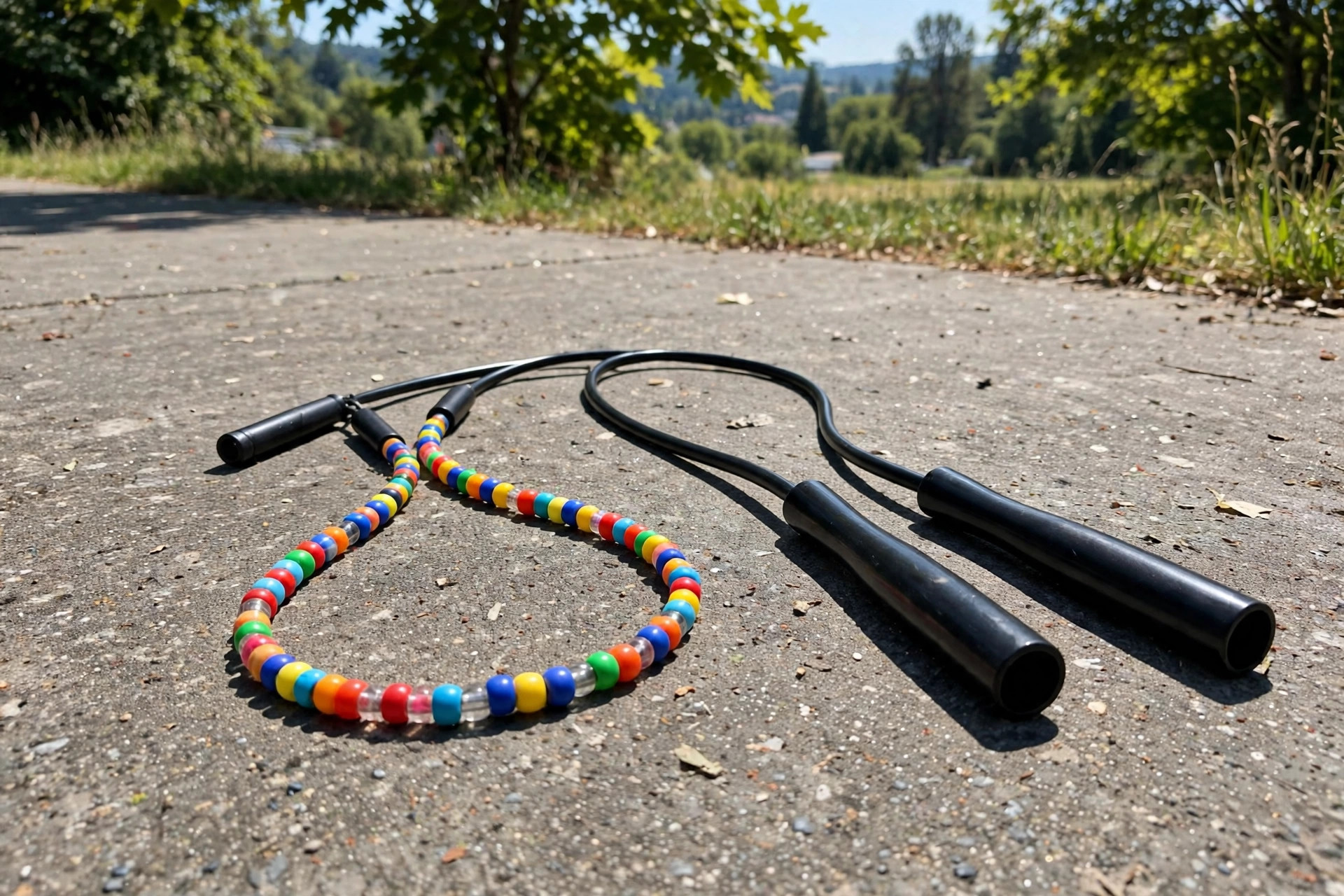
A beaded rope is a cord threaded with plastic beads along its full length. That construction sounds like a kids’ playground rope, and it kind of is, but it solves the beginner’s biggest problem. You can feel where the rope is at all times.
The beads add weight, and the weight does two useful things. It keeps the rope in a clean, round loop instead of collapsing mid-turn, and it slows the turn just enough that your jumps and wrists can agree on a rhythm. When you mistime a turn, you know it right away. A beaded rope to the shin still gets your attention, though. Feedback isn’t painless. It’s just clear.
Beaded ropes are also the hardest of the three to kill. The beads take the beating from the floor instead of the cord, and a cracked bead can be replaced or the rope restrung. That makes beaded a sensible pick for pavement or a garage. The trade-off is speed. All that helpful weight works against you at high tempos, so a beaded rope will never be a double under rope. It isn’t trying to be.
I’d put beaded first for anyone learning footwork, jumping with kids, or training mostly outdoors. It’s the most forgiving teacher of the three.
Cable Ropes Are Built for Speed You Don’t Need Yet
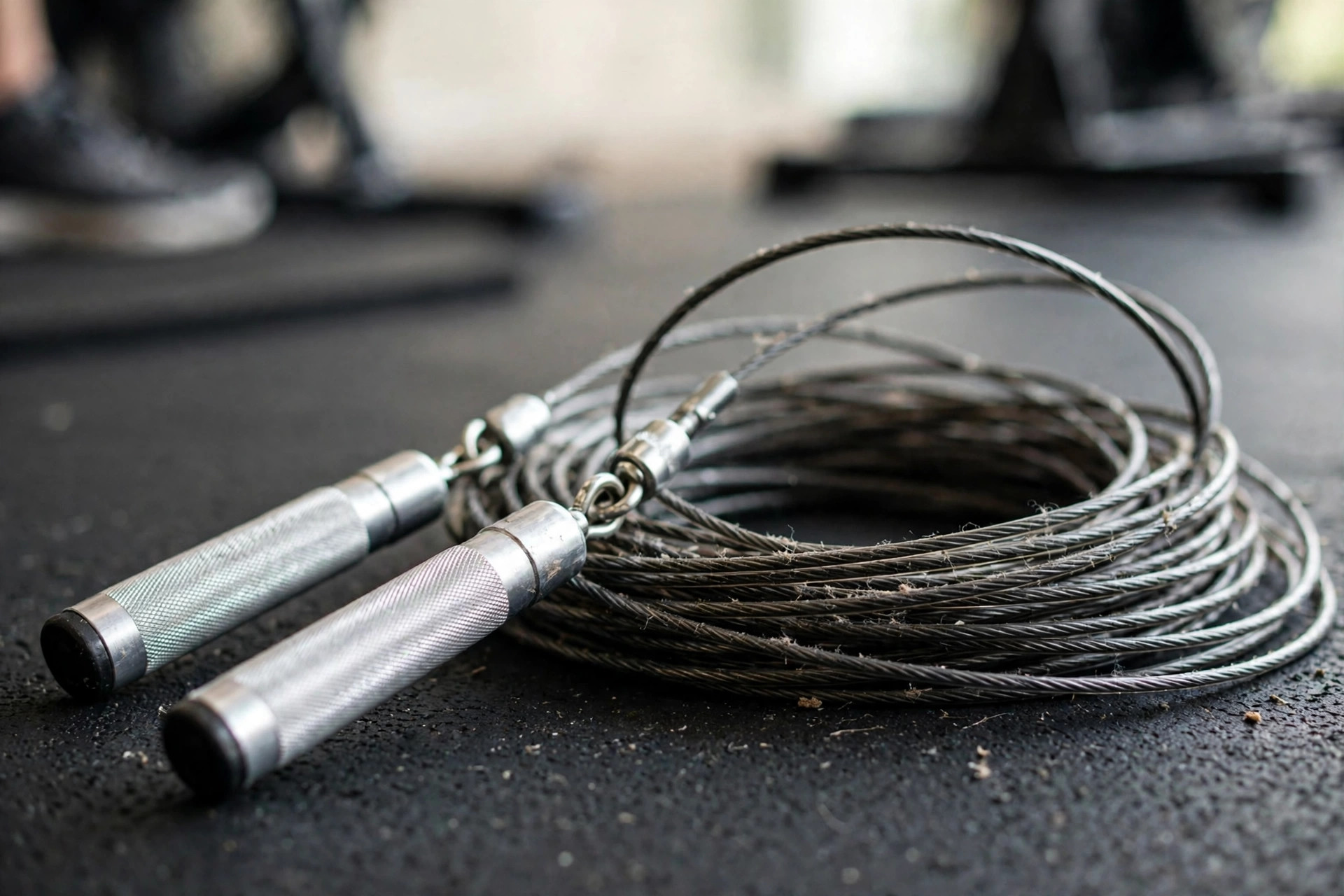
A cable rope, usually called a speed rope, uses a thin coated steel cable and lightweight handles, often with bearings so the cable spins fast with little effort. The design goal is revolutions per minute. For competitive speed events and double unders, nothing else here comes close.
That speed is exactly the problem for a first rope. A cable gives you very little feedback, so when your timing is off you get almost no information about why. The rope is just suddenly there, catching your toes or whipping past. Experienced jumpers don’t need feedback because their rhythm is automatic. Beginners are still building that rhythm, and a cable makes the building harder.
Cables are fussy about surfaces and storage, too. Rough concrete wears through the coating, then the cable frays. Kink it in a gym bag and it may never turn in a clean loop again. Replacement cables are a normal ongoing cost, so the purchase price isn’t the whole price.
None of that makes cable ropes bad. It makes them second ropes. Buy one when your basic bounce is automatic and you’re chasing speed work or double unders, when low feedback stops mattering and speed becomes the point. The International Jump Rope Union governs the speed events these ropes are built for.
PVC Ropes Are the Simple, Cheap Middle Ground
A PVC rope, often called a licorice rope, is one solid cord of PVC plastic with basic handles. There’s nothing to adjust beyond length, nothing to restring, and nothing to fray. It’s the rope most school gyms and group fitness classes hand out, and that ubiquity is a genuine point in its favor.
PVC sits between the other two in feel. It’s lighter than beaded, so it turns quicker and asks a bit more of your timing, but it holds its loop far better than a cable. For steady fitness jumping over several minutes, that middle weight is comfortable and sustainable.
The limitations are mild. PVC can get stiff in cold weather and stretchier in heat. It wears down on rough concrete over time, though it tolerates everyday surfaces better than a cable. And when it wears out, you replace the whole rope rather than a part.
On price, PVC is usually the cheapest way in, in true budget territory. If you aren’t sure jumping will stick, I’d rather see you start with an inexpensive PVC rope and jump for a month than research premium options for a month. A rope you own and use beats a better rope you’re still deciding about.
How They Compare Where It Counts
Feedback while learning. Beaded wins, and it isn’t close. PVC is second. Cable is a distant third, which is the strongest single argument against starting with one.
Durability and surfaces. Beaded wins again, because the beads are sacrificial protection for the cord. PVC is a solid second on smooth surfaces. Cable finishes last and needs a mat or gym floor to live long.
Speed ceiling. Cable wins by a huge margin, then PVC, then beaded. This only matters once your skills reach the ceiling, and for most beginners that takes months, not days.
Total cost of ownership. PVC starts cheapest. Beaded costs a bit more up front but can be restrung and repaired for years. Cable can cost the most over time once replacement cables count, especially if you jump anywhere rougher than a gym floor.
Tricks and footwork. Beaded and PVC both handle beginner footwork well. Beaded gets the edge for learning new moves, because the slower, clearer turn gives you time to think. Cable rewards moves you already own and punishes moves you’re still learning. Our jumping rope for beginners guide covers the starting skills either rope will be asked to support.
Who Should Buy Which Rope First
Buy beaded first if you’re a true beginner, you’re learning with kids, you jump outdoors or on pavement, or you want to learn footwork and tricks. It’s the choice I’d make for most people here, because it shortens the frustrating first two weeks more than the other two do.
Buy PVC first if you want the lowest cost start, you mainly want steady cardio jumping, or you jump in classes where this is the standard style. It’s also a fine pick if a beaded rope’s weight sounds tiring, since some smaller jumpers really do prefer the lighter feel.
Buy cable first only if you already jump with decent timing, or your one clear goal is double unders and you’re willing to learn on harder mode. A friend of mine jump ropes for boxing training, and boxing gyms are one of the few places you’ll see speed style ropes in regular use, because those jumpers log enough rounds to keep their timing sharp. If that isn’t you yet, cable can wait.
Whichever type you pick, length matters more than brand. The right length in the cheapest type will serve you for months. When you’re ready for a second rope, the full range of jump rope styles shows where each type leads, and USA Jump Rope publishes beginner guidance too.
Frequently Asked Questions
beaded vs cable vs pvc jump rope which is best for beginners
Beaded is my pick for most beginners because its weight gives you clear feedback on every turn and it survives pavement and mistakes. PVC is a close second if you want the cheapest, simplest start. I’d save cable for later, since its speed and low feedback make early timing harder to learn.
is a beaded jump rope good for adults or just kids
It’s good for adults, and a lot of adult beginners do better on one than on a speed rope. The playground look throws people off, but the weight, durability, and feedback are exactly what an adult learning rhythm and footwork needs. Kids do well on them too, partly because the beads survive schoolyard surfaces.
when should I switch to a cable speed rope
Switch when your basic bounce and boxer step feel automatic and you have a specific reason, usually double unders or timed speed work. If you’re still tripping a few times per minute on a beaded or PVC rope, a cable won’t fix that. It’ll just make the trips faster and harder to diagnose.
can I use a cable jump rope on concrete
You can, but I wouldn’t make a habit of it. Rough concrete wears through the cable’s coating, and once the coating goes, the cable frays and needs replacing. If concrete is your only surface, a beaded rope is the practical choice, since the beads take the damage instead of the cord.
Pick One and Start Jumping This Week
If you’re torn between beaded and PVC, decide by surface. Pavement, garage, or driveway points to beaded. Smooth floors and the tightest budget point to PVC. Leave cable on the shelf until your timing earns it, then buy it as the reward it actually is. The first rope’s job is to teach you, and both of my picks do that job well.
Why Does My Rope Keep Hitting My Feet? Form Fixes That Work

How to Size a Jump Rope Correctly by Height
