Why Does My Rope Keep Hitting My Feet? Form Fixes That Work10 min read
If your rope clips your toes on the third turn, behaves for ten turns, then catches a heel, I’d bet against your feet being the problem. It’s usually rope length, jump height, or hands drifting out of position. The good news is you can test each cause in about a minute, and most fixes stick within one short session.
If you’re still sorting out which styles are worth learning first, start with our overview of jump rope styles. Then come back here and fix the trip.
At a Glance: The 7 Causes and Their Fastest Fix
| Cause | What it feels like | Fastest fix |
|---|---|---|
| Rope too long | Rope slaps the floor and bounces into your shins | Shorten until handles reach your armpits when you stand on the center |
| Rope too short | Rope catches your head or toes on nearly every turn | Lengthen it or switch to a longer rope |
| Jumping too high | You land heavy and the rope seems to arrive late | Jump about 1 inch high, on the balls of your feet |
| Arms drifting wide | Rope narrows and clips your feet even though length felt right at rest | Pin elbows near your ribs, hands at hip height |
| Turning with your arms | Big circles, tired shoulders, rope shape changes mid-turn | Shrink the motion to small wrist circles |
| Timing is off | You jump before or after the rope arrives, especially when tired | Slow down and count turns out loud for 20 seconds |
| Wrong shoes or surface | Rope drags, bounces oddly, or your feet slide | Flat training shoes on a smooth, grippy surface |
Check Your Rope Length Before Anything Else
Length is the first thing I’d check, because a badly sized rope makes good form look bad. Stand on the center of the rope with one foot and pull the handles up. For most beginners, the handle ends should land between your chest and your armpits. Near your shoulders means too long. Barely past your hips means too short.
A long rope’s slack bounces off the floor into your feet and shins. A short rope forces you to hunch and jump higher just to clear it, so you catch your toes even when your timing is fine. Adjust in small steps, testing 30 seconds of bounce after each change. Our jumping rope for beginners guide covers the full setup.
You’re Probably Jumping Too High
Most beginners jump two or three times higher than they need to. The rope is thin. It needs about an inch of clearance under your shoes, not three inches and a prayer.
High jumps cause trips in a sneaky way. While you’re in the air, the rope keeps traveling, slows, and sags. By your next jump its shape has changed, so it catches a foot that would’ve cleared it lower down. You’re also airborne longer than the turn expects, which wrecks your rhythm.
Keep your jumps low and quiet instead. Land on the balls of your feet, stay springy, and aim to speak in short sentences while you bounce. If you’re gasping and thumping, you’re too high. A friend of mine jump ropes for boxing training, and what stands out about experienced jumpers like him isn’t height. It’s how boringly low and even the bounce looks.
Watch Where Your Arms Drift
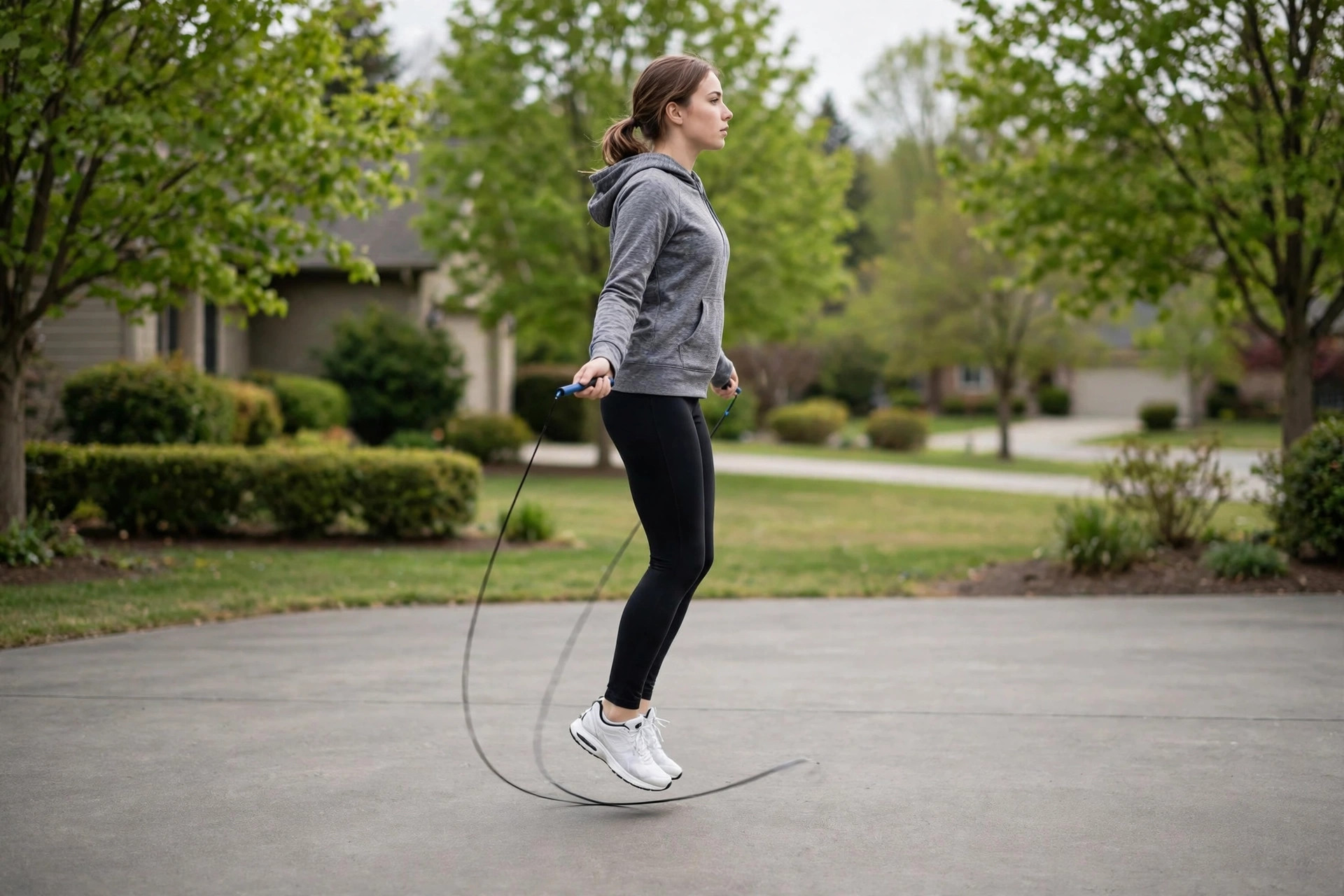
Your hands set the width of the rope’s loop, and your feet have to fit through that loop. When your elbows drift out and your hands move wide, the loop narrows at the bottom. A rope that fit at rest suddenly doesn’t fit while it’s moving.
Fatigue makes this worse. Two minutes in, your shoulders tire, your hands creep out and up, and a clean session falls apart. That’s why the rope often only hits your feet late in a set. It isn’t a new foot problem. It’s arm position decaying.
Set a home base: elbows close to your ribs, hands just in front of your hips. When a trip happens, stop and reset instead of restarting at full speed. I’d rather see five resets than a minute of sloppy turns, because the sloppy minute is what you’re actually practicing.
Turn With Your Wrists, Not Your Arms
If your shoulders are doing the work, your wrists aren’t. Big arm circles move your hands in big arcs, so the rope’s effective length changes on every turn. One turn runs long and drags. The next runs short and clips your toes. It feels random, but the pattern is right there in your arms.
Shrink the motion. Your forearms stay mostly still while your wrists make small, even circles, more like stirring something in a mug than cranking a handle. Both wrists need the same speed, too. If one hand is lazier, the rope tilts and one side arrives lower, a classic reason it always catches the same foot.
Try this drill. Turn the rope beside your body in a side swing for 30 seconds per side, watching that both wrists stay small and even. The side swing appears in most lists of jump rope styles as a rest move, but it works just as well as a form reset. Once both sides match, jump again with that exact wrist motion.
Timing Trips Look Like Foot Trips
Sometimes the length is right, your arms are fine, and you still catch it. That’s usually timing. You jump a fraction early and land as the rope arrives, or hesitate and meet it on its way down instead of passing under it.
Timing falls apart fastest when you speed up too soon. Slow down until matching the rope feels almost too easy, then count your turns out loud for 20 or 30 seconds. Counting sounds basic, but it locks your jumps to the rope.
Looking down is the other timing killer. Stare at your feet and your head drops, your back rounds, and your hands drift forward. Pick a spot on the wall at eye level instead. Your feet know where the floor is.
Don’t Ignore Your Shoes and Surface
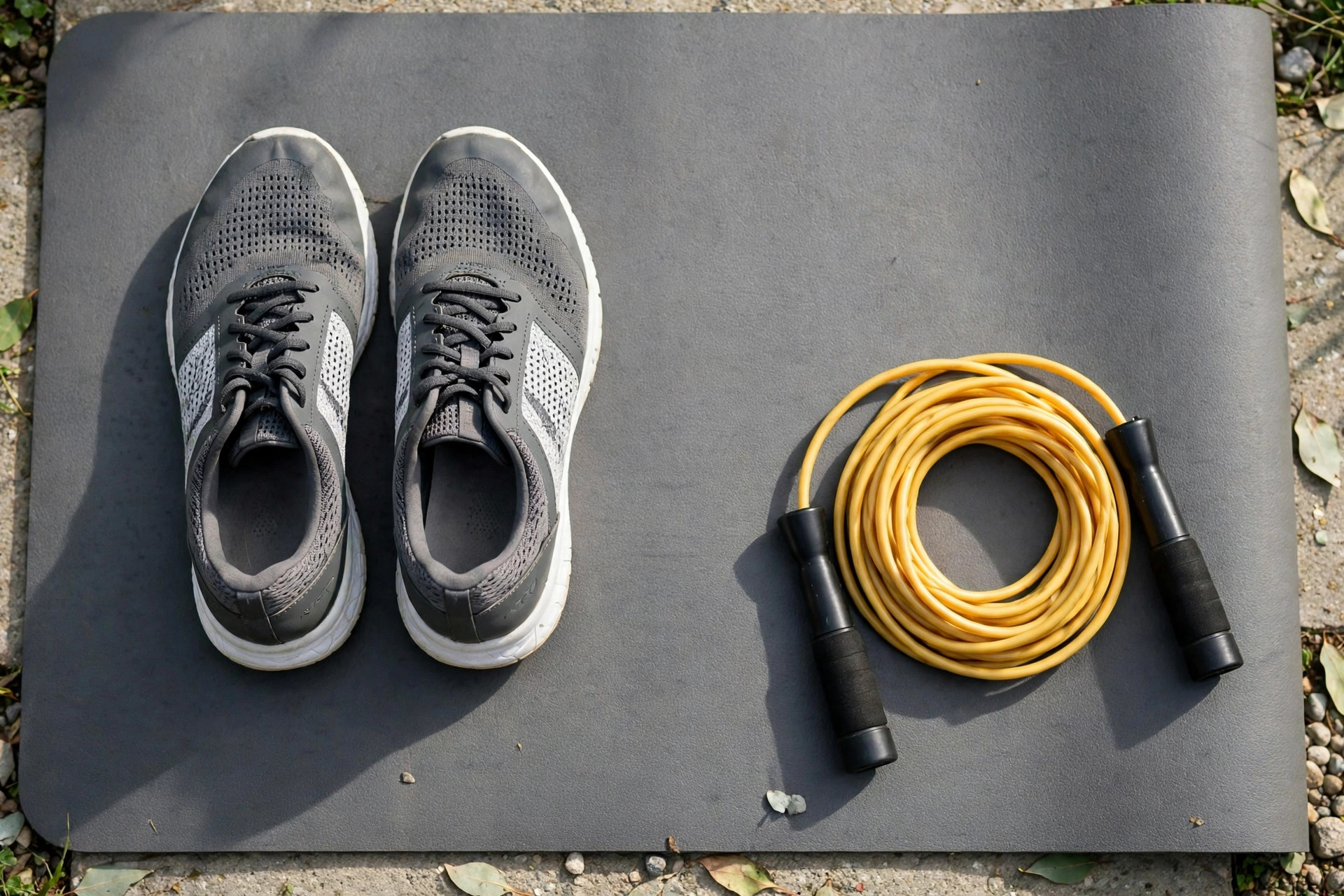
Footwear won’t fix bad form, but the wrong setup creates trips that look like form problems. Chunky running shoes with thick, flared heels give the rope far more to catch than flat training shoes do. If you’re clipping the back of your heel more than your toes, look at your shoes before you blame your timing.
Surface matters too. Thick carpet and grass drag on the rope and slow it unevenly, and rough concrete makes it bounce unpredictably. A smooth gym floor, mat, or flat pavement gives you a consistent turn. The International Jump Rope Union technique material assumes a flat, clear surface for this reason, and USA Jump Rope teaches the same basics.
A 10 Minute Fix Session You Can Repeat
You don’t need a long workout to sort this out. You need one focused session that tests causes in order instead of guessing.
- Size the rope with the stand-on-the-center test, then do 30 seconds of easy basic bounce.
- Do two rounds of 30 seconds focusing only on jump height. Low, quiet landings, nothing else.
- Do two rounds of 30 seconds focusing only on elbows and hands. Reset to home base every time you trip.
- Do 30 seconds of side swings on each side, watching for small, even wrist circles.
- Finish with one minute of basic bounce at a slow, counted pace. If it stays clean, that’s your practice pace for the week.
Run that order whenever trips creep back: length first, height second, arms third, timing last. Most people find their culprit in the first two steps. Once the trips stop, beginner footwork patterns build directly on the clean basic bounce you’ll have.
Frequently Asked Questions
why does my jump rope keep hitting my feet
It’s usually rope length, jump height, or your hands drifting wide, and rarely your feet themselves. I’d test in that order: size the rope first, lower your jump to about an inch, then reset your elbows near your ribs. Fix one cause at a time so you know which one was actually doing it.
how do I know if my jump rope is too long
Stand on the center of the rope and pull the handles up. If the handle ends reach past your armpits toward your shoulders, it’s too long for most beginners. A long rope slaps the floor, bounces, and catches your shins and feet even when your form is fine.
should I jump higher to stop tripping on the rope
No, jumping higher usually makes tripping worse. Extra height gives the rope time to slow down and sag, and it throws off your rhythm. Jump just high enough for the rope to pass under your shoes, about an inch, and keep the bounce low and even.
why does the rope only hit my feet when I get tired
Your arm position is probably decaying as your shoulders tire. When your hands drift wide or upward, the rope’s loop narrows and starts clipping your feet late in the set. Stop and reset your elbows and hands instead of pushing through, because tired, sloppy turns are what you’re practicing if you keep going.
The One Check to Run Before You Blame Your Feet
Next time the rope catches you twice in a row, stop and stand on the center of it. That ten second length check rules out the most common cause before frustration takes over and you start changing everything at once. If the length’s right, drop your jump height and reset your elbows, in that order. Work the checklist from the top and your trip will have a specific cause, and a specific fix, almost every time.
Beaded vs Cable vs PVC Jump Ropes for Your First Rope
Jump Rope 101: Jumping Rope for Beginners